La maison de l'ogre
Part 3 · The ogre's house
Reading only. Members hear every sentence, save words and take the quiz.
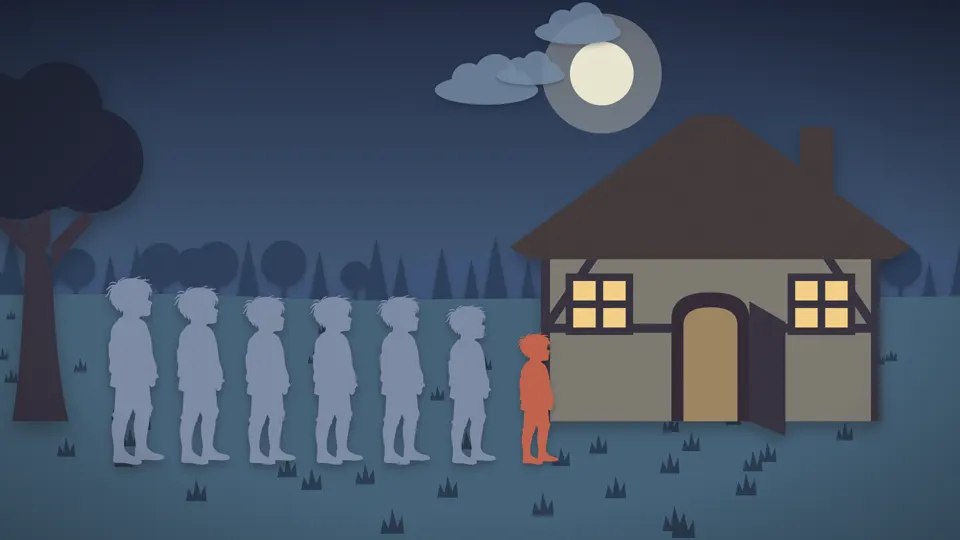
Le Petit Poucet descend de l’arbre.
Little Thumb climbs down from the tree.
En bas, il ne voit plus la lumière.
Down below, he can no longer see the light.
Il est très triste.
He is very sad.
Mais il marche avec ses frères vers la lumière.
But he walks with his brothers toward the light.
Au bout de la forêt, il la voit de nouveau.
At the end of the forest, he sees it again.
Souvent, ils la perdent, et ils ont peur.
Often they lose it, and they are afraid.
Enfin, ils arrivent à une grande maison.
At last they come to a big house.
La lumière brille à la fenêtre.
The light shines in the window.
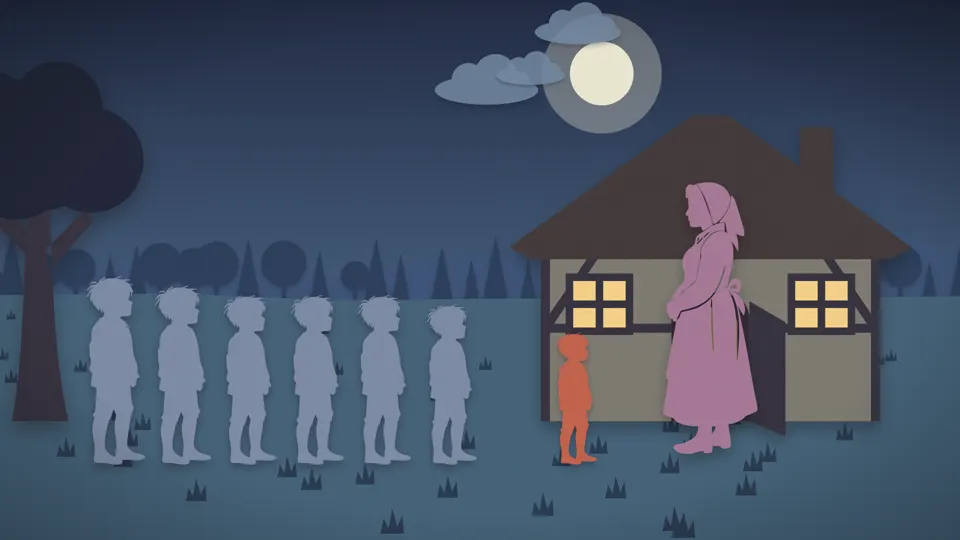
Ils frappent à la porte.
They knock at the door.
Une femme ouvre la porte.
A woman opens the door.
Elle demande : « Que voulez-vous ? »
She asks: “What do you want?”
Le Petit Poucet dit : « Nous sommes de pauvres enfants perdus. »
Little Thumb says: “We are poor lost children.”
« Pouvons-nous dormir chez vous, s’il vous plaît ? »
“May we sleep at your house, please?”
La femme regarde les sept garçons, et elle pleure.
The woman looks at the seven boys, and she cries.
Elle dit : « Mes pauvres petits, vous ne savez pas où vous êtes ? »
She says: “My poor little ones, don't you know where you are?”
« C’est la maison d’un ogre ! »
“This is the house of an ogre!”
« Il mange les petits enfants ! »
“He eats little children!”
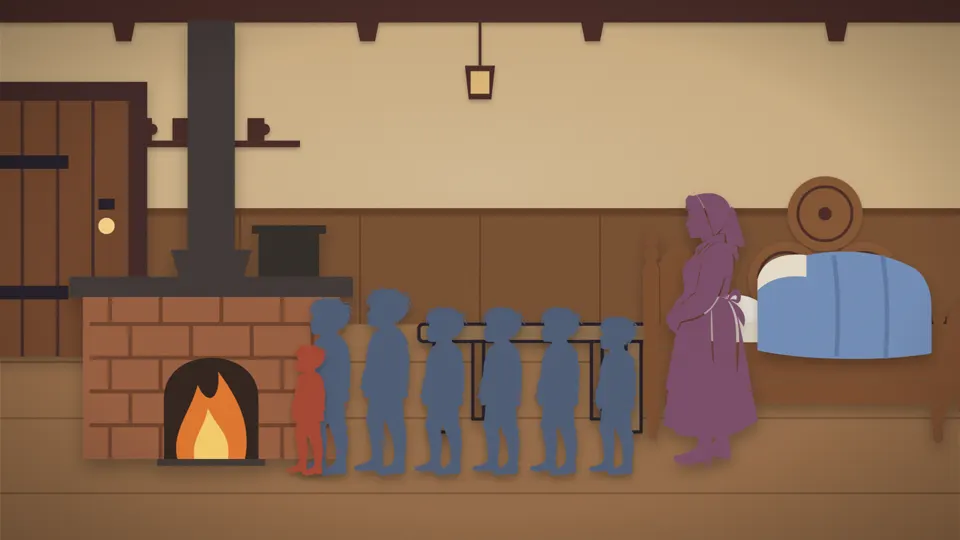
Le Petit Poucet tremble, et ses frères aussi.
Little Thumb trembles, and so do his brothers.
Il dit : « Madame, que pouvons-nous faire ? »
He says: “Madam, what can we do?”
« Cette nuit, les loups de la forêt vont nous manger. »
“Tonight the wolves of the forest are going to eat us.”
« Alors nous aimons mieux être mangés par votre mari. »
“So we would rather be eaten by your husband.”
« Il va peut-être avoir pitié de nous. »
“Perhaps he will take pity on us.”
La femme pense : « Je peux les cacher jusqu’à demain matin. »
The woman thinks: “I can hide them until tomorrow morning.”
Elle les fait entrer.
She lets them in.
Les enfants se chauffent près d’un bon feu.
The children warm themselves by a good fire.
Un mouton entier cuit sur le feu.
A whole sheep is cooking on the fire.
C’est le dîner de l’ogre.
It is the ogre's supper.
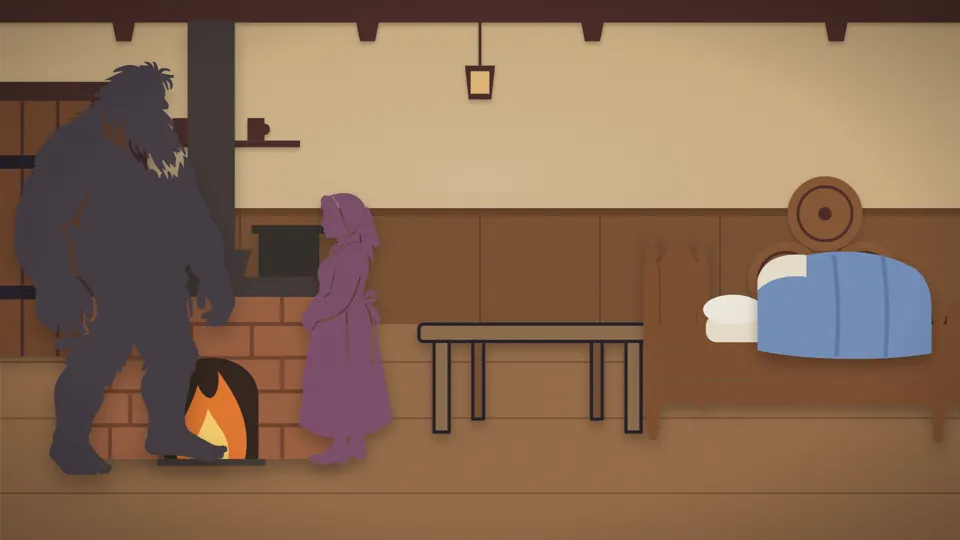
Tout à coup, on frappe très fort à la porte.
Suddenly someone knocks very hard at the door.
C’est l’ogre qui rentre !
It is the ogre coming home!
Vite, la femme cache les enfants sous le lit.
Quickly the woman hides the children under the bed.
Puis elle ouvre la porte.
Then she opens the door.
L’ogre demande : « Mon dîner est prêt ? »
The ogre asks: “Is my supper ready?”
« Et le vin, il est sur la table ? »
“And the wine, is it on the table?”
Il se met à table tout de suite.
He sits down to eat at once.
Le mouton est presque cru, mais il le trouve très bon.
The sheep is almost raw, but he finds it very good.
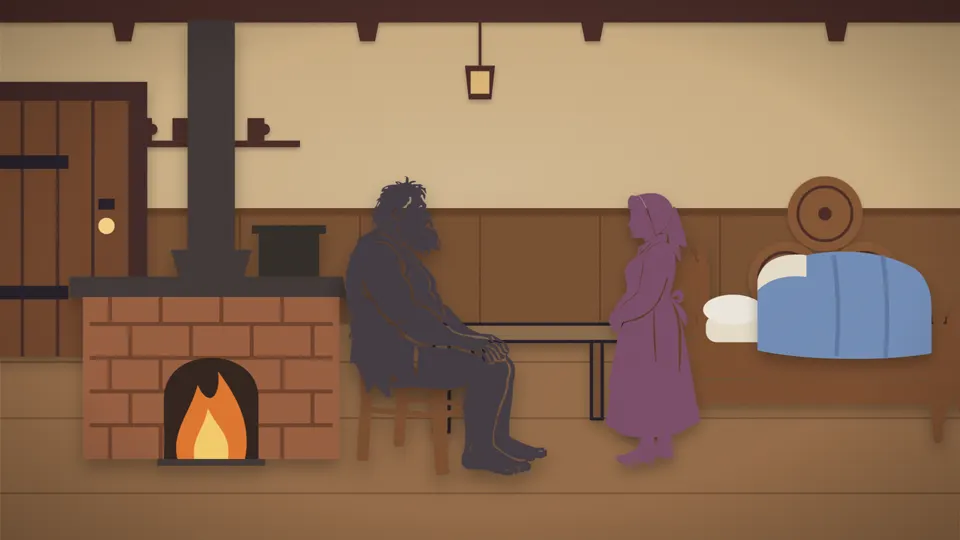
L’ogre sent à droite et à gauche.
The ogre sniffs to the right and to the left.
Il dit : « Je sens la chair fraîche ! »
He says: “I smell fresh meat!”
Sa femme dit : « C’est sûrement le veau de la cuisine. »
His wife says: “It is surely the calf in the kitchen.”
L’ogre dit : « Je sens la chair fraîche, je te dis ! »
The ogre says: “I smell fresh meat, I tell you!”
« Il y a quelque chose ici. »
“There is something here.”
Il regarde sa femme d’un air méchant.
He looks at his wife nastily.
Puis il se lève et il va droit au lit.
Then he gets up and goes straight to the bed.
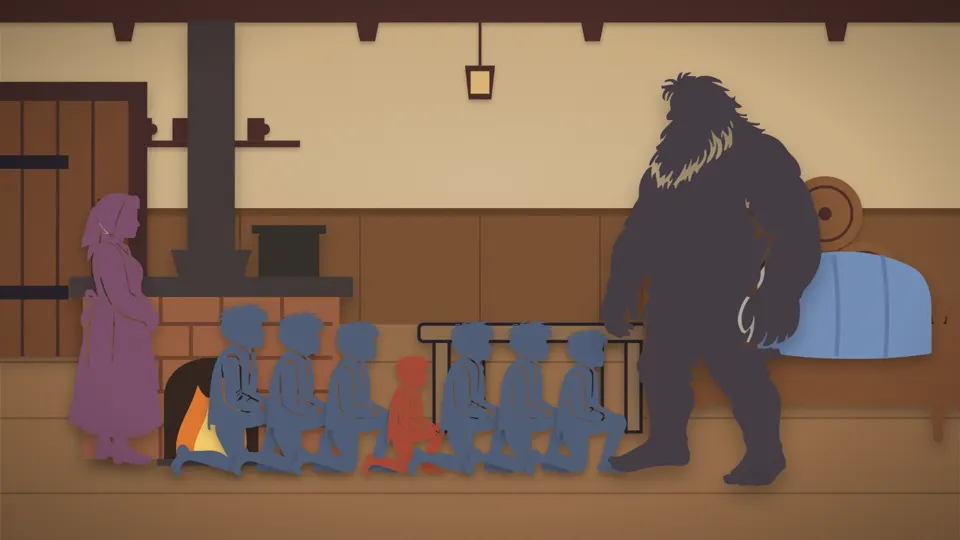
L’ogre crie : « Ah, tu veux me tromper, méchante femme ! »
The ogre shouts: “Ah, you want to trick me, wicked woman!”
« Voilà un bon repas pour mes trois amis ogres ! »
“Here is a good meal for my three ogre friends!”
« Ils viennent me voir bientôt. »
“They are coming to see me soon.”
Il tire les enfants de sous le lit, un par un.
He pulls the children out from under the bed, one by one.
Les pauvres enfants se mettent à genoux.
The poor children go down on their knees.
Ils demandent pardon.
They beg for mercy.
Mais c’est le plus cruel de tous les ogres.
But he is the cruellest of all the ogres.
Il dit à sa femme : « Avec une bonne sauce, ils vont être délicieux ! »
He says to his wife: “With a good sauce they will be delicious!”
Il prend un grand couteau.
He takes a big knife.
Il l’aiguise sur une longue pierre.
He sharpens it on a long stone.
Il attrape déjà un des enfants.
He is already grabbing one of the children.
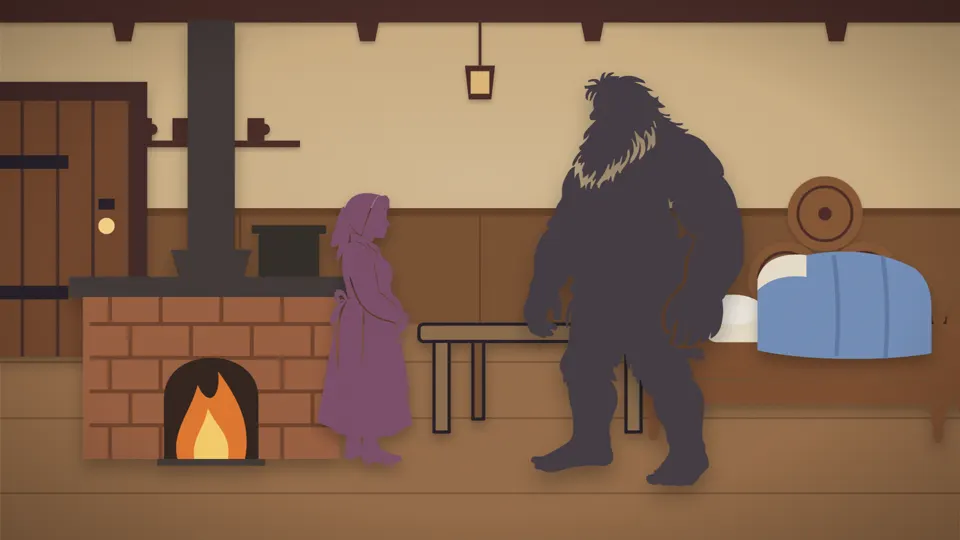
Mais sa femme dit : « Pourquoi maintenant, si tard le soir ? »
But his wife says: “Why now, so late in the evening?”
« Demain matin, vous avez tout le temps ! »
“Tomorrow morning you have all the time you want!”
L’ogre dit : « Tais-toi, femme ! »
The ogre says: “Be quiet, woman!”
Sa femme dit : « Mais vous avez encore tant de viande ! »
His wife says: “But you still have so much meat!”
« Il y a un veau, deux moutons et la moitié d’un cochon. »
“There is a calf, two sheep and half a pig.”
L’ogre dit : « Tu as raison. »
The ogre says: “You are right.”
« Donne-leur un bon dîner. »
“Give them a good supper.”
« Ils ne doivent pas maigrir. »
“They must not get thin.”
« Puis mets-les au lit. »
“Then put them to bed.”
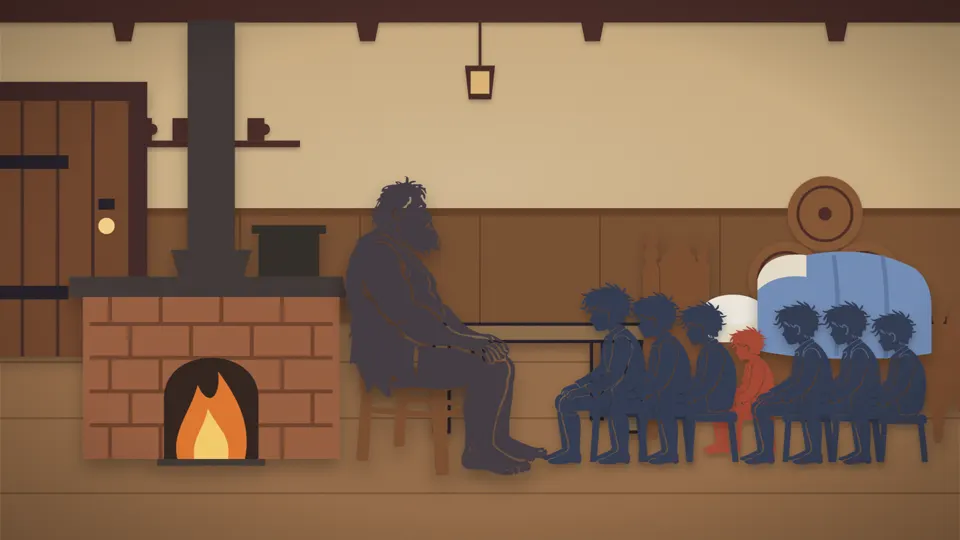
La femme est très contente.
The woman is very glad.
Elle donne un bon dîner aux enfants.
She gives the children a good supper.
Mais ils ont trop peur pour manger.
But they are too afraid to eat.
L’ogre, lui, boit beaucoup de vin.
The ogre, for his part, drinks a lot of wine.
Il est content : il a un bon repas pour ses amis.
He is pleased: he has a good meal for his friends.
Il boit douze verres de plus que d’habitude.
He drinks twelve glasses more than usual.
Sa tête tourne, et il va se coucher.
His head spins, and he goes to bed.
Hear it, don't just read it.
Every part is free to read. Members hear every part of every story, in every language, and learn from it.
- ✦ Tap any sentence to hear it again, with every word lit
- ✦ A quiz after each part
- ✦ Save words and review them with their audio
- ✦ Anki decks and offline downloads