Bricklebrit!
Part 4
Reading only. Members hear every sentence, save words and take the quiz.
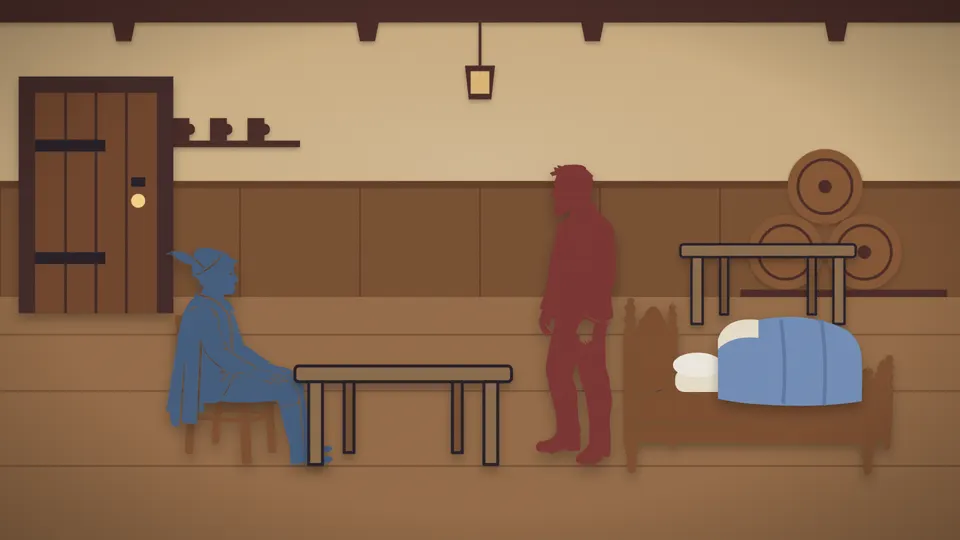
Der Müller führt seinen Esel zum Gasthaus.
The miller leads his donkey to the inn.
Der Wirt will den Esel nehmen.
The innkeeper wants to take the donkey.
Aber der Müller sagt: „Nein, danke.“
But the miller says: "No, thank you."
Er sagt: „Ich bringe meinen Esel selbst in den Stall.“
He says: "I'll take my donkey to the stable myself."
Der Wirt denkt: „Das ist komisch.“
The innkeeper thinks: "That's strange."
Dann setzt sich der Müller an einen Tisch.
Then the miller sits down at a table.
Er bestellt das beste Essen.
He orders the best food.
Er isst und trinkt viel.
He eats and drinks a lot.
Am Abend will der Wirt sein Geld.
In the evening the innkeeper wants his money.
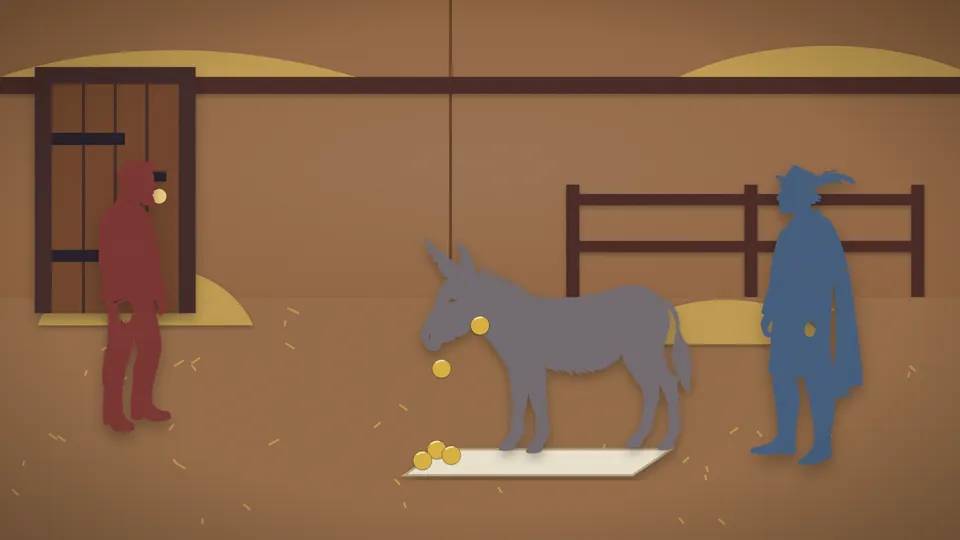
Der Müller sagt: „Warte, ich hole Geld.“
The miller says: "Wait, I'll get some money."
Er nimmt ein Tuch und geht in den Stall.
He takes a cloth and goes into the stable.
Der Wirt ist neugierig.
The innkeeper is curious.
Er geht leise hinterher.
He quietly follows.
Die Stalltür ist zu.
The stable door is shut.
Aber in der Tür ist ein kleines Loch.
But there is a small hole in the door.
Der Wirt schaut durch das Loch.
The innkeeper looks through the hole.
Der Müller legt das Tuch unter den Esel.
The miller puts the cloth under the donkey.
Er ruft: „Bricklebrit!“
He calls: "Bricklebrit!"
Da spuckt der Esel Gold, hinten und vorn.
Then the donkey spits gold, at the back and the front.
Die Goldstücke fallen auf das Tuch.
The gold coins fall onto the cloth.
Der Wirt macht große Augen.
The innkeeper's eyes grow wide.
Er denkt: „So einen Esel will ich haben!“
He thinks: "I want a donkey like that!"
Der Müller bezahlt mit einem Goldstück.
The miller pays with a gold coin.
Dann geht er schlafen.
Then he goes to sleep.
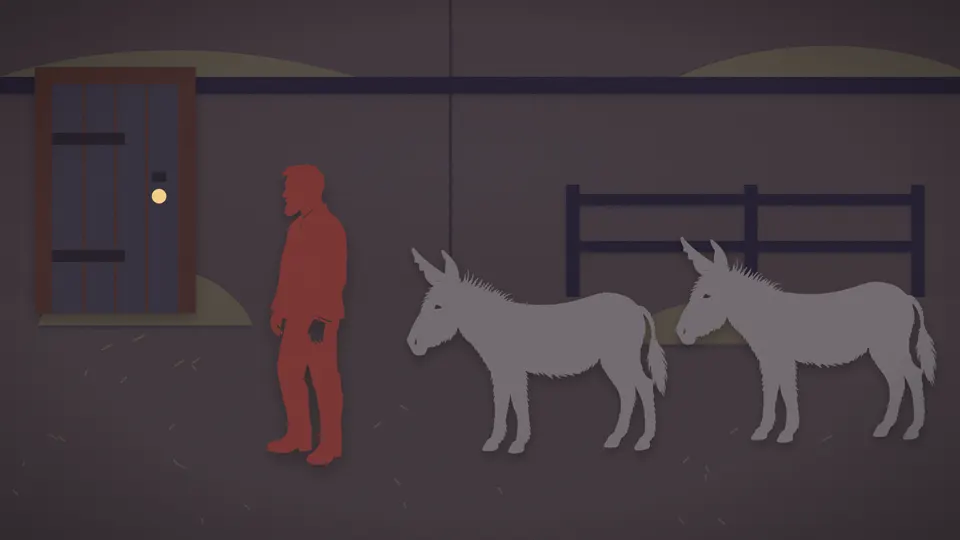
In der Nacht schleicht der Wirt in den Stall.
In the night the innkeeper creeps into the stable.
Er nimmt den Goldesel mit.
He takes the gold donkey away.
Er bindet einen anderen Esel an seinen Platz.
He ties another donkey in its place.
Der andere Esel sieht genauso aus.
The other donkey looks just the same.
Aber er spuckt kein Gold.
But it doesn't spit any gold.
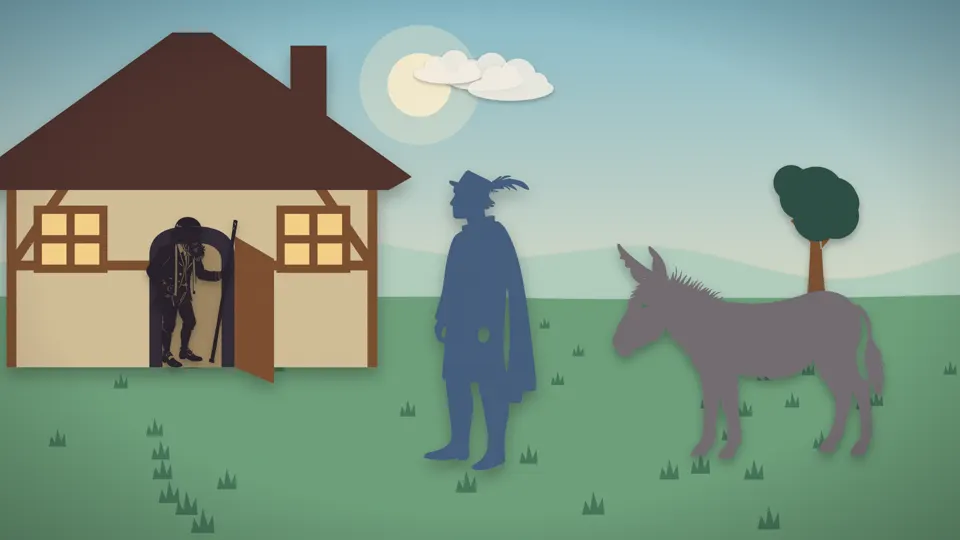
Am Morgen geht der Müller mit dem Esel los.
In the morning the miller sets off with the donkey.
Er weiß nicht: Es ist der falsche Esel.
He doesn't know it is the wrong donkey.
Zu Mittag ist er bei seinem Vater.
At midday he is at his father's.
Der Vater fragt: „Was hast du gelernt, mein Sohn?“
The father asks: "What have you learned, my son?"
Der Sohn sagt: „Lieber Vater, ich bin jetzt Müller.“
The son says: "Dear father, I am a miller now."
Der Vater fragt: „Und was bringst du mit?“
The father asks: "And what have you brought with you?"
Der Sohn sagt: „Ich bringe einen Esel.“
The son says: "I'm bringing a donkey."
Der Vater sagt: „Esel gibt es hier genug.“
The father says: "There are enough donkeys here."
Der Sohn sagt: „Aber das ist ein Goldesel!“
The son says: "But this is a gold donkey!"
Er sagt: „Ruf alle Verwandten! Ich mache alle reich.“
He says: "Call all the relatives! I'll make everyone rich."
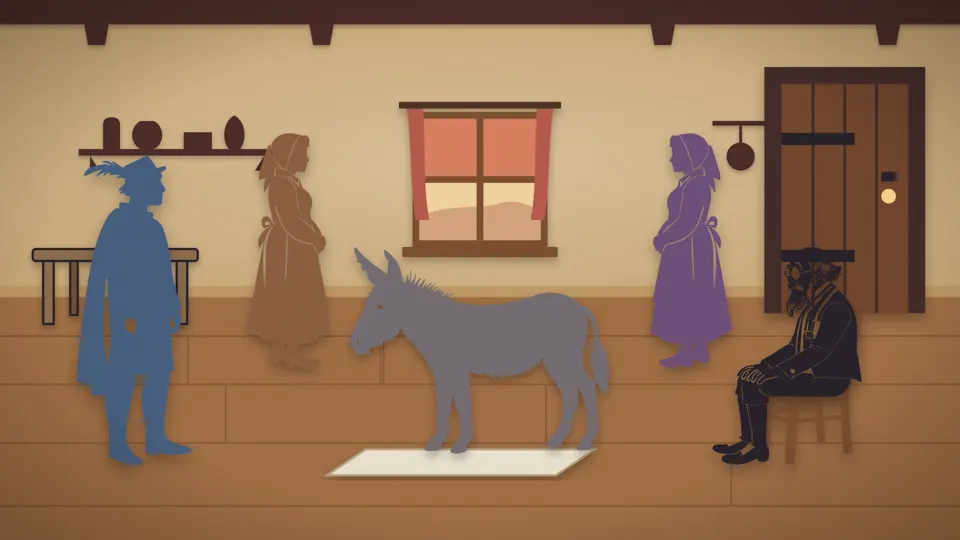
Bald sind alle Verwandten da.
Soon all the relatives are there.
Der Müller legt ein Tuch auf den Boden.
The miller lays a cloth on the floor.
Er holt den Esel in die Stube.
He brings the donkey into the room.
Er sagt: „Jetzt passt gut auf!“
He says: "Now watch carefully!"
Er ruft: „Bricklebrit!“
He calls: "Bricklebrit!"
Aber es fällt kein einziges Goldstück.
But not a single gold coin falls.
Da versteht der arme Müller: Das ist nicht sein Esel.
Then the poor miller understands: this is not his donkey.
Er schämt sich sehr.
He is very ashamed.
Die Verwandten lachen ihn aus.
The relatives laugh at him.
Sie gehen so arm nach Hause wie vorher.
They go home as poor as before.
Der Vater muss wieder Kleider nähen.
The father has to sew clothes again.
Der Müller arbeitet wieder in einer Mühle.
The miller works in a mill again.
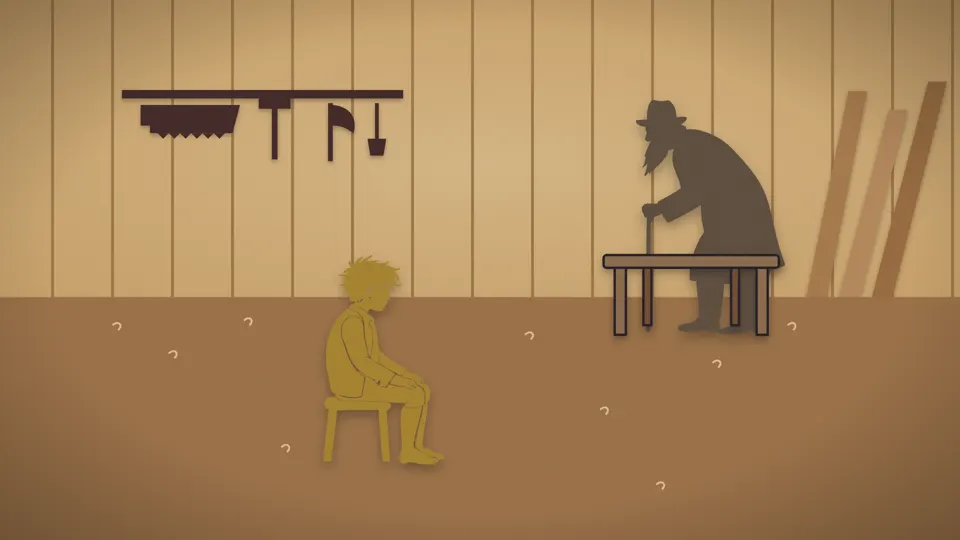
Der dritte Sohn lernt bei einem Drechsler.
The third son is learning with a turner.
Das ist ein schweres Handwerk.
That is a hard trade.
Darum lernt er am längsten.
That is why he learns the longest.
Eines Tages bekommt er einen Brief von seinen Brüdern.
One day he gets a letter from his brothers.
Darin steht alles über den bösen Wirt.
In it is everything about the wicked innkeeper.
Der Wirt hat ihnen ihre Schätze gestohlen.
The innkeeper stole their treasures from them.
Der junge Drechsler wird sehr wütend.
The young turner becomes very angry.
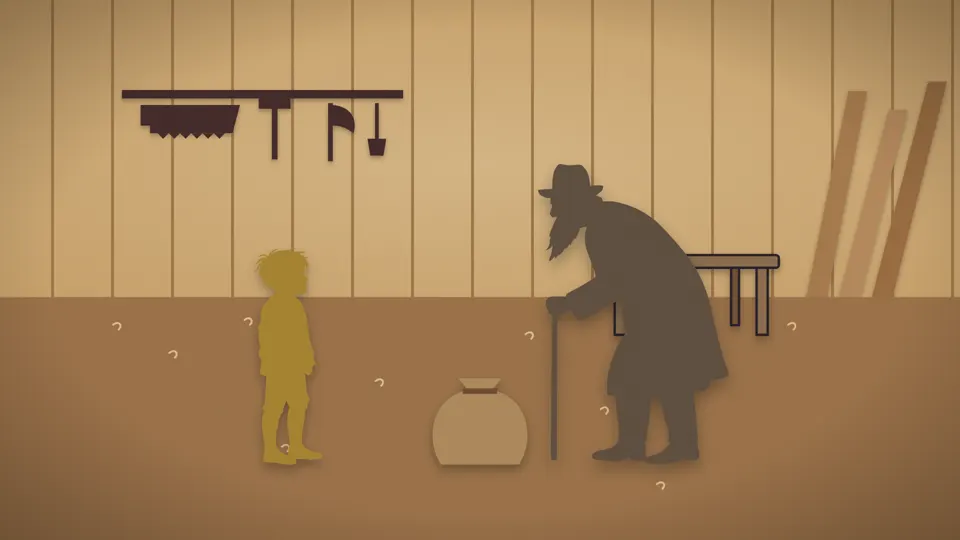
Endlich ist der Drechsler fertig.
At last the turner is finished.
Sein Meister schenkt ihm einen Sack.
His master gives him a sack.
Er sagt: „In dem Sack ist ein Knüppel.“
He says: "In the sack there is a cudgel."
Der Drechsler fragt: „Wofür ist der Knüppel gut?“
The turner asks: "What is the cudgel good for?"
Der Meister sagt: „Ist jemand böse zu dir, dann sag: Knüppel, aus dem Sack!“
The master says: "If someone is wicked to you, then say: Cudgel, out of the sack!"
Er sagt: „Dann springt der Knüppel heraus und schlägt ihn.“
He says: "Then the cudgel jumps out and beats him."
Er sagt: „Er schlägt so lange, bis du sagst: Knüppel, in den Sack!“
He says: "It beats until you say: Cudgel, into the sack!"
Der Drechsler dankt ihm und geht los.
The turner thanks him and sets off.
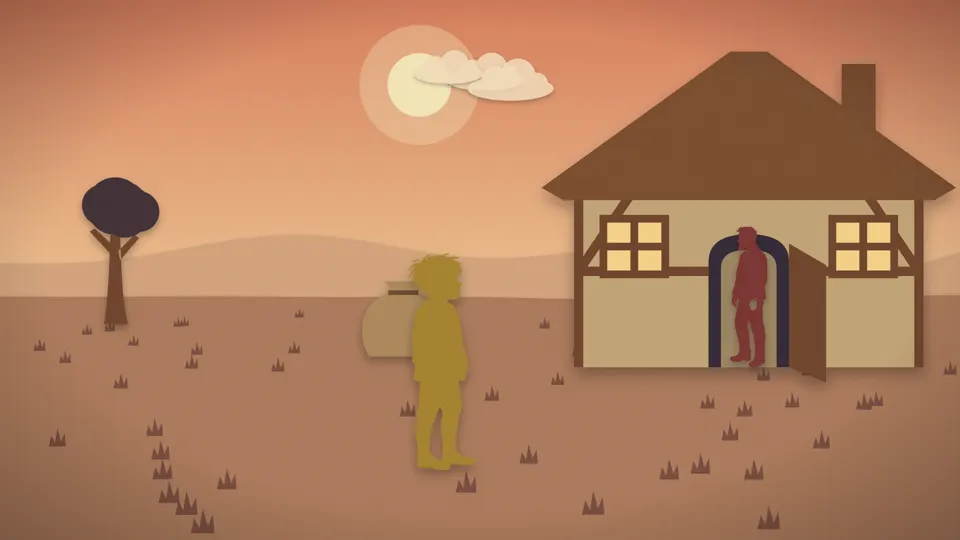
Am Abend kommt er zu einem Gasthaus.
In the evening he comes to an inn.
Es ist das Gasthaus von dem bösen Wirt.
It is the wicked innkeeper's inn.
Hier hat der Wirt seine Brüder betrogen.
Here the innkeeper cheated his brothers.
Hear it, don't just read it.
Every part is free to read. Members hear every part of every story, in every language, and learn from it.
- ✦ Tap any sentence to hear it again, with every word lit
- ✦ A quiz after each part
- ✦ Save words and review them with their audio
- ✦ Anki decks and offline downloads