Tischchen, deck dich!
Part 2 · Little table, set yourself!
Reading only. Members hear every sentence, save words and take the quiz.
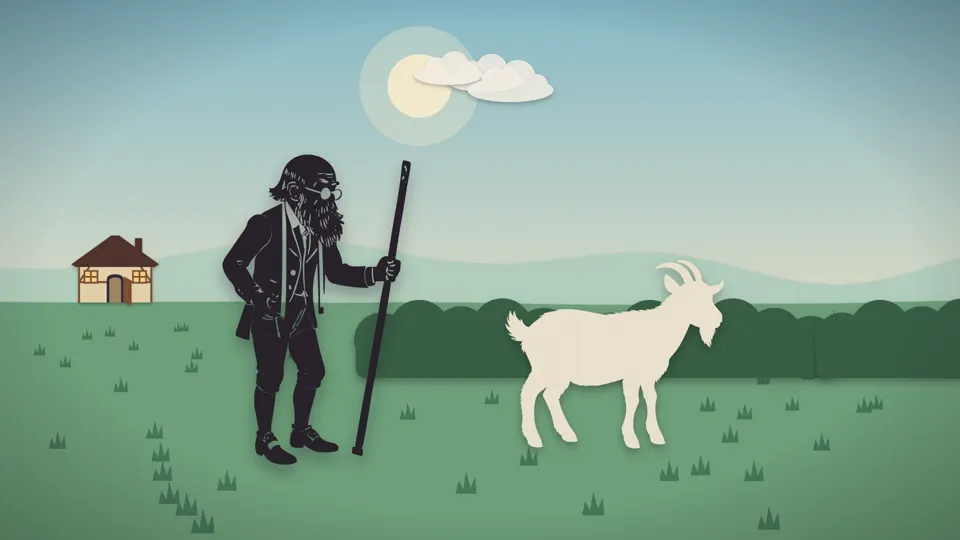
Am Morgen geht der Schneider in den Stall.
In the morning the tailor goes into the stable.
Er streichelt die Ziege.
He strokes the goat.
Er sagt: „Komm, mein liebes Tier.“
He says: "Come, my dear animal."
Er sagt: „Heute bringe ich dich selbst zur Wiese.“
He says: "Today I'll take you to the meadow myself."
Er bringt sie zu grünen Hecken.
He takes her to green hedges.
Dort gibt es alles, was Ziegen gern fressen.
There is everything goats like to eat there.
Er sagt: „Hier kannst du fressen, so viel du willst.“
He says: "Here you can eat as much as you like."
Die Ziege frisst bis zum Abend.
The goat eats until evening.
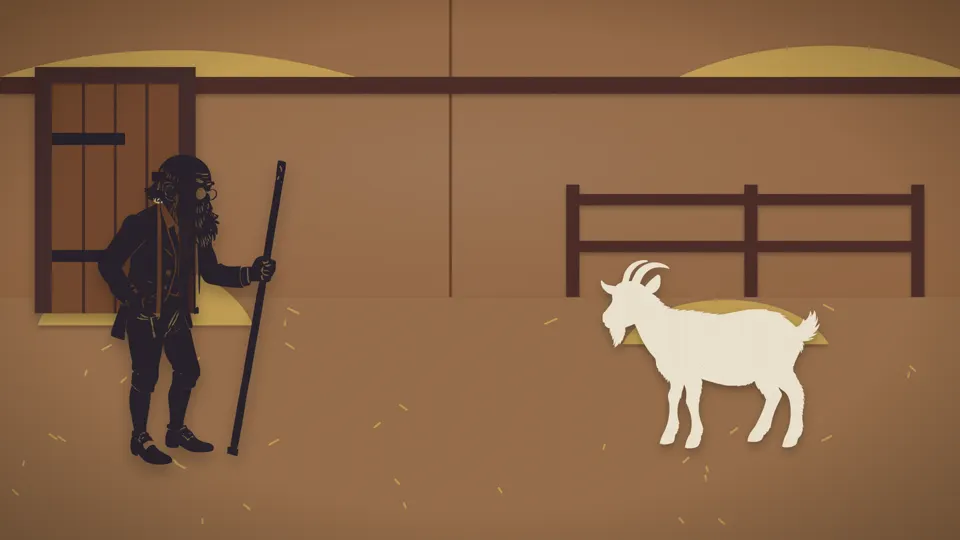
Dann fragt er: „Ziege, bist du satt?“
Then he asks: "Goat, are you full?"
Die Ziege sagt: „Ich bin so satt, ich mag kein Blatt.“
The goat says: "I am so full, I don't want a single leaf."
Sie ruft: „Meh! Meh!“
She calls: "Meh! Meh!"
Er bringt sie in den Stall und bindet sie fest.
He takes her into the stable and ties her up.
An der Tür dreht er sich noch einmal um.
At the door he turns round once more.
Er sagt: „Jetzt bist du endlich einmal satt!“
He says: "Now at last you are full!"
Aber die Ziege sagt: „Wie soll ich satt sein?“
But the goat says: "How could I be full?"
Sie sagt: „Ich springe nur über Gräben.“
She says: "I only jump over ditches."
Sie sagt: „Ich finde kein einziges Blatt.“
She says: "I can't find a single leaf."
Sie ruft: „Meh! Meh!“
She calls: "Meh! Meh!"
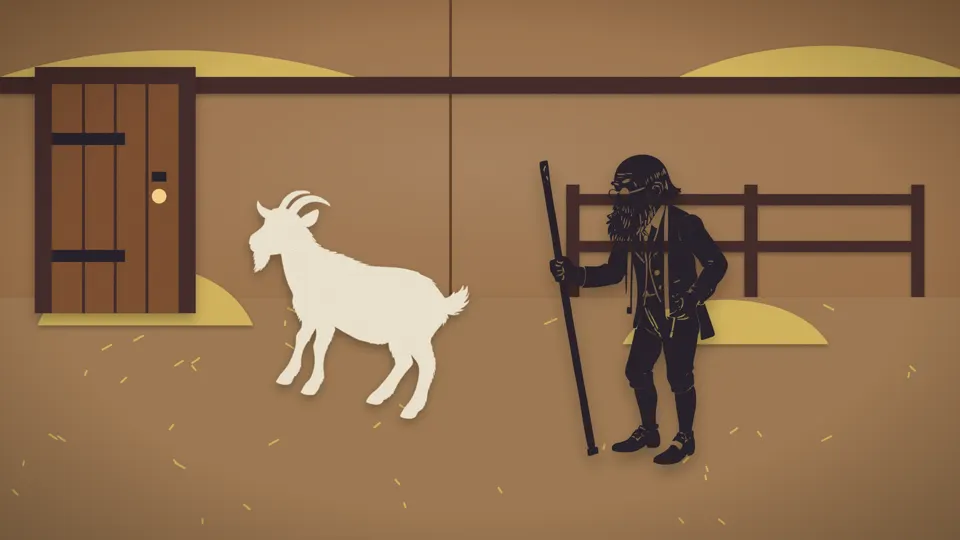
Da versteht der Schneider alles.
Then the tailor understands everything.
Die Ziege lügt, nicht seine Söhne.
The goat is lying, not his sons.
Und jetzt sind die Söhne fort.
And now his sons are gone.
Er ruft: „Du undankbares Tier!“
He shouts: "You ungrateful creature!"
Er holt sein Rasiermesser.
He fetches his razor.
Er seift den Kopf der Ziege ein.
He lathers the goat's head with soap.
Er rasiert ihr den ganzen Kopf.
He shaves her whole head.
Jetzt ist ihr Kopf glatt wie seine Hand.
Now her head is as smooth as his hand.
Dann holt er die Peitsche.
Then he fetches the whip.
Er schlägt die Ziege.
He beats the goat.
Mit großen Sprüngen läuft sie davon.
With great leaps she runs away.
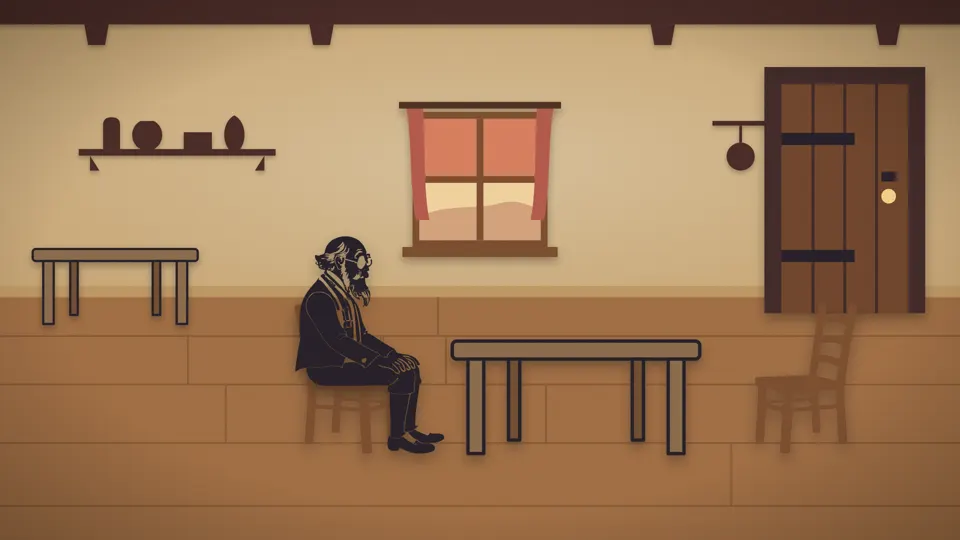
Jetzt sitzt der Schneider ganz allein im Haus.
Now the tailor sits all alone in the house.
Er ist sehr traurig.
He is very sad.
Er möchte seine Söhne wiederhaben.
He would like to have his sons back.
Aber niemand weiß, wo sie sind.
But nobody knows where they are.
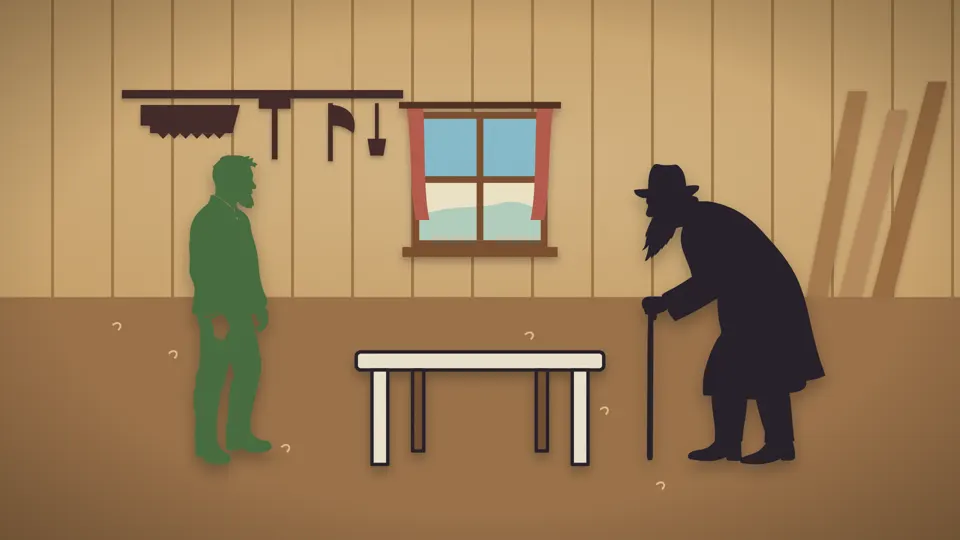
Der älteste Sohn lernt bei einem Schreiner.
The eldest son is learning with a carpenter.
Er arbeitet fleißig.
He works hard.
Am Ende schenkt ihm der Meister ein Tischchen.
At the end his master gives him a little table.
Es ist aus einfachem Holz.
It is made of plain wood.
Aber es kann etwas Besonderes.
But it can do something special.
Man stellt es hin und sagt: „Tischchen, deck dich!“
You set it down and say: "Little table, set yourself!"
Sofort liegt ein weißes Tuch darauf.
At once a white cloth lies on it.
Da stehen ein Teller, ein Messer und eine Gabel.
There stand a plate, a knife and a fork.
Da stehen Schüsseln mit Fleisch und Braten.
There stand bowls of boiled meat and roast.
Da steht ein großes Glas mit rotem Wein.
There stands a big glass of red wine.
Er denkt: „Jetzt habe ich immer genug.“
He thinks: "Now I'll always have enough."
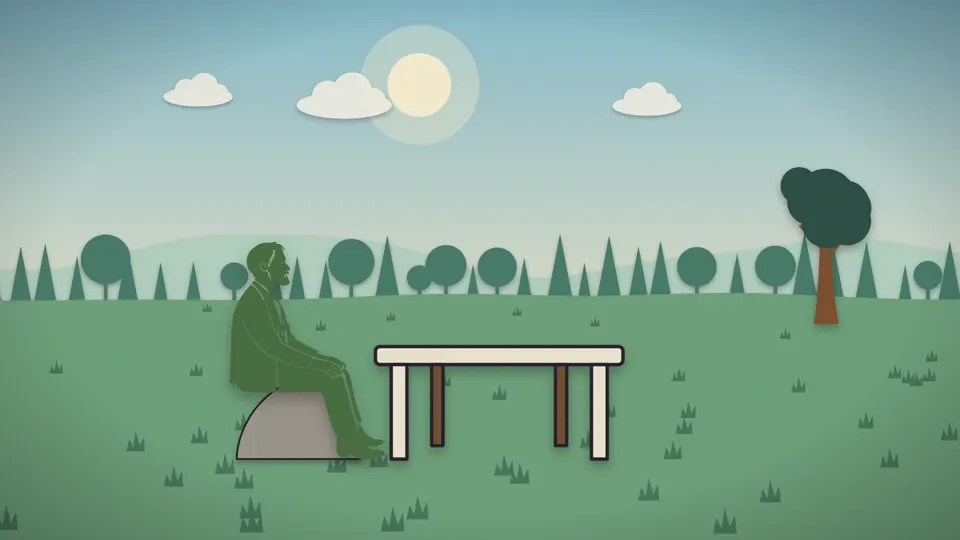
Froh wandert er durch die Welt.
Happily he wanders through the world.
Er braucht kein Gasthaus.
He doesn't need an inn.
Im Wald oder auf der Wiese stellt er das Tischchen hin.
In the forest or in a meadow he sets the little table down.
Er sagt: „Deck dich!“
He says: "Set yourself!"
Und alles ist da.
And everything is there.
Eines Tages denkt er an seinen Vater.
One day he thinks of his father.
Er denkt: „Der Vater ist nicht mehr böse.“
He thinks: "Father isn't angry any more."
Er denkt: „Über das Tischchen freut er sich.“
He thinks: "He'll be glad about the little table."
Er macht sich auf den Weg nach Hause.
He sets off for home.
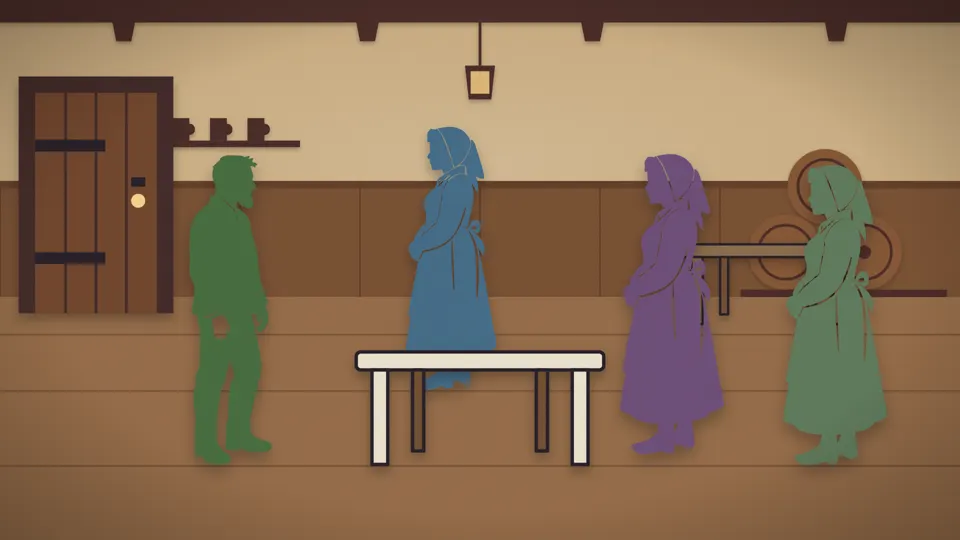
Am Abend kommt er in ein Gasthaus.
In the evening he comes to an inn.
Es ist voll mit Gästen.
It is full of guests.
Die Gäste sagen: „Setz dich zu uns und iss mit!“
The guests say: "Sit with us and eat with us!"
Sie sagen: „Sonst bekommst du nichts mehr.“
They say: "Otherwise you won't get anything now."
Der Schreiner sagt: „Nein, ihr sollt meine Gäste sein.“
The carpenter says: "No, you shall be my guests."
Die Leute lachen.
The people laugh.
Sie denken, er macht Spaß.
They think he is joking.
Er stellt sein Tischchen mitten in die Stube.
He puts his little table in the middle of the room.
Er sagt: „Tischchen, deck dich!“
He says: "Little table, set yourself!"
Sofort ist der Tisch voll mit gutem Essen.
At once the table is full of good food.
Es riecht wunderbar.
It smells wonderful.
Der Schreiner sagt: „Esst, liebe Freunde!“
The carpenter says: "Eat, dear friends!"
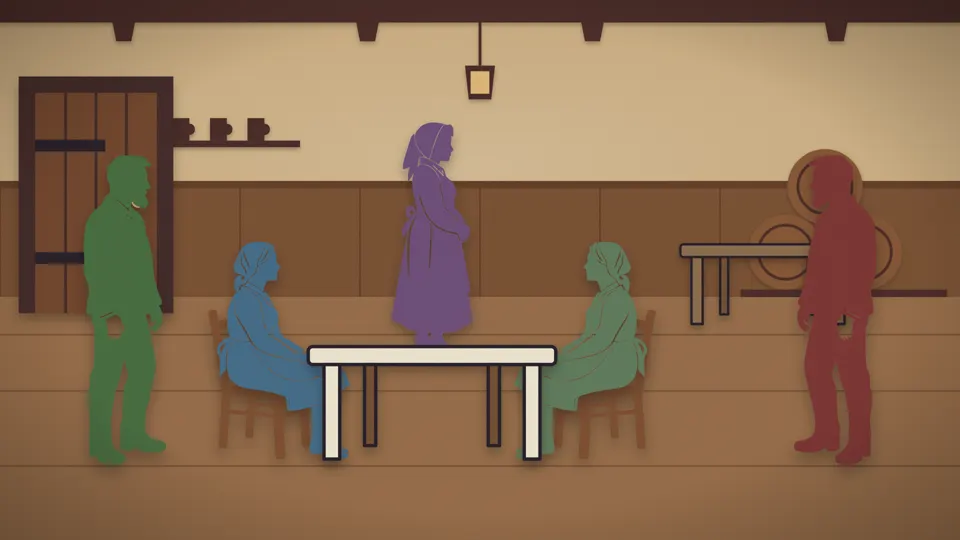
Die Gäste nehmen ihre Messer und essen.
The guests take their knives and eat.
Bald ist eine Schüssel leer.
Soon a bowl is empty.
Sofort steht eine volle Schüssel an ihrem Platz.
At once a full bowl stands in its place.
Der Wirt steht in einer Ecke und schaut zu.
The innkeeper stands in a corner and watches.
Er sagt kein Wort.
He doesn't say a word.
Aber er denkt: „So einen Koch kann ich gut brauchen.“
But he thinks: "I could really use a cook like that."
Hear it, don't just read it.
Every part is free to read. Members hear every part of every story, in every language, and learn from it.
- ✦ Tap any sentence to hear it again, with every word lit
- ✦ A quiz after each part
- ✦ Save words and review them with their audio
- ✦ Anki decks and offline downloads