Das kleine Haus
Part 2 · The Little House
Free to watch and read. Members tap any sentence to hear it again, save words and take the quiz.
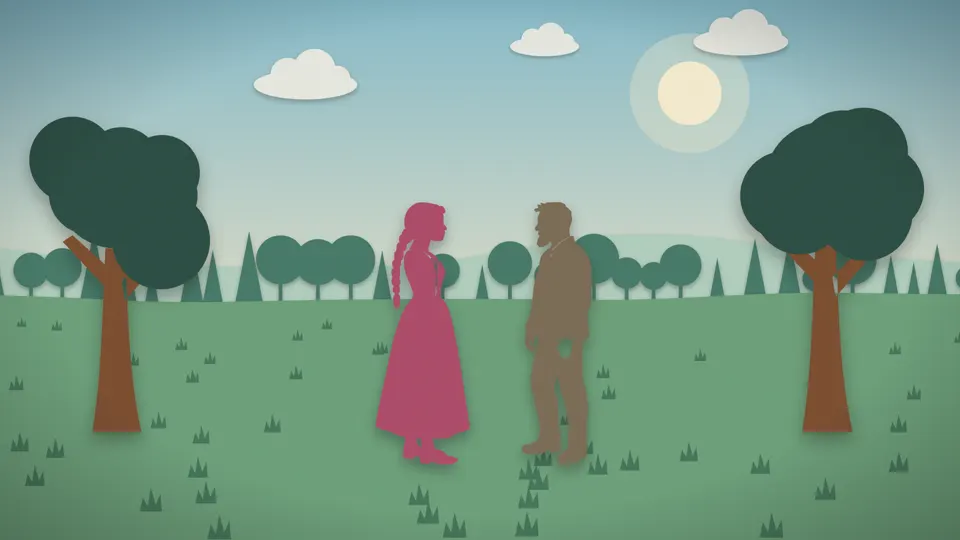
Der Spielmann und die Prinzessin gehen lange.
The minstrel and the princess walk for a long time.
Sie kommen in einen großen Wald.
They come into a big forest.
Die Prinzessin fragt: „Wem gehört der schöne Wald?“
The princess asks: "Who does the beautiful forest belong to?"
Der Spielmann sagt: „Der gehört dem König Drosselbart.“
The minstrel says: "It belongs to King Thrushbeard."
Er sagt auch: „Du wolltest ihn nicht. Sonst wäre er jetzt dein.“
He also says: "You did not want him. Otherwise it would be yours now."
Die Prinzessin seufzt: „Ach, hätte ich nur den König Drosselbart genommen!“
The princess sighs: "Oh, if only I had taken King Thrushbeard!"
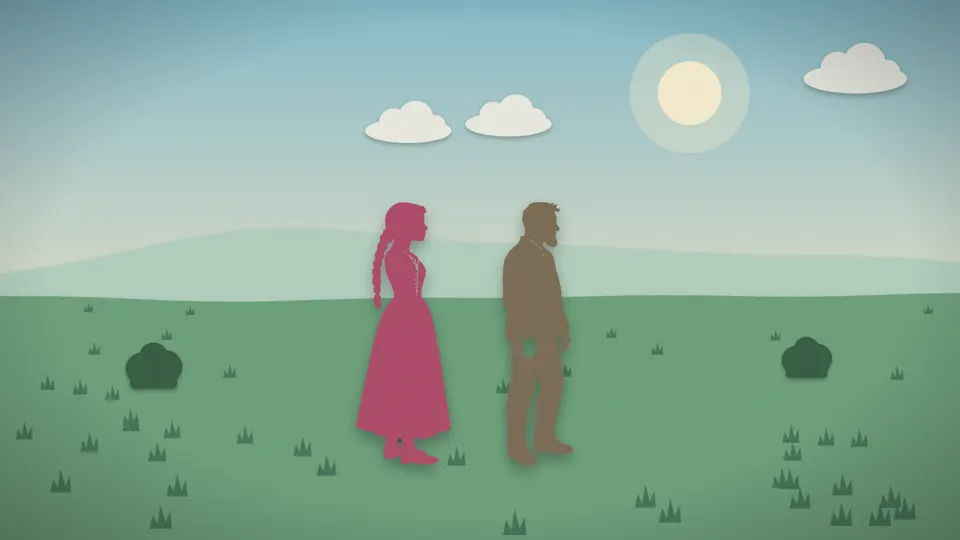
Dann kommen sie über eine grüne Wiese.
Then they cross a green meadow.
Die Prinzessin fragt: „Wem gehört die schöne grüne Wiese?“
The princess asks: "Who does the beautiful green meadow belong to?"
Der Spielmann sagt: „Sie gehört dem König Drosselbart.“
The minstrel says: "It belongs to King Thrushbeard."
Er sagt auch: „Du wolltest ihn nicht. Sonst wäre sie jetzt dein.“
He also says: "You did not want him. Otherwise it would be yours now."
Die Prinzessin seufzt: „Ach, hätte ich nur den König Drosselbart genommen!“
The princess sighs: "Oh, if only I had taken King Thrushbeard!"
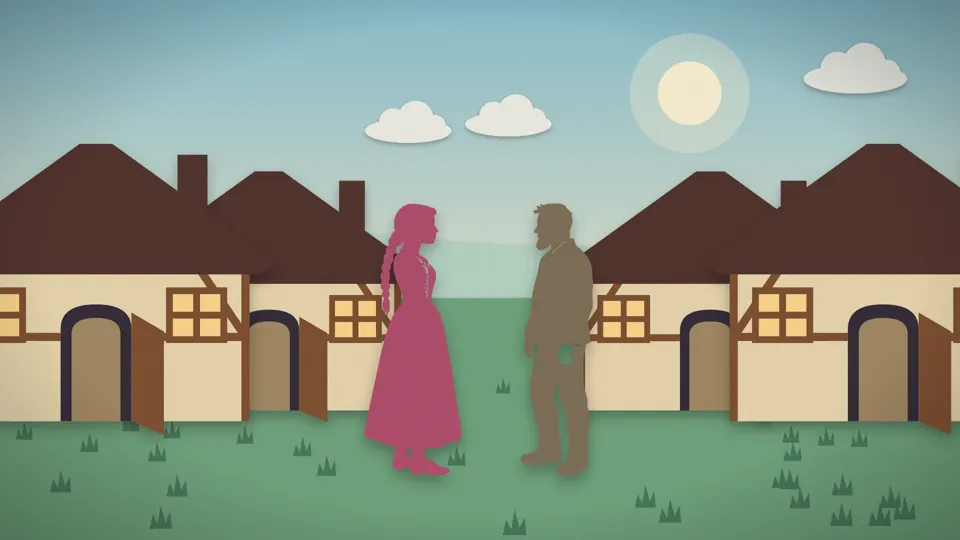
Dann kommen sie in eine große Stadt.
Then they come into a big city.
Die Prinzessin fragt: „Wem gehört die schöne große Stadt?“
The princess asks: "Who does the beautiful big city belong to?"
Der Spielmann sagt: „Sie gehört dem König Drosselbart.“
The minstrel says: "It belongs to King Thrushbeard."
Er sagt auch: „Du wolltest ihn nicht. Sonst wäre sie jetzt dein.“
He also says: "You did not want him. Otherwise it would be yours now."
Die Prinzessin seufzt: „Ach, hätte ich nur den König Drosselbart genommen!“
The princess sighs: "Oh, if only I had taken King Thrushbeard!"
Der Spielmann sagt: „Das gefällt mir gar nicht.“
The minstrel says: "I do not like that at all."
Er sagt: „Du wünschst dir immer einen anderen Mann.“
He says: "You always wish for another man."
Er fragt: „Bin ich dir nicht gut genug?“
He asks: "Am I not good enough for you?"
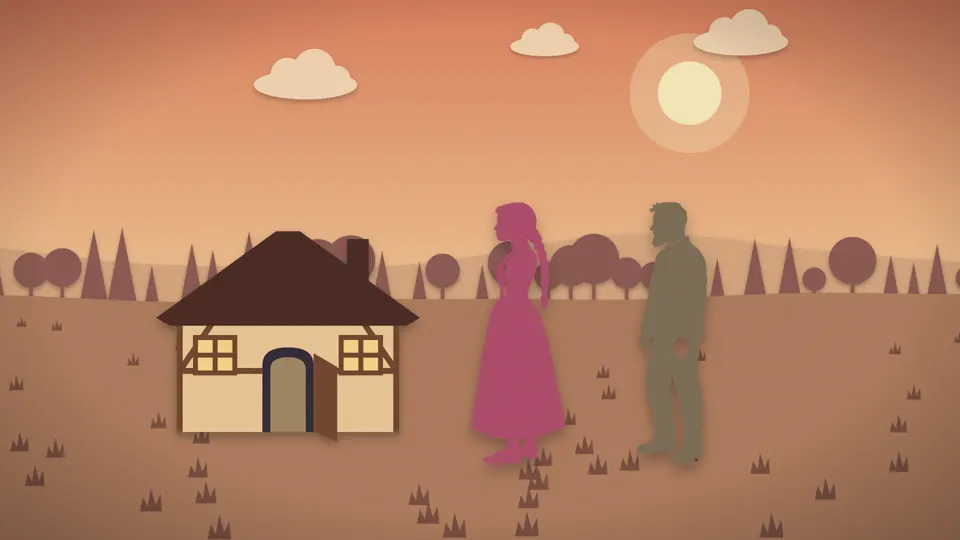
Endlich kommen sie zu einem ganz kleinen Haus.
At last they come to a very small house.
Die Prinzessin sagt: „Ach, das Haus ist so klein!“
The princess says: "Oh, the house is so small!"
Sie fragt: „Wem gehört dieses arme kleine Haus?“
She asks: "Who does this poor little house belong to?"
Der Spielmann sagt: „Das ist mein Haus und dein Haus.“
The minstrel says: "That is my house and your house."
Er sagt auch: „Hier wohnen wir zusammen.“
He also says: "Here we live together."
Die Tür ist sehr niedrig.
The door is very low.
Die Prinzessin muss sich bücken.
The princess has to bend down.
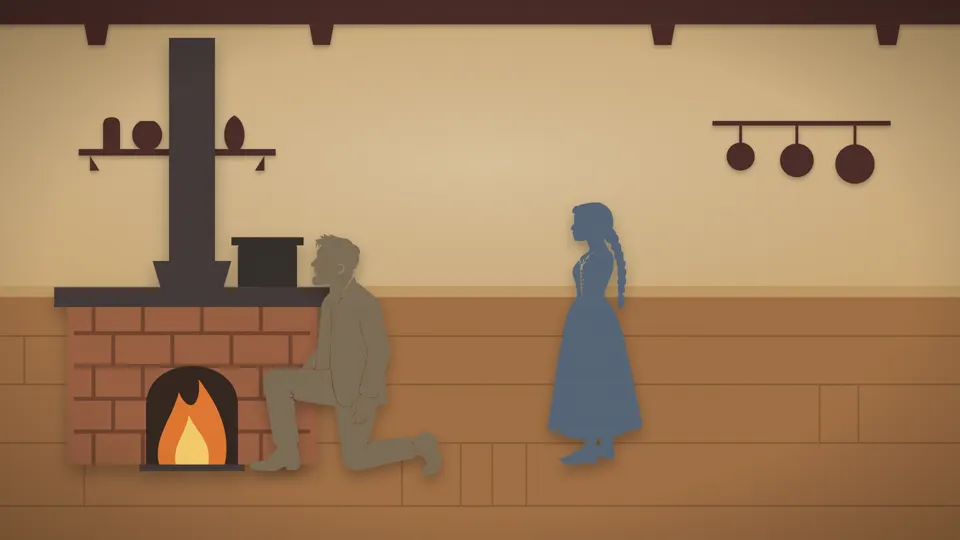
Die Prinzessin fragt: „Wo sind die Diener?“
The princess asks: "Where are the servants?"
Der Spielmann lacht: „Diener? Hier gibt es keine Diener!“
The minstrel laughs: "Servants? There are no servants here!"
Er sagt: „Du musst alles selbst machen.“
He says: "You have to do everything yourself."
Er sagt auch: „Mach Feuer und koch das Essen.“
He also says: "Make a fire and cook the food."
Aber die Prinzessin kann kein Feuer machen.
But the princess cannot make a fire.
Sie kann auch nicht kochen.
She cannot cook either.
Der Spielmann muss ihr helfen.
The minstrel has to help her.
Am Abend essen sie nur wenig.
In the evening they eat only a little.
Am Morgen weckt er sie sehr früh.
In the morning he wakes her very early.
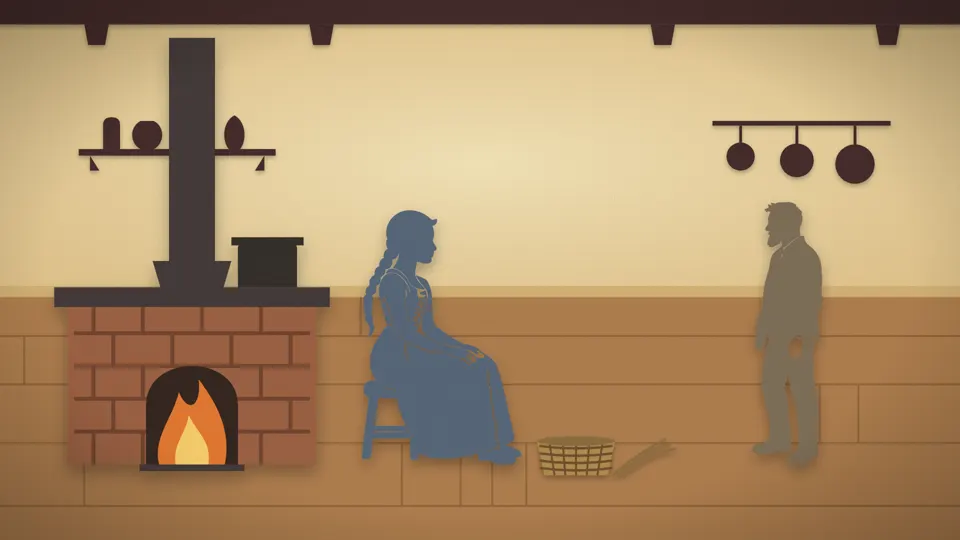
So leben sie ein paar Tage.
So they live for a few days.
Bald ist kein Essen mehr im Haus.
Soon there is no more food in the house.
Der Mann sagt: „Frau, so geht das nicht weiter.“
The man says: "Wife, it cannot go on like this."
Er sagt: „Wir müssen Geld verdienen.“
He says: "We have to earn money."
Er sagt auch: „Du sollst Körbe flechten.“
He also says: "You shall weave baskets."
Er bringt harte Weiden nach Hause.
He brings hard willow twigs home.
Die Prinzessin fängt an zu flechten.
The princess starts to weave.
Aber die harten Weiden stechen in ihre zarten Hände.
But the hard willow twigs prick her delicate hands.
Ihre Hände tun weh.
Her hands hurt.
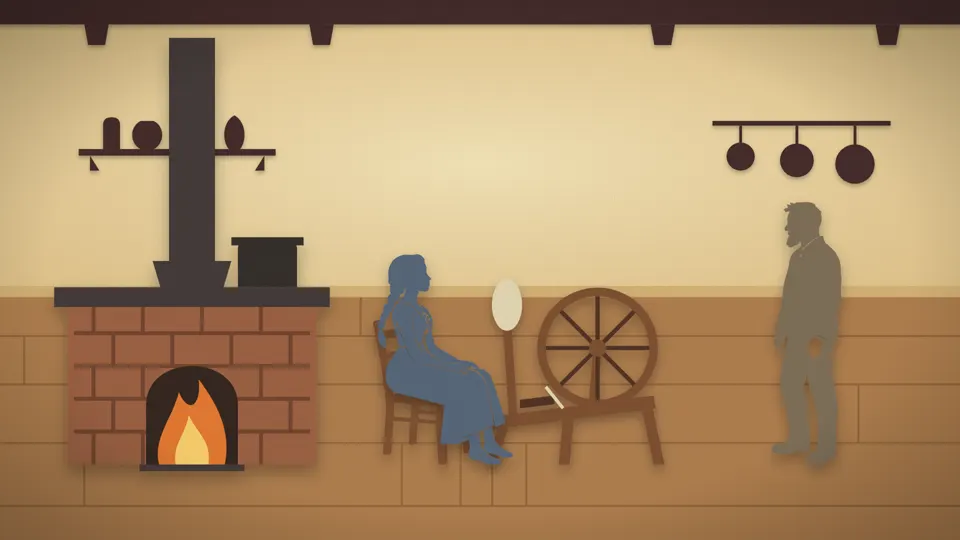
Der Mann sagt: „Das geht nicht. Spinn lieber!“
The man says: "That does not work. Spin instead!"
Die Prinzessin setzt sich an das Spinnrad.
The princess sits down at the spinning wheel.
Aber der harte Faden schneidet in ihre weichen Finger.
But the hard thread cuts into her soft fingers.
Bald läuft Blut an ihren Fingern herunter.
Soon blood runs down her fingers.
Der Mann sagt: „Siehst du? Du kannst gar nichts!“
The man says: "You see? You cannot do anything!"
Er sagt: „Mit dir habe ich kein Glück.“
He says: "I have no luck with you."
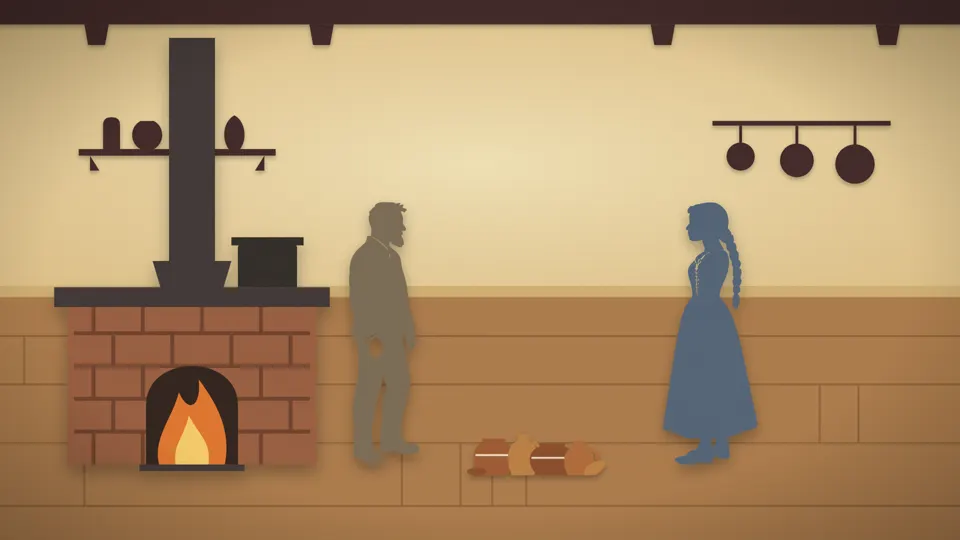
Dann sagt der Mann: „Ich kaufe Töpfe und Krüge.“
Then the man says: "I will buy pots and jugs."
Er sagt: „Du verkaufst sie auf dem Markt.“
He says: "You will sell them at the market."
Die Prinzessin denkt: „Oh nein!“
The princess thinks: "Oh no!"
Sie denkt: „Vielleicht kommen Leute aus dem Reich von meinem Vater.“
She thinks: "Perhaps people from my father's kingdom will come."
Sie denkt: „Dann lachen sie über mich!“
She thinks: "Then they will laugh at me!"
Aber sie muss es tun, sonst haben sie nichts zu essen.
But she has to do it, otherwise they have nothing to eat.
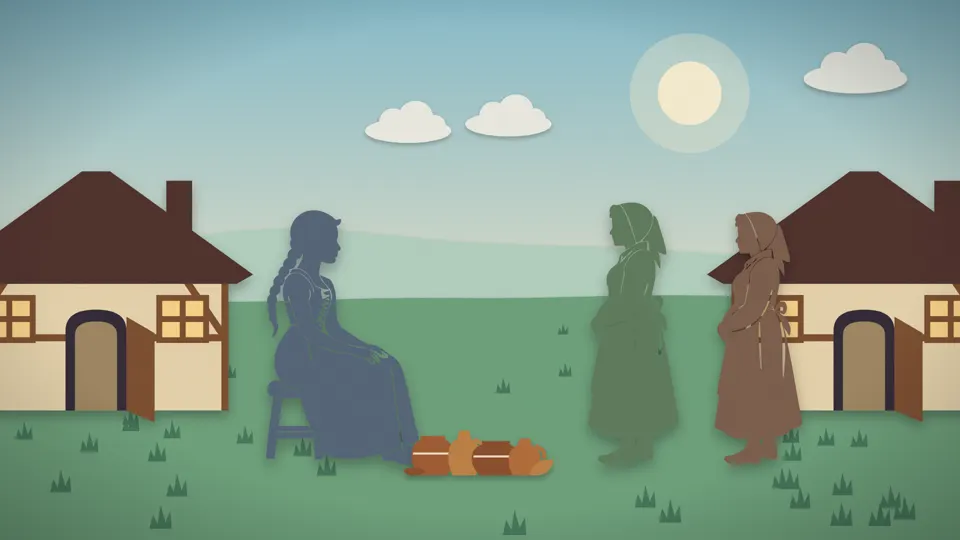
Am ersten Tag geht alles gut.
On the first day everything goes well.
Die Frau ist schön, und die Leute kaufen gern bei ihr.
The woman is beautiful, and people like to buy from her.
Sie bezahlen, was sie will.
They pay what she asks.
Manche geben ihr Geld und lassen die Töpfe da.
Some give her money and leave the pots there.
Bald ist das Geld weg, und der Mann kauft neue Töpfe.
Soon the money is gone, and the man buys new pots.
Die Frau setzt sich an eine Ecke vom Markt.
The woman sits down at a corner of the market.
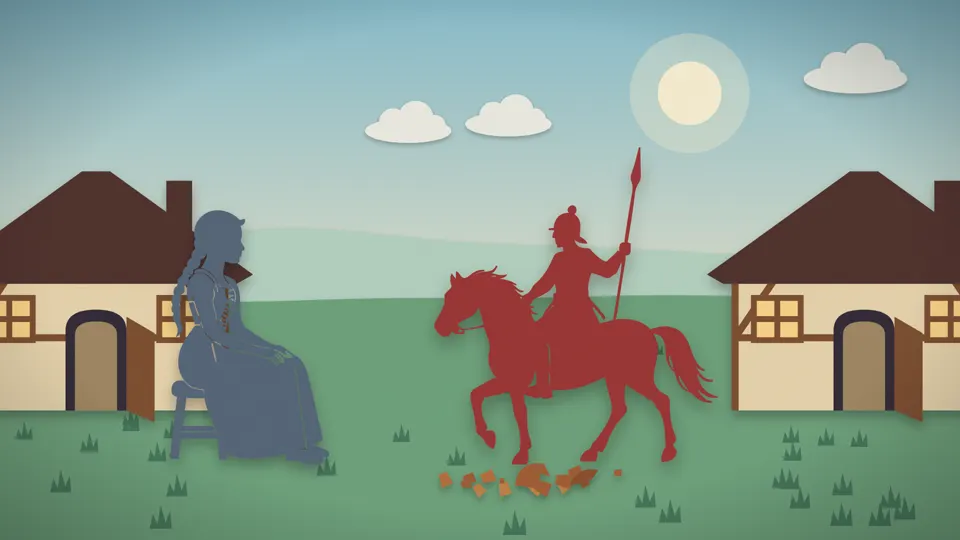
Plötzlich kommt ein Husar auf einem Pferd.
Suddenly a hussar comes on a horse.
Er ist betrunken und reitet sehr schnell.
He is drunk and rides very fast.
Er reitet mitten in die Töpfe hinein.
He rides right into the pots.
Alle Töpfe gehen in tausend Stücke.
All the pots break into a thousand pieces.
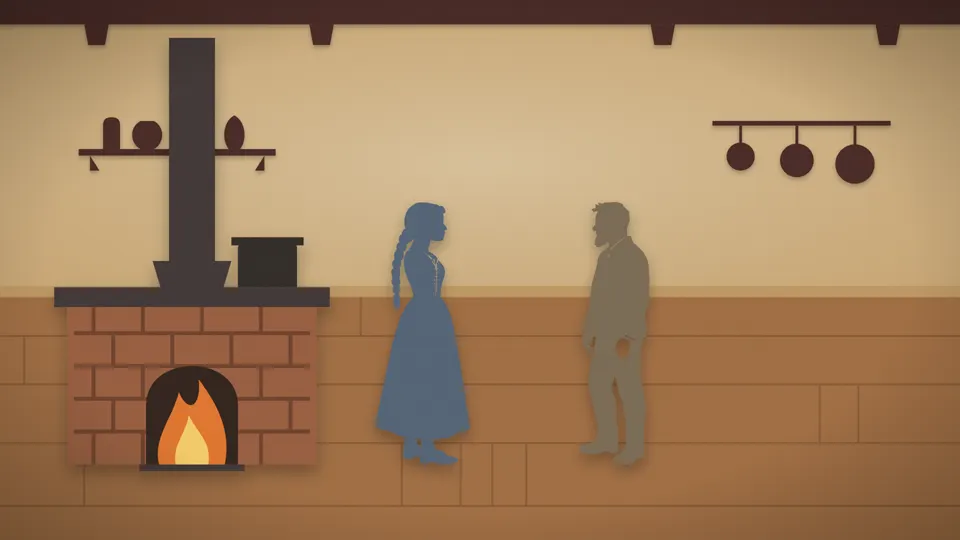
Die Frau weint.
The woman cries.
Sie ruft: „Ach, was sagt jetzt mein Mann?“
She cries out: "Oh, what will my husband say now?"
Sie läuft nach Hause und erzählt alles.
She runs home and tells him everything.
Der Mann sagt: „Wer setzt sich mit Töpfen an die Ecke?“
The man says: "Who sits at the corner with pots?"
Er sagt: „Hör auf zu weinen.“
He says: "Stop crying."
Er sagt auch: „Ich war im Schloss von unserem König.“
He also says: "I was at our king's castle."
Er sagt: „Sie brauchen eine Küchenmagd. Das bist jetzt du.“
He says: "They need a kitchen maid. That is you now."
Er sagt: „Dafür bekommst du dein Essen.“
He says: "For that you get your food."
Don't just watch it. Learn from it.
Every story is free to watch on YouTube and free to read here. A pass adds the learning tools on every part of every story, in every language.
- ✦ Tap any sentence to hear it again, with every word lit
- ✦ A quiz after each part
- ✦ Save words and review them with their audio
- ✦ Anki decks and offline downloads