Eine Kuh, ein Schwein, eine Gans
Part 2 · A Cow, a Pig, a Goose
Free to watch and read. Members tap any sentence to hear it again, save words and take the quiz.
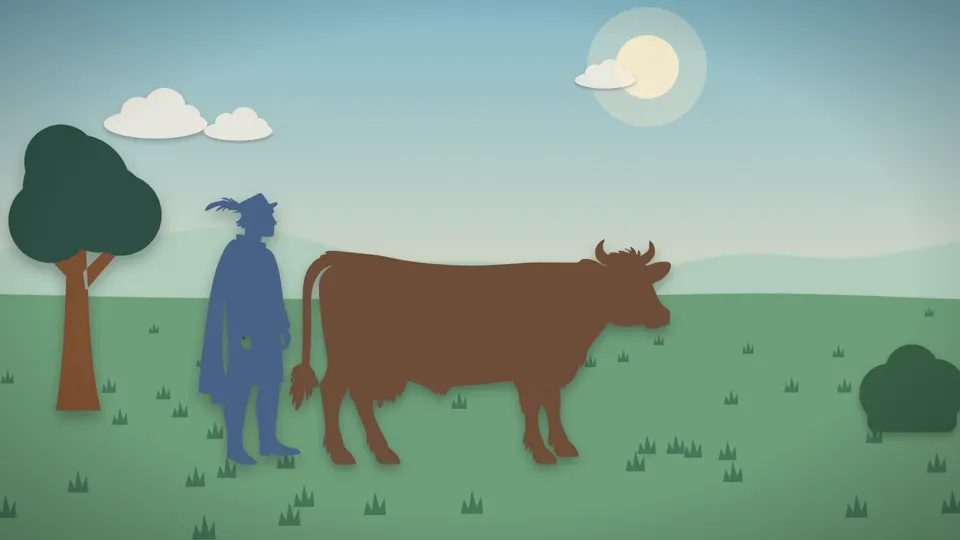
Hans trieb seine Kuh ruhig vor sich her.
Hans drove his cow calmly in front of him.
Er dachte an den guten Tausch.
He thought about the good trade.
„Habe ich ein Stück Brot, kann ich Butter und Käse dazu essen.“
"If I have a piece of bread, I can eat butter and cheese with it."
„Habe ich Durst, melke ich meine Kuh und trinke Milch.“
"If I am thirsty, I milk my cow and drink milk."
„Was will ich mehr?“
"What more do I want?"
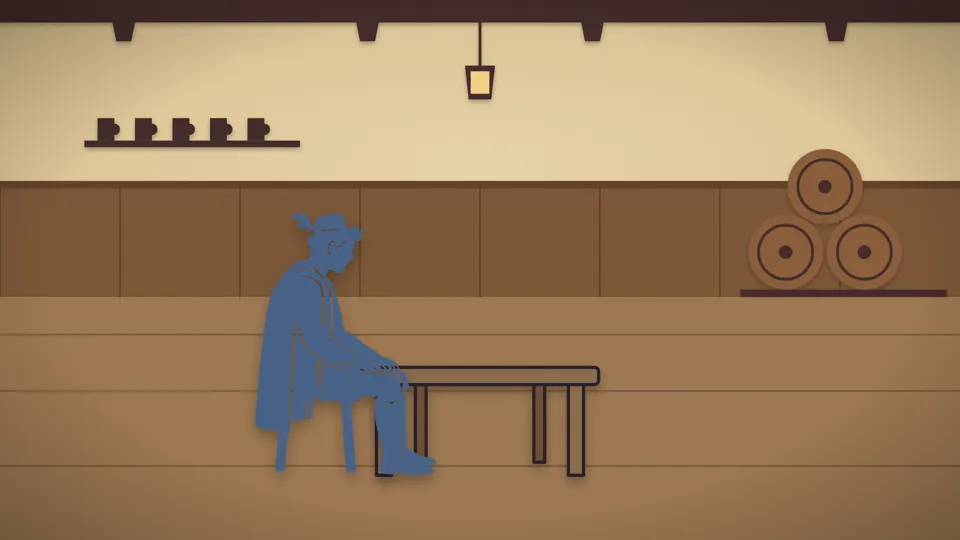
Bald kam er zu einem Gasthaus.
Soon he came to an inn.
Dort machte er Halt.
There he stopped.
Vor Freude aß er alles, was er hatte: sein Mittagessen und sein Abendbrot.
For joy he ate everything he had: his lunch and his supper.
Für sein letztes Geld bekam er ein halbes Glas Bier.
For his last money he got half a glass of beer.
Dann trieb er seine Kuh weiter, zum Dorf seiner Mutter.
Then he drove his cow on, towards his mother's village.
Am Mittag wurde es sehr heiß.
At midday it became very hot.
Hans ging über eine Heide.
Hans walked across a heath.
Er hatte so großen Durst, dass ihm die Zunge am Gaumen klebte.
He was so thirsty that his tongue stuck to the roof of his mouth.
„Jetzt melke ich meine Kuh!“, dachte er.
"Now I will milk my cow!" he thought.
Er band sie an einen dürren Baum.
He tied her to a dry tree.
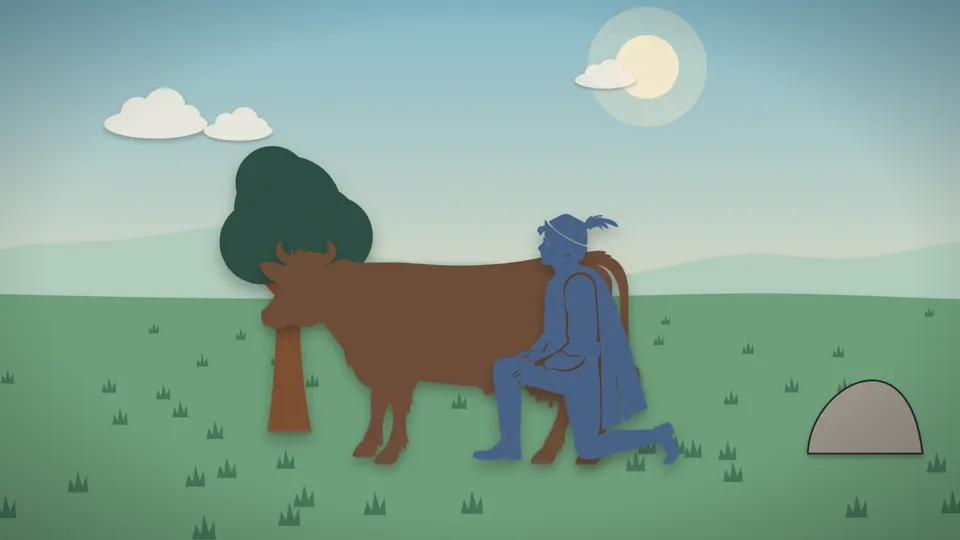
Er hatte keinen Eimer, darum hielt er seine Mütze darunter.
He had no bucket, so he held his cap under her.
Aber es kam kein Tropfen Milch.
But not a drop of milk came.
Hans stellte sich sehr ungeschickt an.
Hans was very clumsy about it.
Da wurde die Kuh ungeduldig.
Then the cow grew impatient.
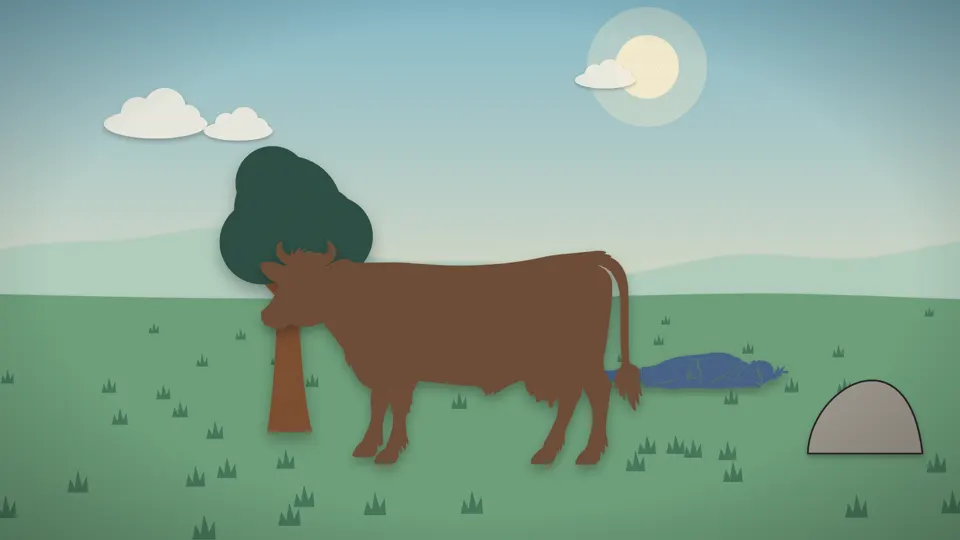
Sie trat ihm mit dem Hinterbein an den Kopf.
She kicked him on the head with her hind leg.
Hans fiel um.
Hans fell over.
Eine Zeit lang wusste er nicht mehr, wo er war.
For a while he no longer knew where he was.
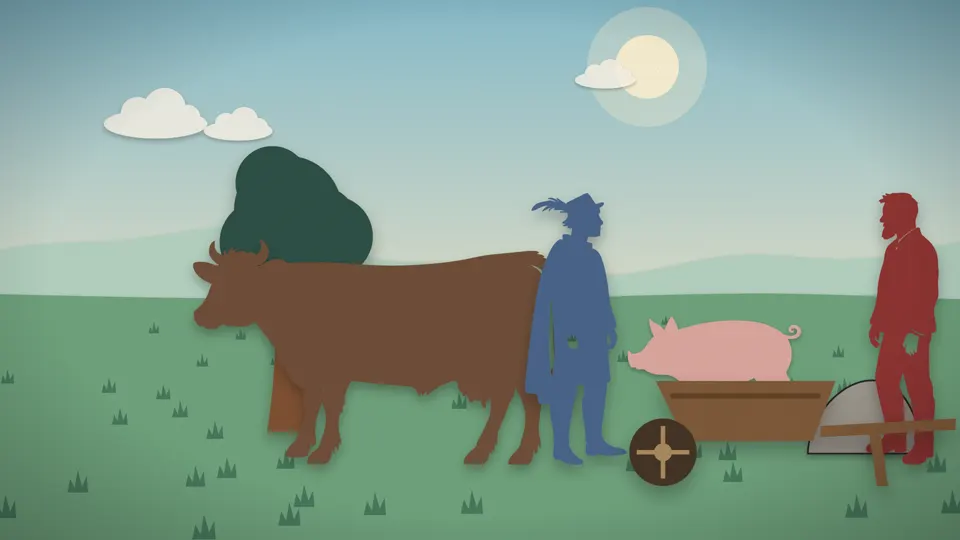
Zum Glück kam gerade ein Metzger vorbei.
Luckily a butcher came by just then.
Auf seiner Schubkarre lag ein junges Schwein.
On his wheelbarrow was a young pig.
„Was ist denn hier passiert?“, rief er und half Hans auf.
"Whatever happened here?" he cried, and helped Hans up.
Hans erzählte alles.
Hans told him everything.
Der Metzger gab ihm seine Flasche und sagte: „Trink und erhol dich!“
The butcher gave him his bottle and said: "Drink and recover!"
„Die Kuh gibt keine Milch mehr. Sie ist alt.“
"The cow gives no more milk. She is old."
„Sie taugt nur noch zum Ziehen oder zum Schlachten.“
"She is only good for pulling or for slaughter now."
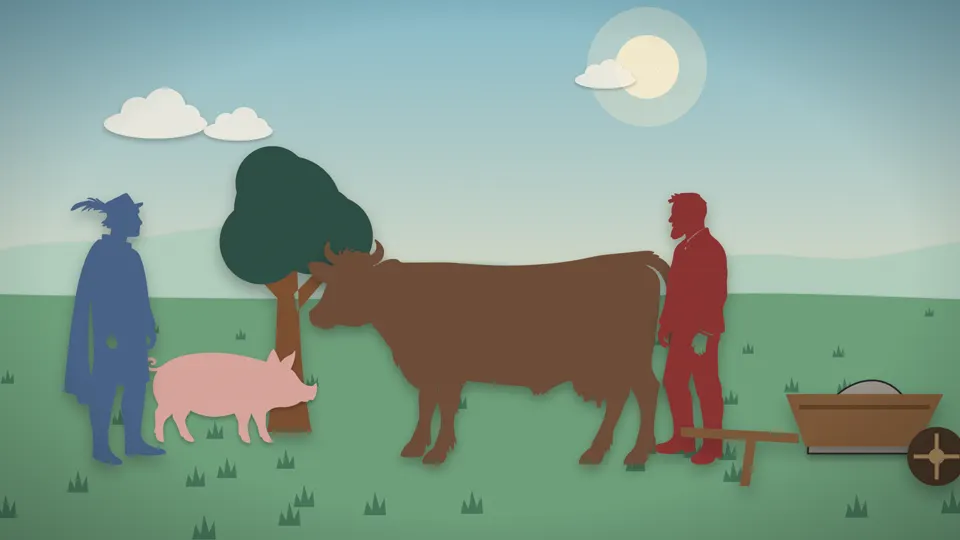
„Ach“, sagte Hans, „wer hätte das gedacht!“
"Oh," said Hans, "who would have thought it!"
„Aber Kuhfleisch mag ich nicht so sehr.“
"But I don't much like beef."
„So ein junges Schwein, das schmeckt besser! Und dann die Würste!“
"A young pig like that tastes better! And then the sausages!"
„Hör zu, Hans“, sagte der Metzger.
"Listen, Hans," said the butcher.
„Dir zuliebe tausche ich. Ich gebe dir das Schwein für die Kuh.“
"For your sake I'll swap. I'll give you the pig for the cow."
„Danke für deine Freundschaft!“, sagte Hans.
"Thank you for your friendship!" said Hans.
Er gab dem Metzger die Kuh und nahm das Schwein an einem Strick.
He gave the butcher the cow and took the pig on a rope.
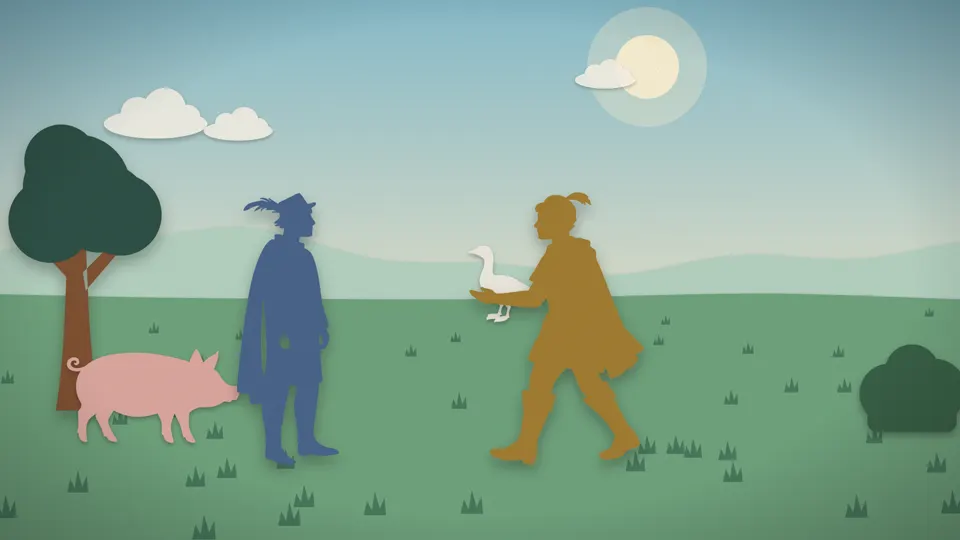
Hans ging weiter und war sehr zufrieden.
Hans walked on and was very content.
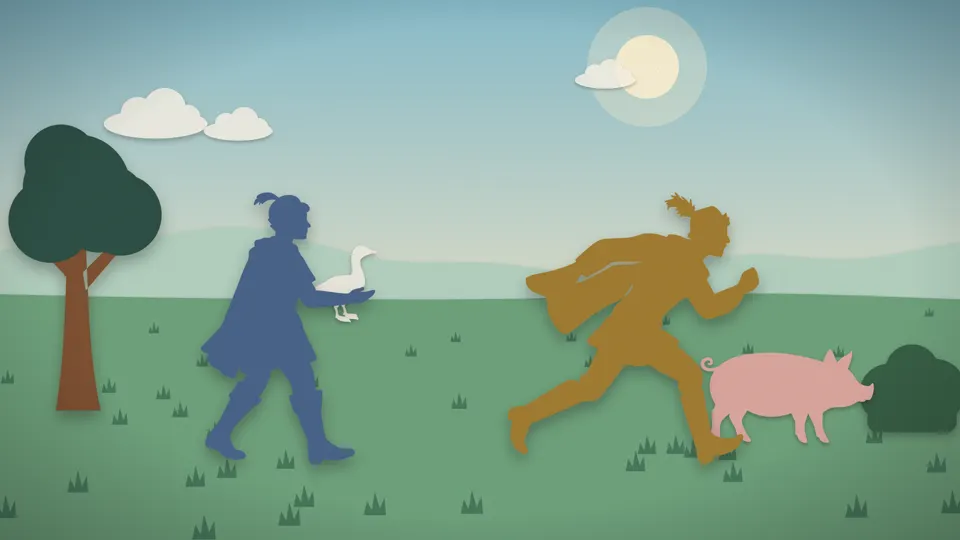
Bald kam ein junger Bursche zu ihm.
Soon a young lad joined him.
Er trug eine schöne weiße Gans unter dem Arm.
He carried a fine white goose under his arm.
Hans erzählte von seinem Glück und seinen guten Tauschen.
Hans told him about his luck and his good trades.
Der Bursche brachte die Gans zu einem Tauffest.
The lad was taking the goose to a christening feast.
„Heb sie mal! Wie schwer sie ist!“
"Just lift her! How heavy she is!"
„Sie wurde acht Wochen lang gemästet.“
"She was fattened for eight weeks."
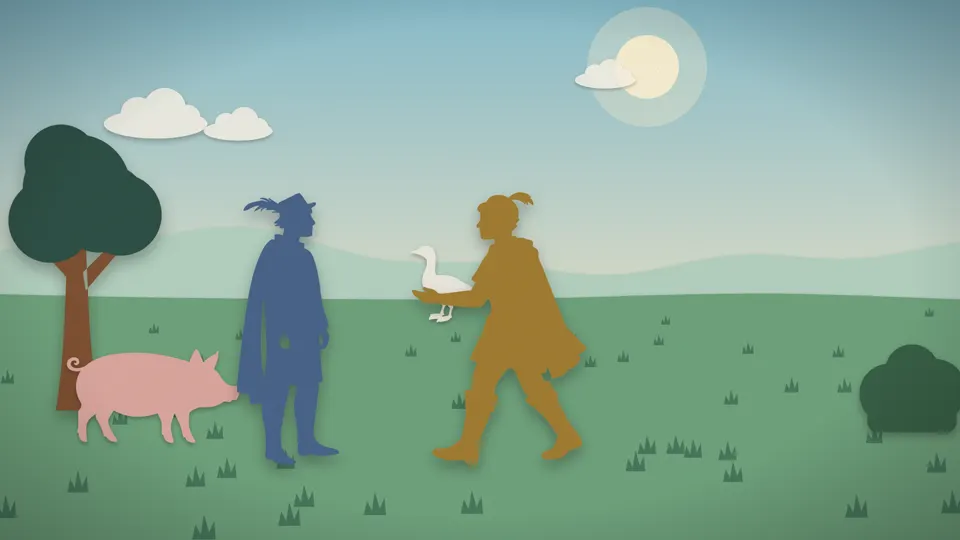
Der Bursche sah sich nach allen Seiten um.
The lad looked around on all sides.
Dann schüttelte er den Kopf.
Then he shook his head.
„Mit deinem Schwein stimmt etwas nicht.“
"Something is not right with your pig."
„Im Dorf hinter mir wurde dem Bürgermeister ein Schwein gestohlen.“
"In the village behind me, a pig was stolen from the mayor."
„Ich fürchte, du hast es an deinem Strick!“
"I'm afraid you have it on your rope!"
„Die Leute suchen es schon.“
"People are already looking for it."
„Wenn sie dich damit finden, kommst du ins Gefängnis.“
"If they find you with it, you will go to prison."
Hans bekam Angst.
Hans grew afraid.
„Ach, hilf mir!“, sagte er.
"Oh, help me!" he said.
„Nimm mein Schwein und gib mir deine Gans!“
"Take my pig and give me your goose!"
„Damit gehe ich ein Risiko ein“, antwortete der Bursche.
"I'm taking a risk with that," answered the lad.
„Aber du sollst nicht ins Unglück kommen.“
"But you shall not come to harm."
Er nahm den Strick und trieb das Schwein schnell auf einen Seitenweg.
He took the rope and drove the pig quickly down a side path.
Hans ging froh mit der Gans unter dem Arm nach Hause.
Hans went happily on towards home with the goose under his arm.
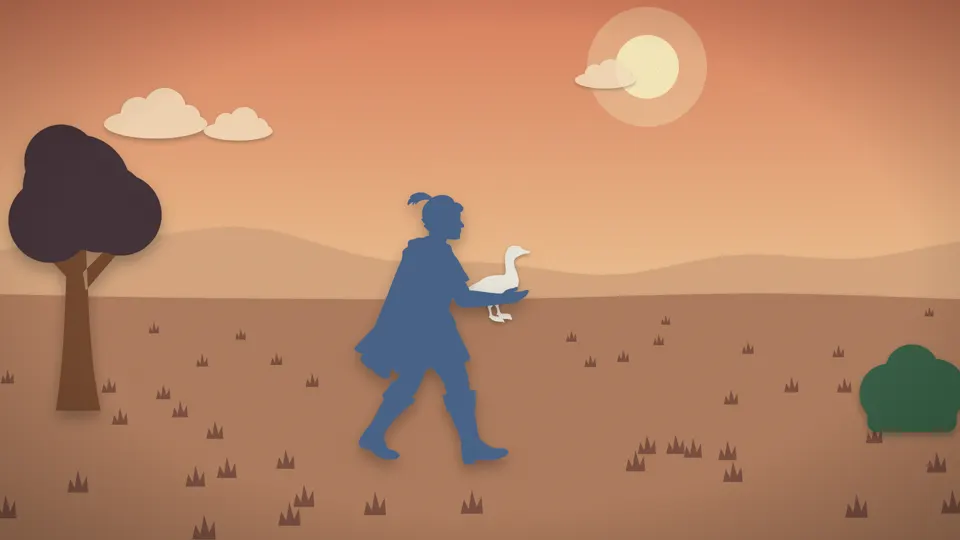
„Ich habe gut getauscht“, sagte Hans zu sich selbst.
"I have traded well," said Hans to himself.
„Zuerst gibt es einen guten Braten.“
"First there will be a good roast."
„Dann viel Gänsefett für mein Brot.“
"Then lots of goose fat for my bread."
„Und die schönen weißen Federn kommen in mein Kopfkissen.“
"And the lovely white feathers go into my pillow."
„Wie wird sich meine Mutter freuen!“
"How happy my mother will be!"
Don't just watch it. Learn from it.
Every story is free to watch on YouTube and free to read here. A pass adds the learning tools on every part of every story, in every language.
- ✦ Tap any sentence to hear it again, with every word lit
- ✦ A quiz after each part
- ✦ Save words and review them with their audio
- ✦ Anki decks and offline downloads