Der schwere Stein
Part 3 · The Heavy Stone
Free to watch and read. Members tap any sentence to hear it again, save words and take the quiz.
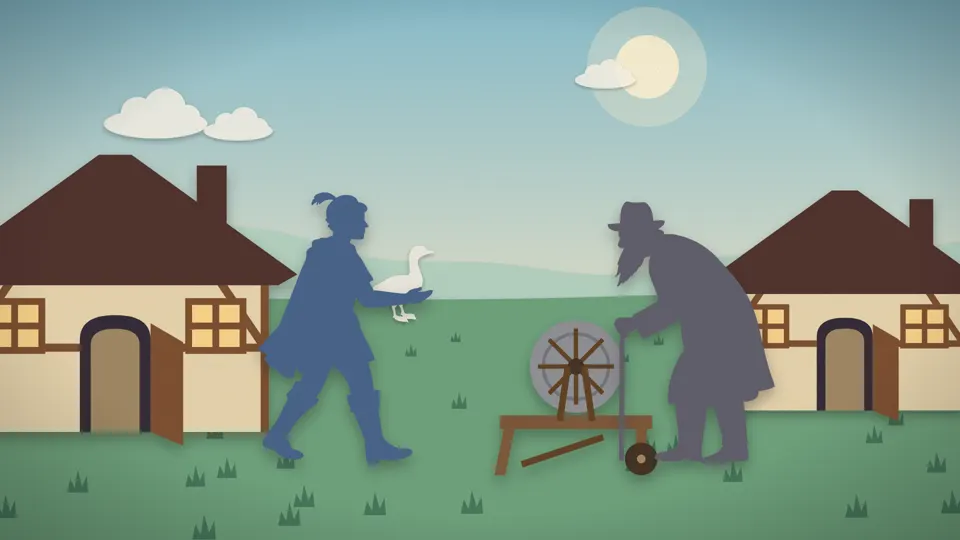
Hans kam durch das letzte Dorf.
Hans came through the last village.
Da stand ein Scherenschleifer mit seinem Karren.
There stood a scissors grinder with his cart.
Sein Rad surrte, und er sang dazu:
His wheel whirred, and he sang along:
„Ich schleife die Schere und drehe geschwind und hänge mein Mäntelchen nach dem Wind.“
"I grind the scissors and turn fast, and hang my little coat to the wind."
Hans blieb stehen und sah ihm zu.
Hans stopped and watched him.
„Dir geht es gut, du bist so lustig bei der Arbeit“, sagte er.
"You're doing well, you are so merry at your work," he said.
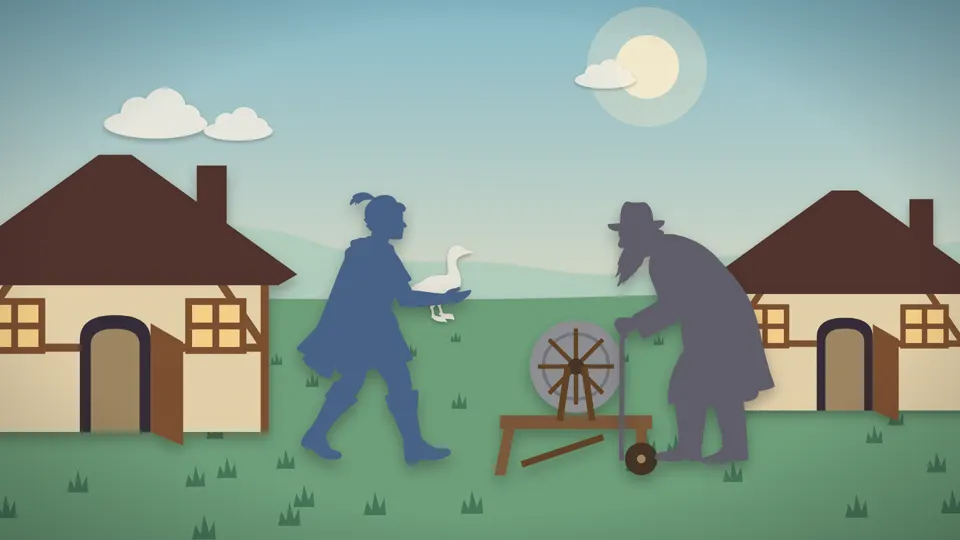
„Ja“, sagte der Schleifer, „mein Handwerk hat goldenen Boden.“
"Yes," said the grinder, "my trade is a gold mine."
„Ein guter Schleifer findet immer Geld in seiner Tasche.“
"A good grinder always finds money in his pocket."
„Aber wo hast du die schöne Gans gekauft?“
"But where did you buy that lovely goose?"
„Ich habe sie nicht gekauft. Ich habe sie für mein Schwein getauscht.“
"I didn't buy her. I swapped her for my pig."
„Und das Schwein?“ – „Das habe ich für eine Kuh bekommen.“
"And the pig?" – "I got that for a cow."
„Und die Kuh?“ – „Die habe ich für ein Pferd bekommen.“
"And the cow?" – "I got that for a horse."
„Und das Pferd?“ – „Dafür habe ich einen Klumpen Gold gegeben, so groß wie mein Kopf.“
"And the horse?" – "For that I gave a lump of gold as big as my head."
„Und das Gold?“ – „Das war mein Lohn für sieben Jahre Arbeit.“
"And the gold?" – "That was my wages for seven years of work."
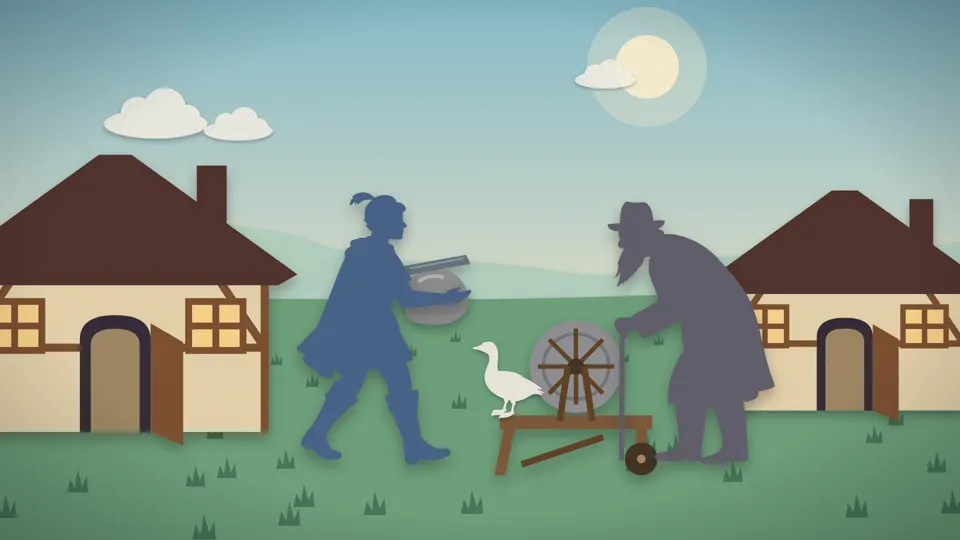
„Du hast dir immer zu helfen gewusst“, sagte der Schleifer.
"You have always known how to help yourself," said the grinder.
„Du musst ein Schleifer werden wie ich.“
"You must become a grinder like me."
„Dazu brauchst du nur einen Wetzstein.“
"All you need for it is a whetstone."
„Hier habe ich einen. Er ist ein bisschen kaputt.“
"Here I have one. It is a bit broken."
„Aber ich gebe ihn dir für deine Gans.“
"But I'll give it to you for your goose."
„Gern!“, rief Hans. „Dann bin ich der glücklichste Mensch auf der Welt!“
"Gladly!" cried Hans. "Then I'll be the happiest man in the world!"
Er gab ihm die Gans und nahm den Wetzstein.
He gave him the goose and took the whetstone.
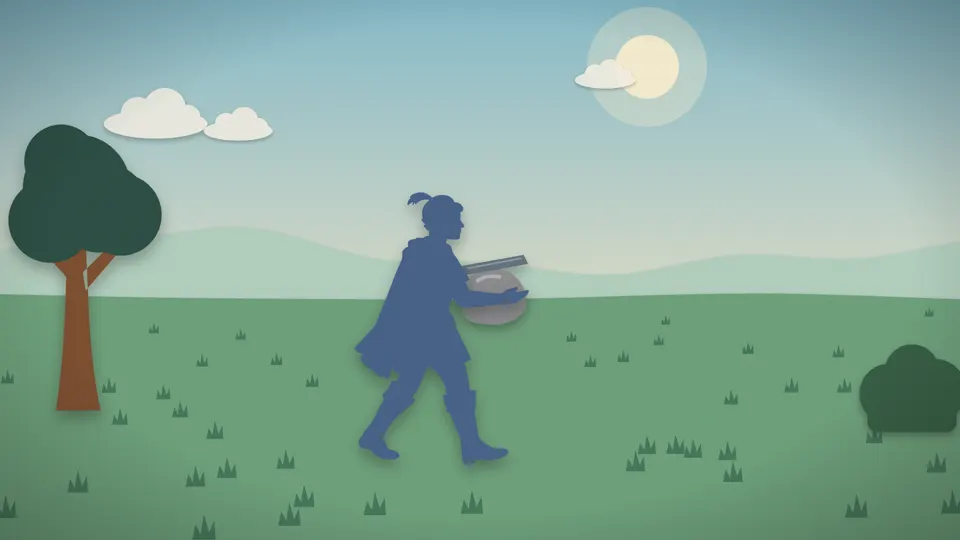
Dann hob der Schleifer einen schweren Feldstein auf.
Then the grinder picked up a heavy field stone.
„Hier hast du noch einen guten Stein dazu.“
"Here is a good stone for you as well."
„Darauf kannst du alte Nägel gerade klopfen. Nimm ihn mit!“
"On it you can hammer old nails straight. Take it with you!"
Hans nahm die Steine und ging froh weiter.
Hans took the stones and went on happily.
Seine Augen leuchteten vor Freude.
His eyes shone with joy.
„Ich bin ein Glückskind!“, rief er.
"I am a child of fortune!" he cried.
„Alles, was ich mir wünsche, bekomme ich.“
"Everything I wish for, I get."
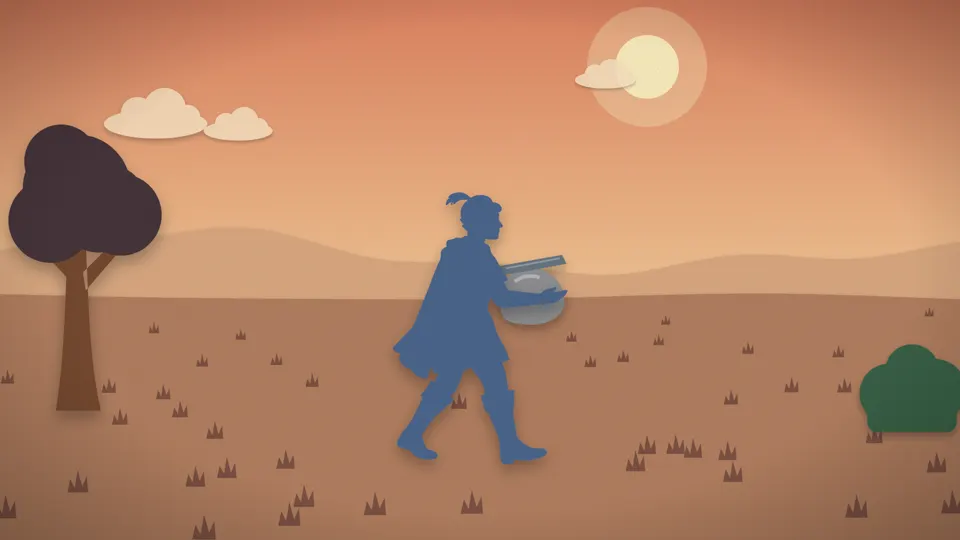
Aber Hans war seit dem Morgen unterwegs.
But Hans had been on the road since morning.
Er wurde müde.
He grew tired.
Er hatte auch Hunger, denn er hatte alles auf einmal gegessen.
He was hungry too, because he had eaten everything at once.
Er konnte nur noch langsam gehen und musste immer wieder anhalten.
He could only walk slowly and had to stop again and again.
Die Steine drückten ihn sehr.
The stones weighed on him terribly.
Er dachte: „Wie gut wäre es, wenn ich sie nicht tragen müsste!“
He thought: "How good it would be if I didn't have to carry them!"
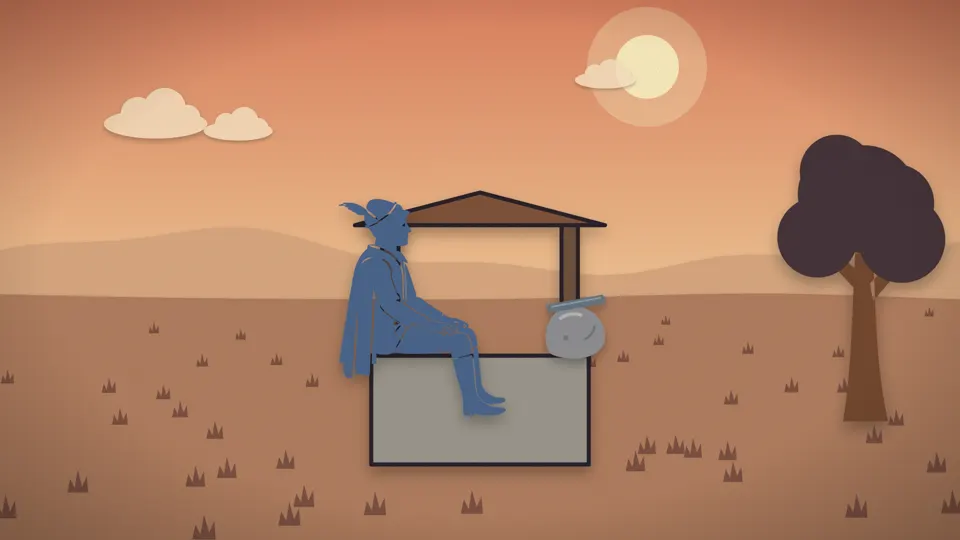
Langsam wie eine Schnecke kam er zu einem Brunnen auf dem Feld.
Slow as a snail he came to a well in the field.
Dort wollte er sich ausruhen und frisches Wasser trinken.
There he wanted to rest and drink fresh water.
Er legte die Steine vorsichtig auf den Rand des Brunnens.
He laid the stones carefully on the rim of the well.
Dann setzte er sich und bückte sich zum Trinken.
Then he sat down and bent over to drink.
Da stieß er ein klein wenig an die Steine.
Then he bumped the stones a tiny bit.
Plumps! Beide Steine fielen hinunter in das Wasser.
Splash! Both stones fell down into the water.
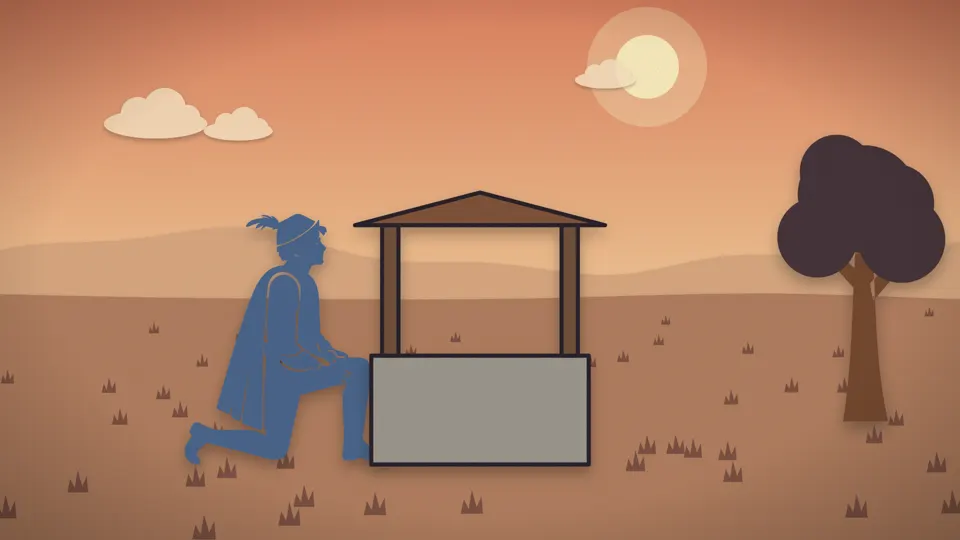
Hans sah, wie die Steine in der Tiefe versanken.
Hans watched the stones sink into the depths.
Da sprang er vor Freude auf.
Then he jumped up for joy.
Er kniete nieder und dankte Gott mit Tränen in den Augen.
He knelt down and thanked God with tears in his eyes.
Jetzt war er die schweren Steine los!
Now he was rid of the heavy stones!
„So glücklich wie ich ist kein Mensch unter der Sonne!“, rief er.
"No one under the sun is as lucky as I am!" he cried.
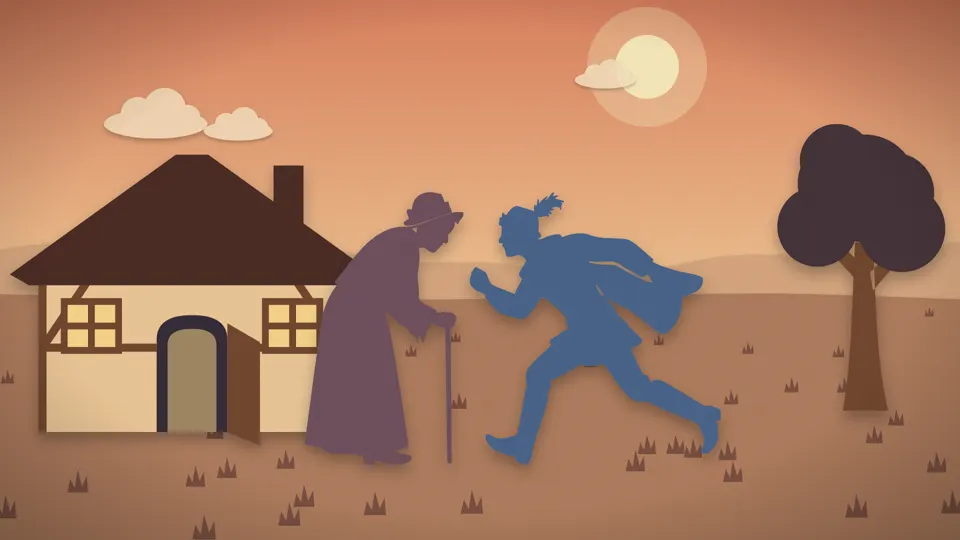
Mit leichtem Herzen und frei von aller Last sprang er fort.
With a light heart and free of every load, he ran off.
Er lief und lief, bis er zu Hause bei seiner Mutter war.
He ran and ran until he was home with his mother.
Don't just watch it. Learn from it.
Every story is free to watch on YouTube and free to read here. A pass adds the learning tools on every part of every story, in every language.
- ✦ Tap any sentence to hear it again, with every word lit
- ✦ A quiz after each part
- ✦ Save words and review them with their audio
- ✦ Anki decks and offline downloads