Wie heiß ich?
Part 2 · What Is My Name?
Reading only. Members hear every sentence, save words and take the quiz.
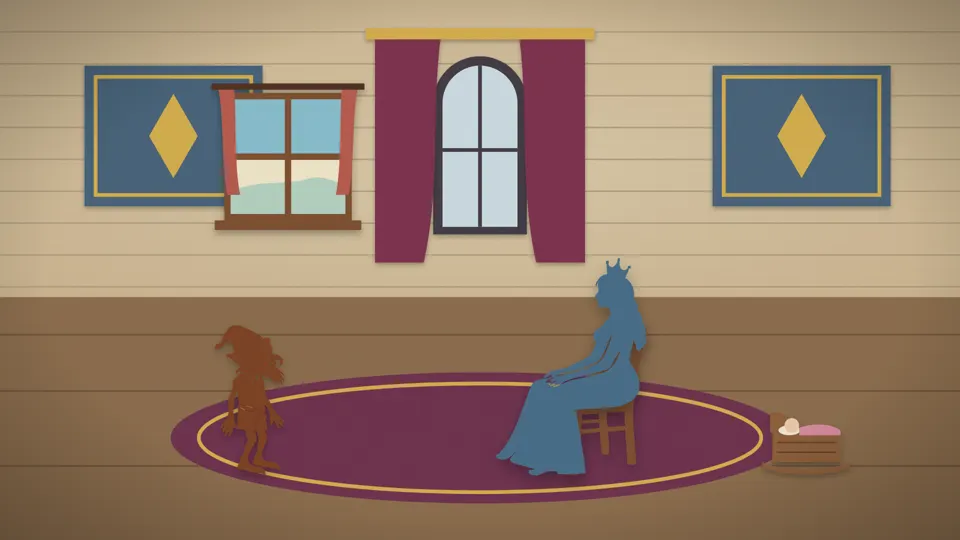
Ein Jahr später bekommt die Königin ein schönes Kind.
A year later the queen has a beautiful baby.
Sie denkt gar nicht mehr an den kleinen Mann.
She no longer thinks about the little man at all.
Da steht er plötzlich in ihrem Zimmer.
Then suddenly he is standing in her room.
Er sagt: „Jetzt gib mir, was du mir versprochen hast.“
He says: "Now give me what you promised me."
Die Königin erschrickt.
The queen is frightened.
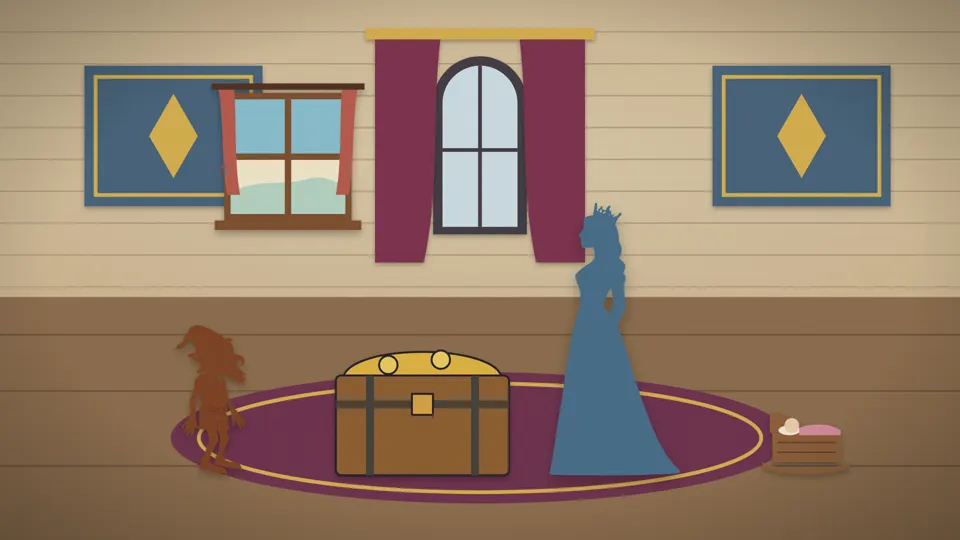
Sie sagt: „Ich gebe dir alle Schätze des Königreichs.“
She says: "I will give you all the treasures of the kingdom."
„Gold, Silber und Edelsteine, alles!“
"Gold, silver and jewels, everything!"
„Aber lass mir mein Kind!“
"But let me keep my child!"
Der kleine Mann antwortet: „Nein. Etwas Lebendiges ist mir lieber als alle Schätze der Welt.“
The little man answers: "No. Something living is dearer to me than all the treasures in the world."
Da jammert und weint die Königin so sehr.
Then the queen wails and cries so much.
Der kleine Mann hat Mitleid mit ihr.
The little man feels pity for her.
Er sagt: „Ich gebe dir drei Tage Zeit.“
He says: "I will give you three days."
„Wenn du bis dann meinen Namen weißt, darfst du dein Kind behalten.“
"If you know my name by then, you may keep your child."
Die ganze Nacht denkt die Königin an alle Namen, die sie kennt.
The whole night the queen thinks of all the names she knows.
Sie kann nicht schlafen.
She cannot sleep.
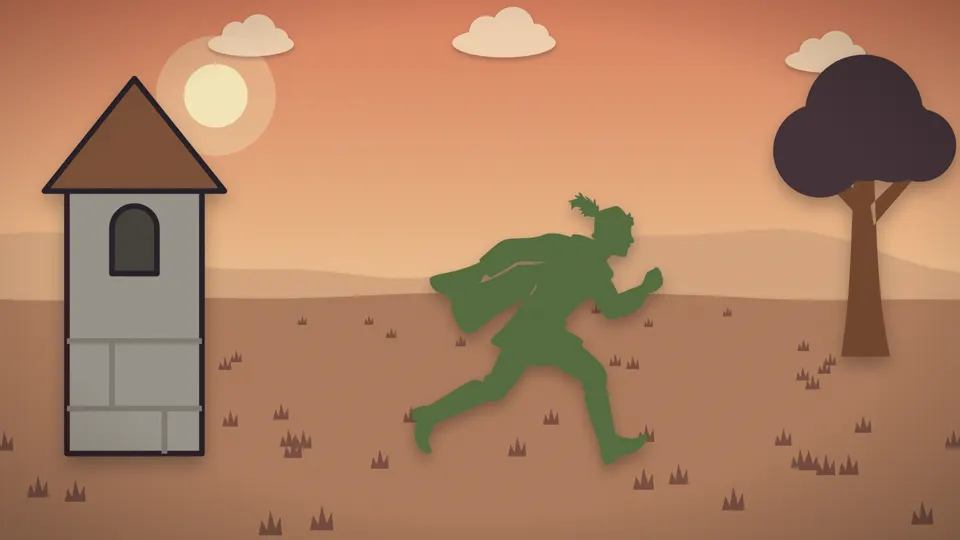
Dann schickt sie einen Boten über das Land.
Then she sends a messenger across the land.
Der Bote soll überall nach neuen Namen fragen.
The messenger is to ask everywhere for new names.
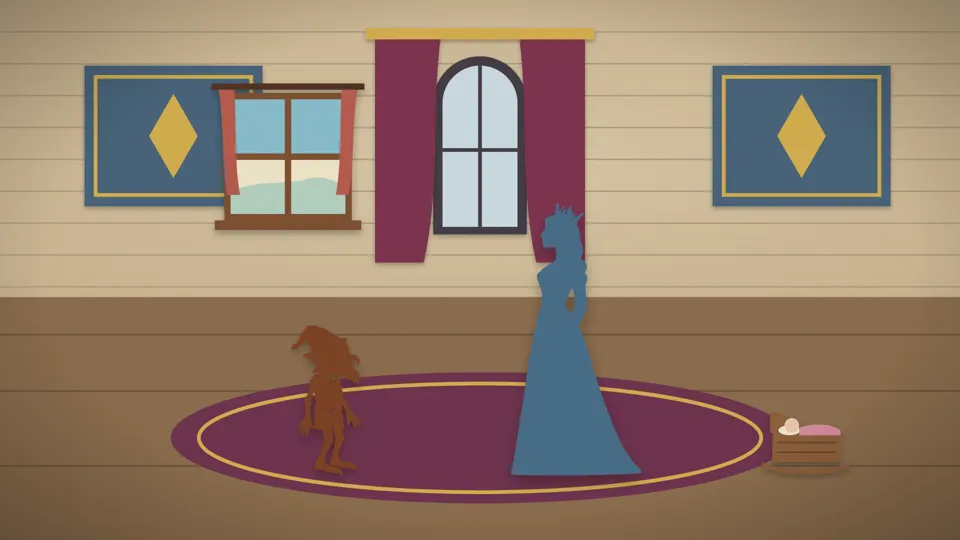
Am nächsten Tag kommt der kleine Mann.
The next day the little man comes.
Die Königin fragt: „Heißt du Kaspar? Heißt du Melchior? Heißt du Balzer?“
The queen asks: "Are you called Kaspar? Are you called Melchior? Are you called Balzer?"
Sie sagt alle Namen, die sie weiß, einen nach dem anderen.
She says all the names she knows, one after the other.
Aber bei jedem Namen sagt der kleine Mann: „So heiß ich nicht.“
But at every name the little man says: "That is not my name."
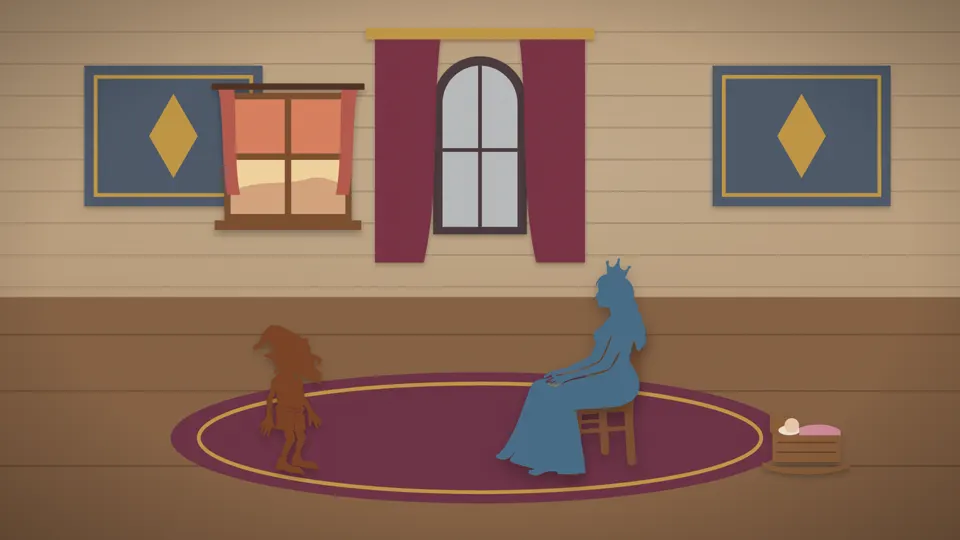
Am zweiten Tag lässt sie in der Nachbarschaft fragen, wie die Leute dort heißen.
On the second day she has people asked in the neighbourhood what they are called.
Sie sagt dem kleinen Mann die seltsamsten Namen.
She tells the little man the strangest names.
Sie fragt: „Heißt du vielleicht Rippenbiest oder Hammelswade oder Schnürbein?“
She asks: "Are you perhaps called Rippenbiest or Hammelswade or Schnürbein?"
Aber er antwortet immer: „So heiß ich nicht.“
But he always answers: "That is not my name."
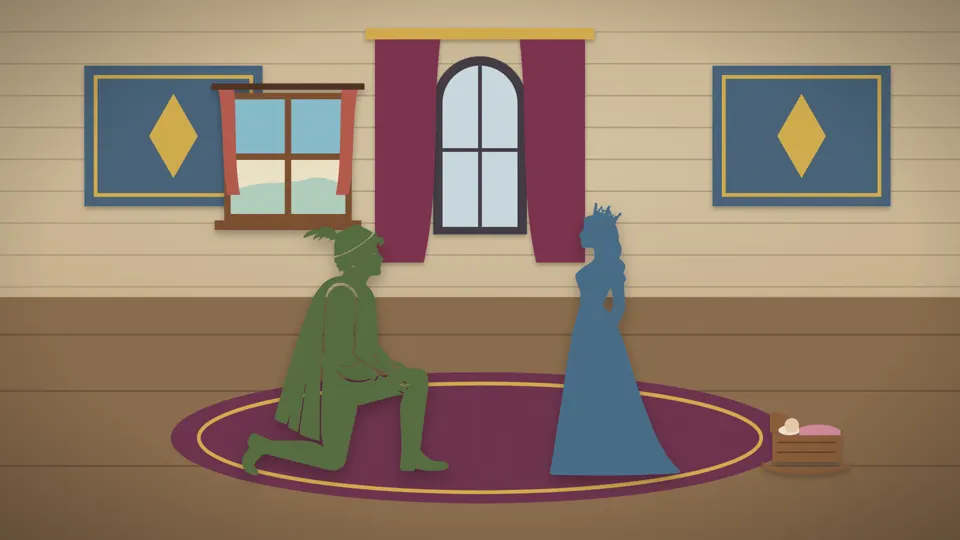
Am dritten Tag kommt der Bote zurück.
On the third day the messenger comes back.
Die Königin fragt: „Hast du neue Namen?“
The queen asks: "Do you have new names?"
Der Bote erzählt: „Neue Namen habe ich keinen einzigen gefunden.“
The messenger reports: "I have not found a single new name."
„Aber ich bin an einen hohen Berg am Waldrand gekommen.“
"But I came to a high mountain at the edge of the forest."
„Dort sagen sich Fuchs und Hase gute Nacht.“
"There the fox and the hare say good night to each other."
„Da habe ich ein kleines Haus gesehen.“
"There I saw a little house."
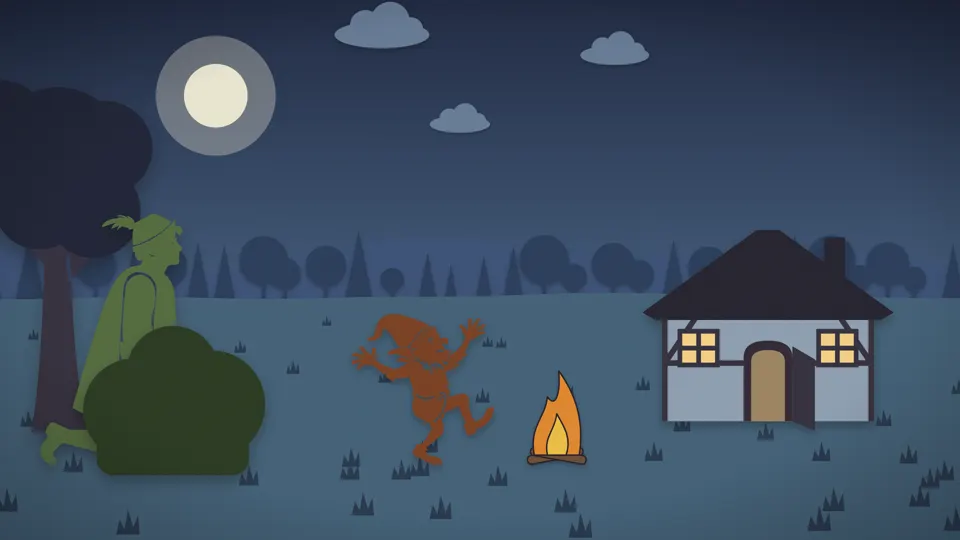
„Vor dem Haus hat ein Feuer gebrannt.“
"In front of the house a fire was burning."
„Um das Feuer ist ein lächerliches Männchen gesprungen.“
"Around the fire a ridiculous little man was jumping."
„Es ist auf einem Bein gehüpft und hat geschrien: ‚Heute back ich, morgen brau ich, übermorgen hol ich der Königin ihr Kind!‘“
"It hopped on one leg and shouted: 'Today I bake, tomorrow I brew, the day after tomorrow I fetch the queen's child!'"
„‚Ach, wie gut, dass niemand weiß, dass ich Rumpelstilzchen heiß!‘“
"'Oh, how good that nobody knows that my name is Rumpelstilzchen!'"
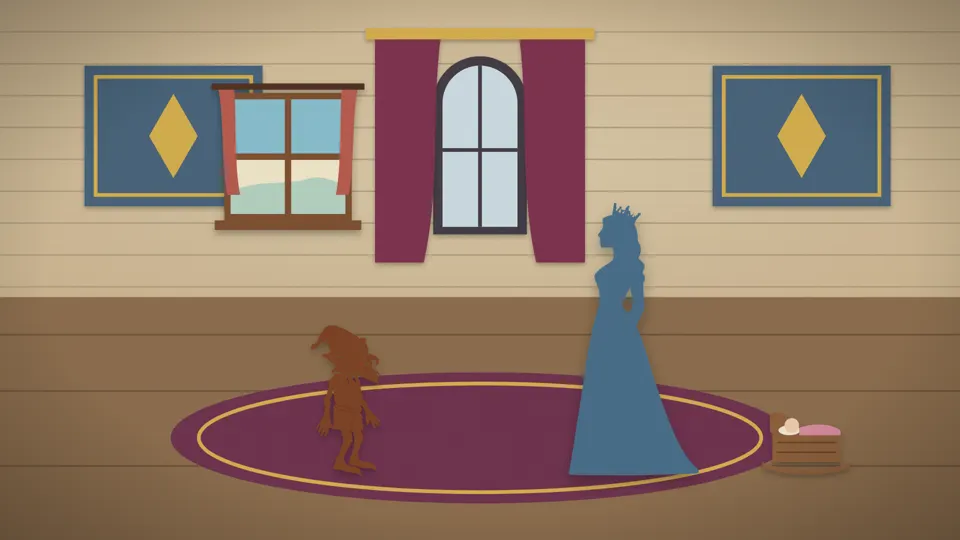
Die Königin ist sehr froh, als sie den Namen hört.
The queen is very glad when she hears the name.
Bald danach kommt der kleine Mann herein.
Soon after, the little man comes in.
Er fragt: „Nun, Frau Königin, wie heiß ich?“
He asks: "Well, Lady Queen, what is my name?"
Die Königin fragt zuerst: „Heißt du Kunz?“
First the queen asks: "Are you called Kunz?"
Der kleine Mann sagt: „Nein.“
The little man says: "No."
Sie fragt: „Heißt du Heinz?“
She asks: "Are you called Heinz?"
Der kleine Mann sagt: „Nein.“
The little man says: "No."
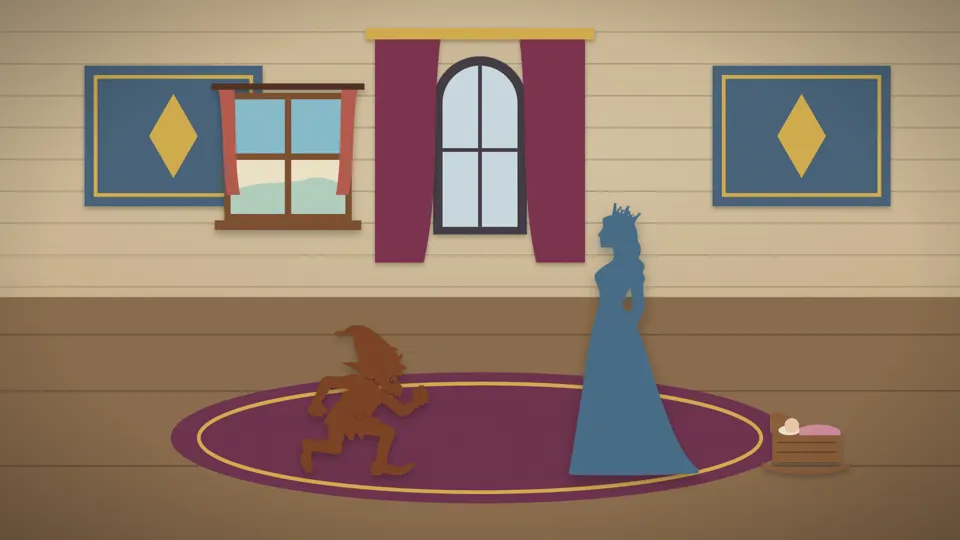
Da fragt die Königin: „Heißt du vielleicht Rumpelstilzchen?“
Then the queen asks: "Are you perhaps called Rumpelstilzchen?"
Der kleine Mann schreit: „Das hat dir der Teufel gesagt! Das hat dir der Teufel gesagt!“
The little man screams: "The devil told you that! The devil told you that!"
Er ist so wütend.
He is so furious.
Er stampft mit dem rechten Fuß so fest auf, dass er bis zum Bauch in der Erde steckt.
He stamps his right foot down so hard that he is stuck in the ground up to his belly.
Dann packt er in seiner Wut den linken Fuß mit beiden Händen.
Then in his rage he grabs his left foot with both hands.
Und er reißt sich selbst in zwei Stücke.
And he tears himself in two.
Die Königin aber behält ihr Kind.
But the queen keeps her child.
Hear it, don't just read it.
Every part is free to read. Members hear every part of every story, in every language, and learn from it.
- ✦ Tap any sentence to hear it again, with every word lit
- ✦ A quiz after each part
- ✦ Save words and review them with their audio
- ✦ Anki decks and offline downloads