Les cailloux blancs
Part 1 · The white pebbles · tap a sentence to hear it
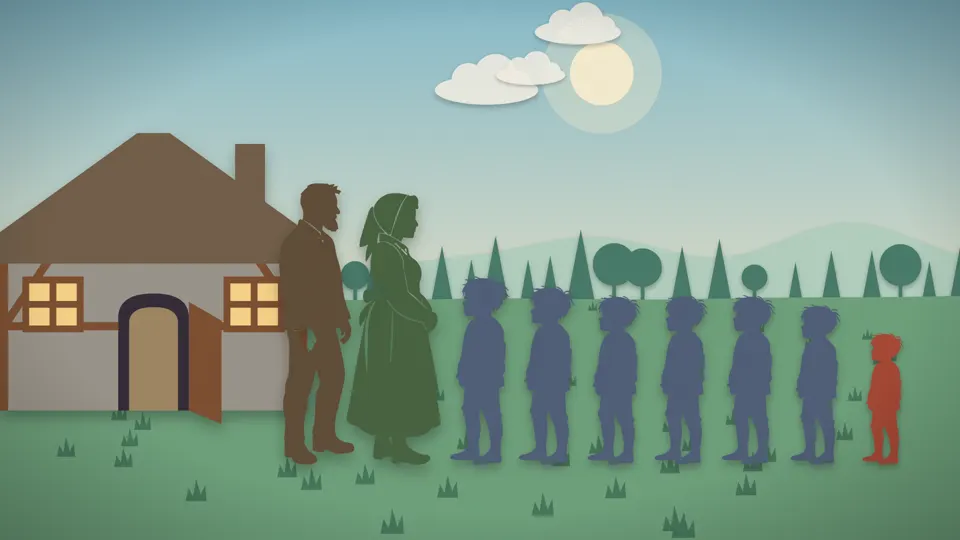
Il était une fois un bûcheron et sa femme.
Once upon a time there was a woodcutter and his wife.
Ils ont sept enfants, sept garçons.
They have seven children, seven boys.
L’aîné a seulement dix ans.
The eldest is only ten.
Le plus jeune a seulement sept ans.
The youngest is only seven.
La mère a souvent deux bébés à la fois.
The mother often has two babies at once.
La famille est très pauvre.
The family is very poor.
Les sept garçons sont trop jeunes pour travailler.
The seven boys are too young to work.
Le plus jeune est tout petit.
The youngest is very small.
Quand il naît, il n’est pas plus grand qu’un pouce.
When he is born, he is no bigger than a thumb.
Alors on l’appelle le Petit Poucet.
So they call him Little Thumb.
Il ne parle pas beaucoup.
He does not talk much.
Ses parents pensent qu’il est bête.
His parents think he is stupid.
Dans la maison, c’est toujours sa faute.
In the house, it is always his fault.
Mais il est le plus malin des sept frères.
But he is the cleverest of the seven brothers.
Il parle peu, mais il écoute beaucoup.
He talks little, but he listens a lot.
Une année, il n’y a plus rien à manger.
One year there is nothing left to eat.
Un soir, les enfants sont au lit.
One evening the children are in bed.
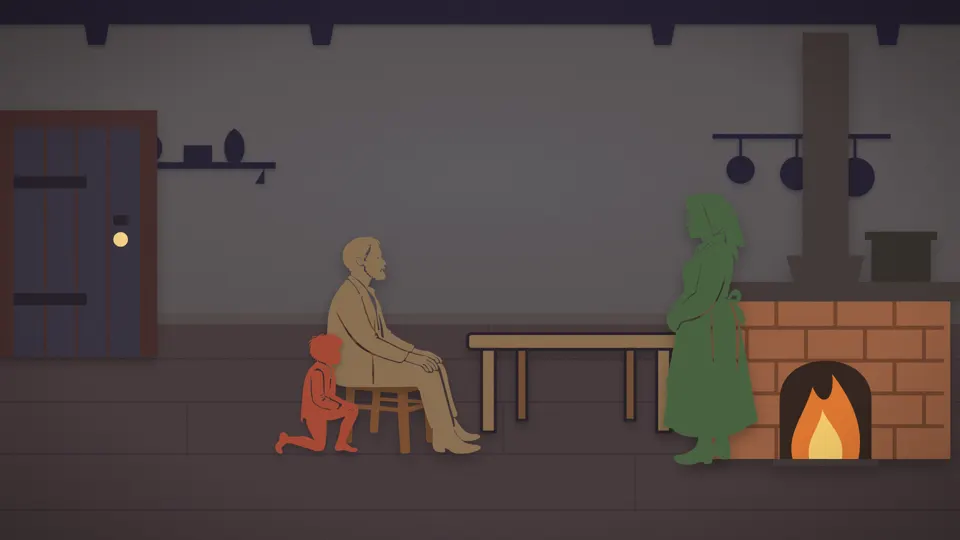
Le bûcheron parle à sa femme près du feu.
The woodcutter talks to his wife by the fire.
Il a le cœur très triste.
His heart is very sad.
Il dit : « Nous ne pouvons plus nourrir nos enfants. »
He says: “We can no longer feed our children.”
« Je ne veux pas les voir mourir de faim. »
“I do not want to watch them starve.”
« Demain, nous allons les perdre dans la forêt. »
“Tomorrow we are going to lose them in the forest.”
« Ils ramassent du bois, et nous partons sans bruit. »
“They gather wood, and we leave without a sound.”
La mère dit : « Tu veux perdre tes enfants ? »
The mother says: “You want to lose your children?”
Elle est pauvre, mais elle est leur mère.
She is poor, but she is their mother.
Mais elle ne veut pas les voir mourir de faim.
But she does not want to watch them starve.
Enfin, elle dit oui, et elle pleure dans son lit.
At last she says yes, and she cries in her bed.
Le Petit Poucet entend tout.
Little Thumb hears everything.
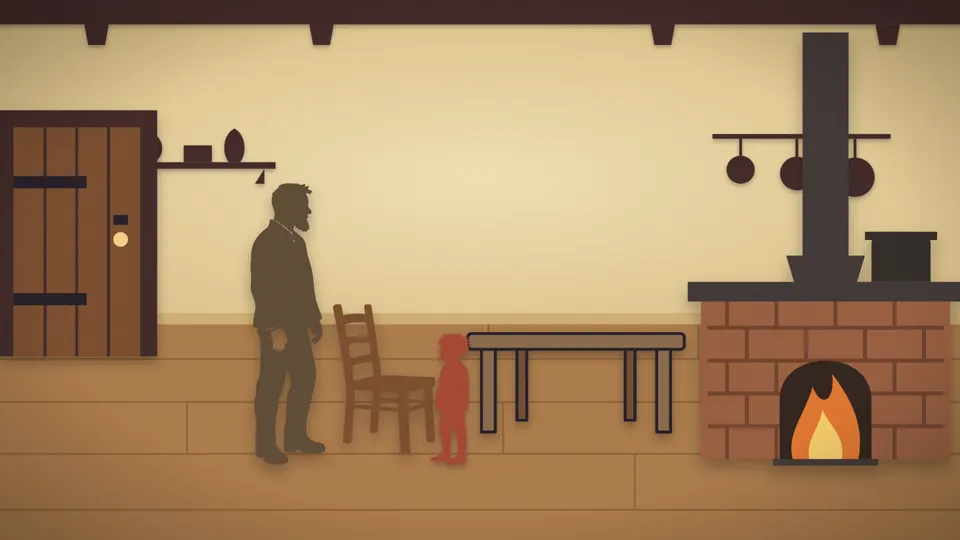
Il est caché sous la chaise de son père.
He is hidden under his father's chair.
Il retourne dans son lit, mais il ne dort pas.
He goes back to his bed, but he does not sleep.
Il pense à un plan toute la nuit.
He thinks about a plan all night.
Le matin, il se lève très tôt.
In the morning he gets up very early.
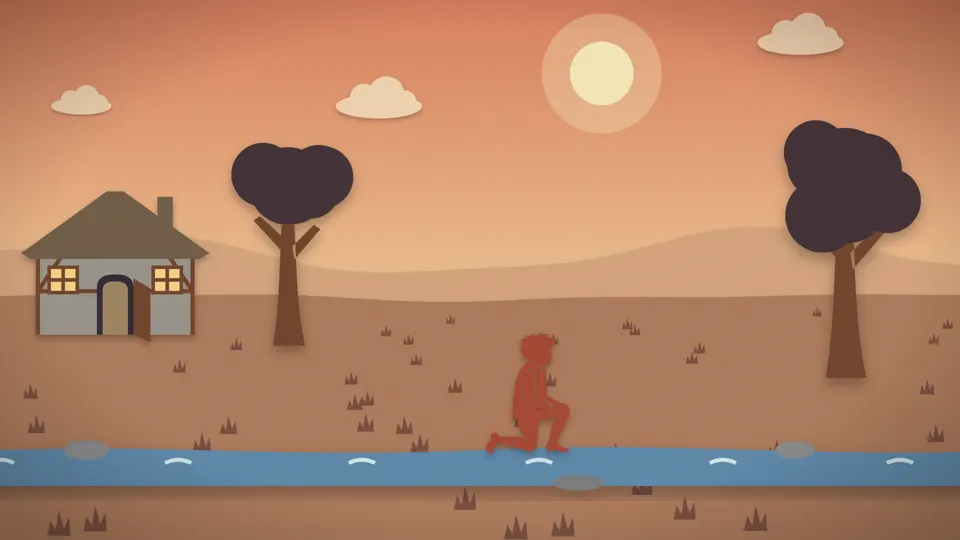
Il va au bord d’un petit ruisseau.
He goes to the bank of a little stream.
Il remplit ses poches de petits cailloux blancs.
He fills his pockets with little white pebbles.
Puis il rentre à la maison.
Then he goes back home.
Il ne dit rien à ses frères.
He says nothing to his brothers.
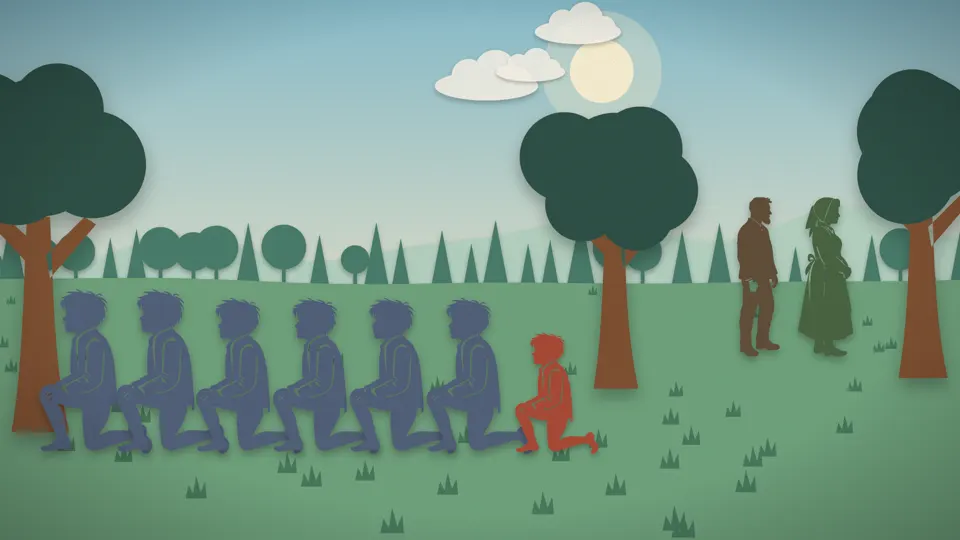
Toute la famille part dans la forêt.
The whole family goes off into the forest.
En marchant, le Petit Poucet jette ses cailloux blancs.
As he walks, Little Thumb drops his white pebbles.
Il les jette un par un, sur le chemin.
He drops them one by one, along the path.
La forêt est très épaisse.
The forest is very thick.
À dix pas, on ne se voit pas.
Ten steps away, you cannot see each other.
Le père coupe du bois.
The father cuts wood.
Les enfants ramassent des petites branches.
The children gather small branches.
Les enfants travaillent et ne regardent pas leurs parents.
The children work and do not watch their parents.
Les parents s’éloignent doucement.
The parents slowly move away.
Puis ils partent vite par un petit chemin.
Then they quickly leave by a little path.
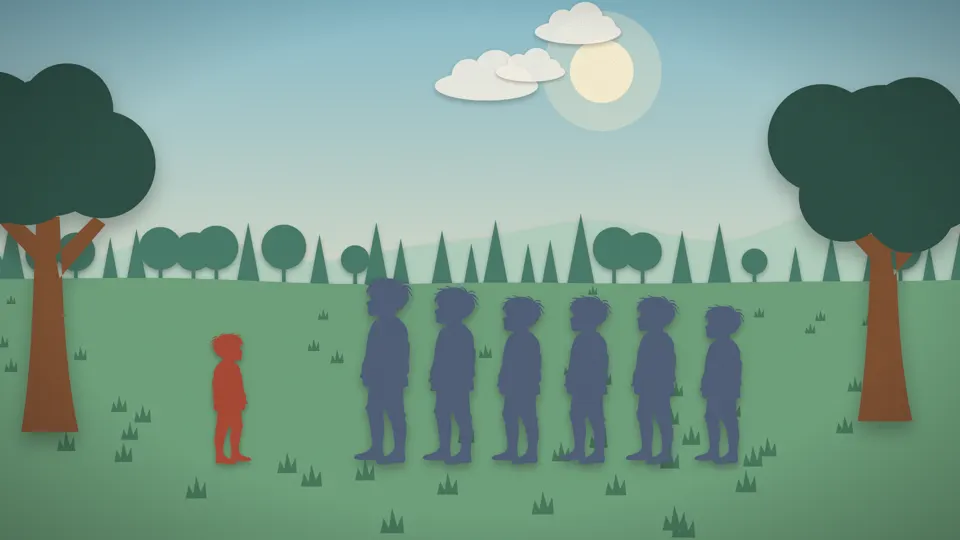
Les enfants voient qu’ils sont seuls.
The children see that they are alone.
Ils crient et ils pleurent très fort.
They shout and cry very loudly.
Le Petit Poucet les laisse crier.
Little Thumb lets them shout.
Lui, il n’a pas peur.
He is not afraid.
Il connaît le chemin de la maison.
He knows the way home.
Il dit : « N’ayez pas peur, mes frères. »
He says: “Do not be afraid, my brothers.”
« Papa et maman ne sont plus là. »
“Papa and Mama are not here any more.”
« Mais je vais vous ramener à la maison. »
“But I am going to take you back home.”
« Venez avec moi, suivez-moi ! »
“Come with me, follow me!”
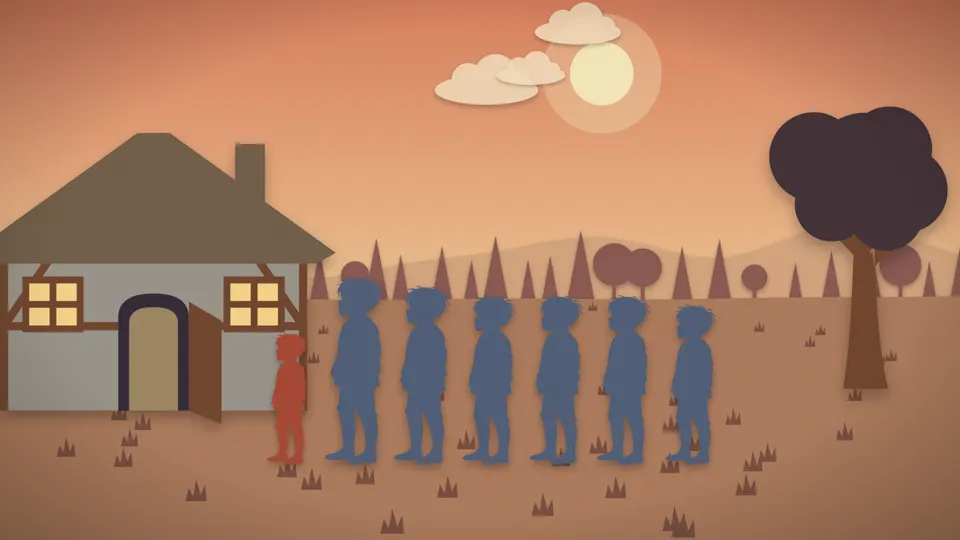
Les frères suivent le Petit Poucet.
The brothers follow Little Thumb.
Et lui, il suit les petits cailloux blancs.
And he follows the little white pebbles.
Ils marchent longtemps sur le même chemin.
They walk a long time along the same path.
Le soir, ils arrivent devant leur maison.
In the evening they arrive in front of their house.
Mais ils n’osent pas entrer.
But they do not dare go in.
Ils restent tous contre la porte.
They all stay against the door.
Ils écoutent leur père et leur mère.
They listen to their father and their mother.