Le loup dans le lit
Part 1 · The wolf in the bed · tap a sentence to hear it
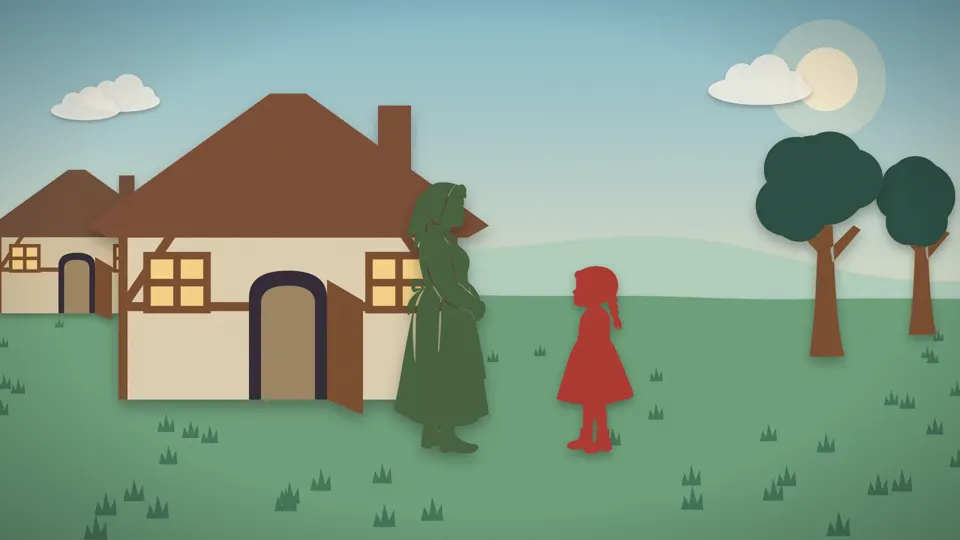
Il était une fois une petite fille.
Once upon a time there was a little girl.
Elle habite dans un village.
She lives in a village.
C’est la plus jolie fille du village.
She is the prettiest girl in the village.
Sa mère l’aime beaucoup.
Her mother loves her very much.
Sa grand-mère l’aime encore plus.
Her grandmother loves her even more.
La grand-mère lui fait un petit chaperon rouge.
The grandmother makes her a little red hood.
Alors, tout le monde l’appelle le Petit Chaperon rouge.
So everyone calls her Little Red Riding Hood.
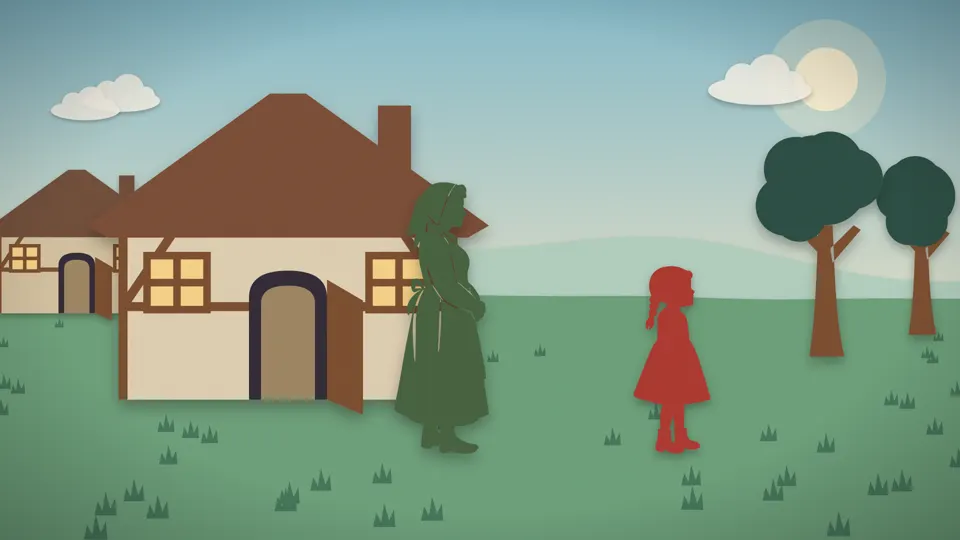
Un jour, la mère fait des galettes.
One day the mother bakes some galettes.
Elle dit : « Va voir ta grand-mère, elle est malade. »
She says: “Go and see your grandmother, she is ill.”
« Porte-lui une galette et ce petit pot de beurre. »
“Take her a galette and this little pot of butter.”
Le Petit Chaperon rouge part tout de suite.
Little Red Riding Hood sets off right away.
Sa grand-mère habite dans un autre village.
Her grandmother lives in another village.
Pour y aller, elle passe par un bois.
To get there, she goes through a wood.
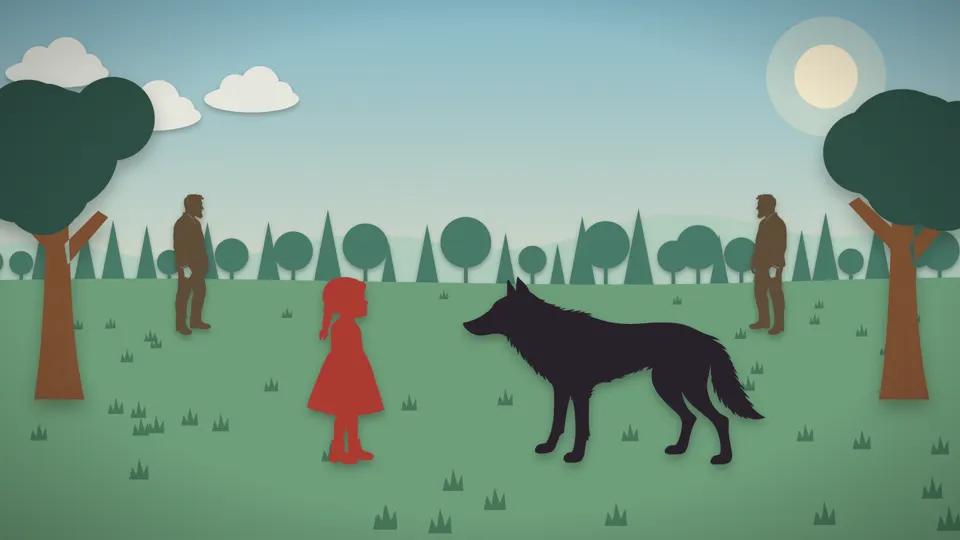
Dans le bois, elle rencontre le loup.
In the wood she meets the wolf.
Le loup a très envie de la manger.
The wolf badly wants to eat her.
Mais il n’ose pas.
But he does not dare.
Tout près, des bûcherons travaillent.
Some woodcutters are working close by.
Le loup demande : « Où vas-tu, petite fille ? »
The wolf asks: “Where are you going, little girl?”
La petite fille ne sait pas qu’un loup est dangereux.
The little girl does not know that a wolf is dangerous.
Elle répond : « Je vais chez ma grand-mère. »
She answers: “I am going to my grandmother's.”
« Je lui porte une galette et un petit pot de beurre. »
“I am taking her a galette and a little pot of butter.”
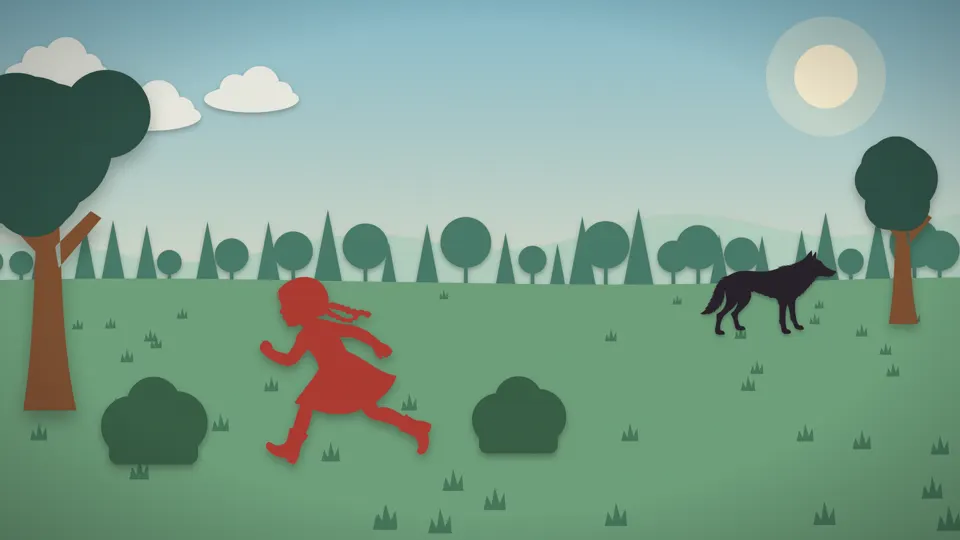
Le loup demande : « Elle habite loin ? »
The wolf asks: “Does she live far away?”
La petite fille dit : « Oh oui, très loin ! »
The little girl says: “Oh yes, very far!”
« Elle habite après le moulin, là-bas. »
“She lives past the mill, over there.”
« C’est la première maison du village. »
“It is the first house in the village.”
Le loup dit : « Moi aussi, je veux aller la voir. »
The wolf says: “I want to go and see her too.”
« Je prends ce chemin-ci, et toi, ce chemin-là. »
“I take this path, and you take that one.”
« Nous allons voir qui arrive le premier ! »
“We will see who gets there first!”
Le loup court très vite par le chemin le plus court.
The wolf runs very fast along the shortest path.
La petite fille prend le chemin le plus long.
The little girl takes the longest path.
Elle cueille des noisettes.
She picks hazelnuts.
Elle court après les papillons.
She runs after the butterflies.
Elle fait des bouquets de petites fleurs.
She makes posies of little flowers.
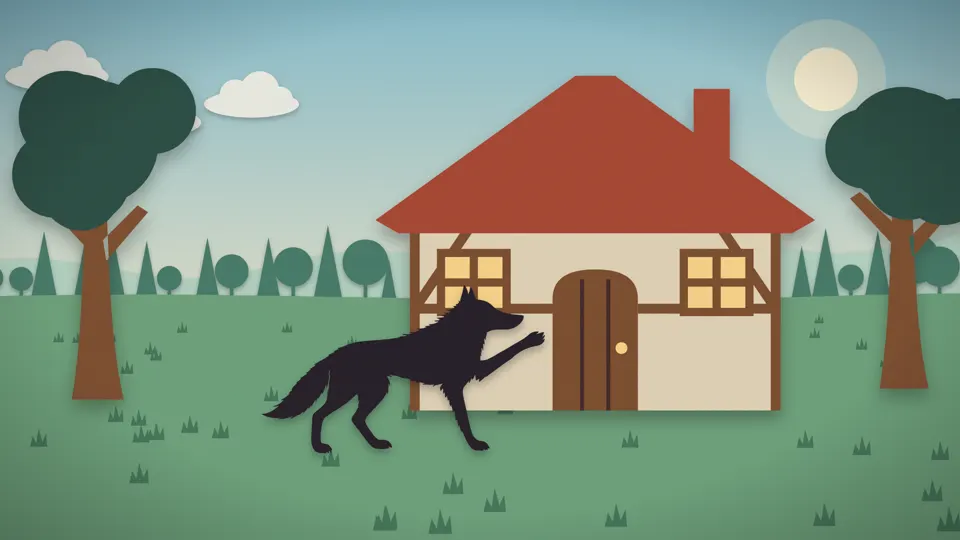
Le loup arrive vite chez la grand-mère.
The wolf soon reaches the grandmother's house.
Il frappe à la porte : toc, toc.
He knocks at the door: knock, knock.
La grand-mère est au lit, un peu malade.
The grandmother is in bed, a little ill.
Elle demande : « Qui est là ? »
She asks: “Who is there?”
Le loup change sa voix.
The wolf changes his voice.
Il dit : « C’est votre petite-fille, le Petit Chaperon rouge. »
He says: “It is your granddaughter, Little Red Riding Hood.”
« Je vous apporte une galette et un petit pot de beurre. »
“I am bringing you a galette and a little pot of butter.”
La grand-mère crie : « Tire la chevillette, la bobinette cherra. »
The grandmother calls: “Pull the little peg, and the latch will drop.”
Le loup tire la chevillette, et la porte s’ouvre.
The wolf pulls the little peg, and the door opens.
Il saute sur la grand-mère.
He jumps on the grandmother.
Il la mange en un instant.
He eats her in no time.
Puis il ferme la porte.
Then he shuts the door.
Il se couche dans le lit de la grand-mère et il attend.
He lies down in the grandmother's bed and waits.
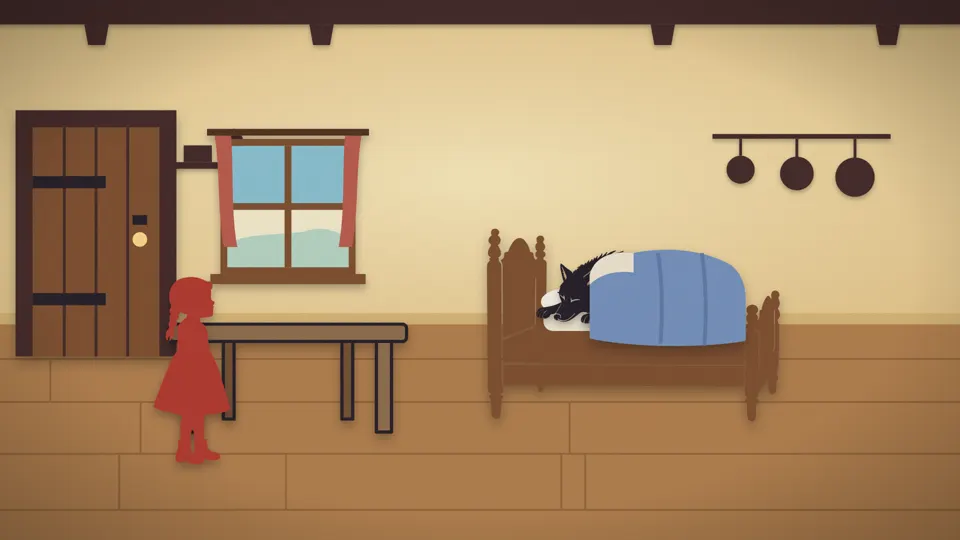
Un peu plus tard, le Petit Chaperon rouge frappe à la porte.
A little later, Little Red Riding Hood knocks at the door.
Le loup demande d’une grosse voix : « Qui est là ? »
The wolf asks in a gruff voice: “Who is there?”
La petite fille a peur.
The little girl is afraid.
Puis elle pense : « Grand-mère a un rhume. »
Then she thinks: “Grandmother has a cold.”
Elle répond : « C’est votre petite-fille, le Petit Chaperon rouge. »
She answers: “It is your granddaughter, Little Red Riding Hood.”
Le loup dit d’une voix plus douce : « Tire la chevillette, la bobinette cherra. »
The wolf says in a softer voice: “Pull the little peg, and the latch will drop.”
Elle tire la chevillette, et la porte s’ouvre.
She pulls the little peg, and the door opens.
Le loup se cache sous la couverture.
The wolf hides under the blanket.
Il dit : « Pose la galette et le beurre sur la table. »
He says: “Put the galette and the butter on the table.”
« Et viens te coucher près de moi. »
“And come and lie down next to me.”
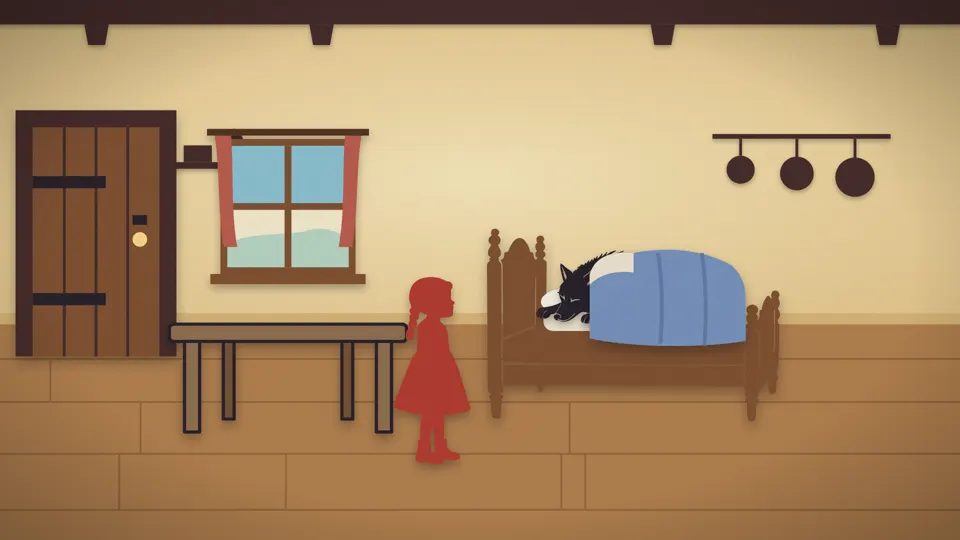
Elle s’approche du lit, et elle est très étonnée.
She comes up to the bed, and she is very surprised.
Elle dit : « Grand-mère, que vous avez de grands bras ! »
She says: “Grandmother, what big arms you have!”
Le loup dit : « C’est pour mieux t’embrasser, ma fille ! »
The wolf says: “All the better to hug you, my girl!”
Elle dit : « Grand-mère, que vous avez de grandes jambes ! »
She says: “Grandmother, what big legs you have!”
Le loup dit : « C’est pour mieux courir, mon enfant ! »
The wolf says: “All the better to run, my child!”
Elle dit : « Grand-mère, que vous avez de grandes oreilles ! »
She says: “Grandmother, what big ears you have!”
Le loup dit : « C’est pour mieux écouter, mon enfant ! »
The wolf says: “All the better to listen, my child!”
Elle dit : « Grand-mère, que vous avez de grands yeux ! »
She says: “Grandmother, what big eyes you have!”
Le loup dit : « C’est pour mieux voir, mon enfant ! »
The wolf says: “All the better to see, my child!”
Elle dit : « Grand-mère, que vous avez de grandes dents ! »
She says: “Grandmother, what big teeth you have!”
Le loup crie : « C’est pour te manger ! »
The wolf cries: “All the better to eat you!”
Et le méchant loup saute sur le Petit Chaperon rouge.
And the wicked wolf jumps on Little Red Riding Hood.
Il la mange, elle aussi.
He eats her too.
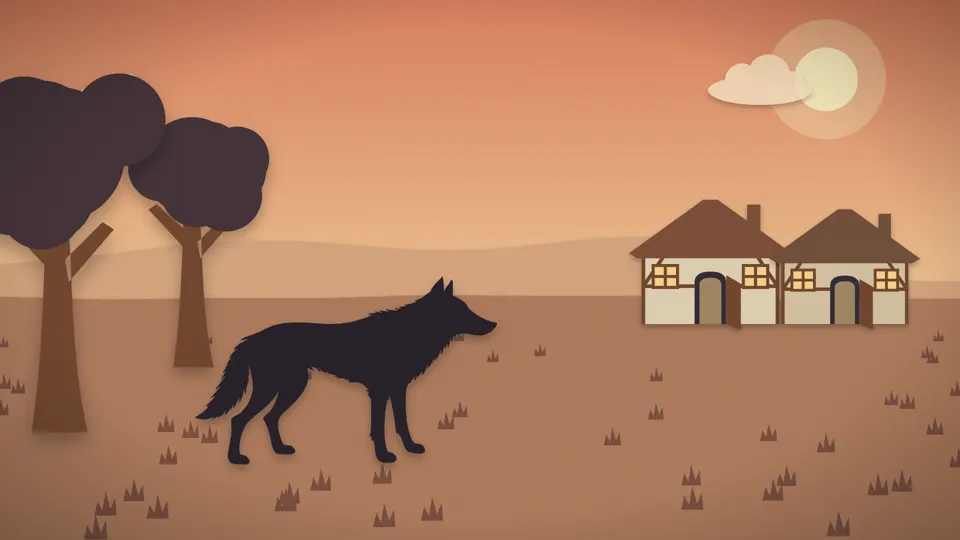
Voici la leçon de cette histoire.
Here is the lesson of this story.
Les enfants ne doivent pas écouter les inconnus.
Children must not listen to strangers.
Et les loups les plus doux sont les plus dangereux.
And the gentlest wolves are the most dangerous.