Le loup au bord de l'eau
Part 1 · The wolf by the water · tap a sentence to hear it
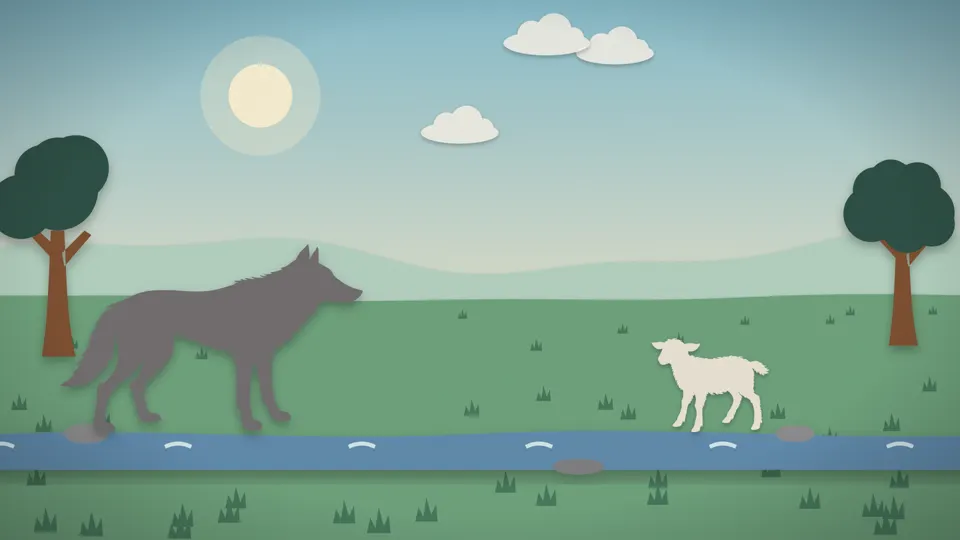
Un agneau boit dans un ruisseau.
A lamb is drinking from a stream.
L’eau est claire et pure.
The water is clear and pure.
Un loup arrive au bord de l’eau.
A wolf comes to the edge of the water.
Il a le ventre vide.
His belly is empty.
Il cherche quelque chose à manger.
He is looking for something to eat.
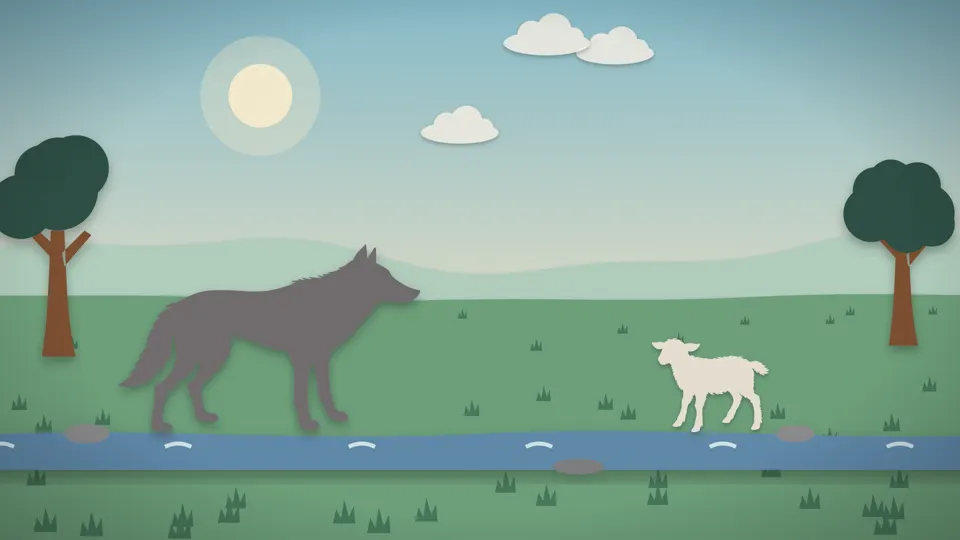
Le loup est très en colère.
The wolf is very angry.
Il dit : « Comment oses-tu salir mon eau ? »
He says: "How dare you dirty my water?"
« Je dois te punir ! »
"I must punish you!"
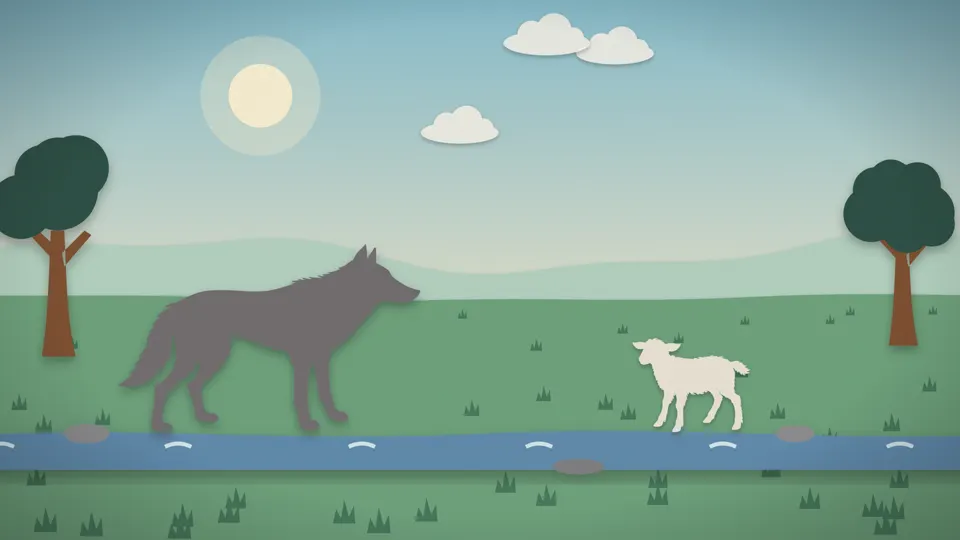
L’agneau répond : « Sire, ne vous mettez pas en colère. »
The lamb answers: "Sire, please do not get angry."
« Je bois plus bas que vous. »
"I am drinking further down than you."
« Je suis à vingt pas de vous. »
"I am twenty steps away from you."
« Alors, je ne peux pas salir votre eau. »
"So I cannot dirty your water."
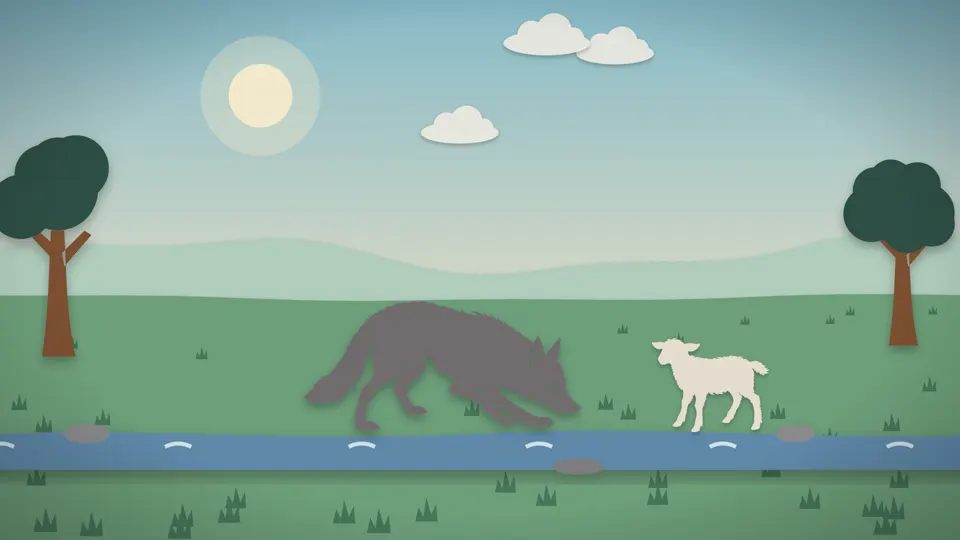
Le loup crie : « Si, tu salis mon eau ! »
The wolf shouts: "Yes, you do dirty my water!"
« Et tu dis du mal de moi depuis un an ! »
"And you have been speaking ill of me for a year!"
L’agneau répond : « Mais je n’ai pas encore un an ! »
The lamb answers: "But I am not even a year old!"
« Je bois encore le lait de ma mère. »
"I still drink my mother's milk."
Le loup dit : « Alors, c’est ton frère. »
The wolf says: "Then it is your brother."
L’agneau répond : « Je n’ai pas de frère. »
The lamb answers: "I do not have a brother."
Le loup dit : « Alors, c’est quelqu’un de ta famille. »
The wolf says: "Then it is someone in your family."
« Toi, tes bergers et tes chiens, vous êtes contre moi. »
"You, your shepherds and your dogs are all against me."
« Je le sais, on me le dit. »
"I know it, people tell me so."
« Et je dois me venger ! »
"And I must take my revenge!"
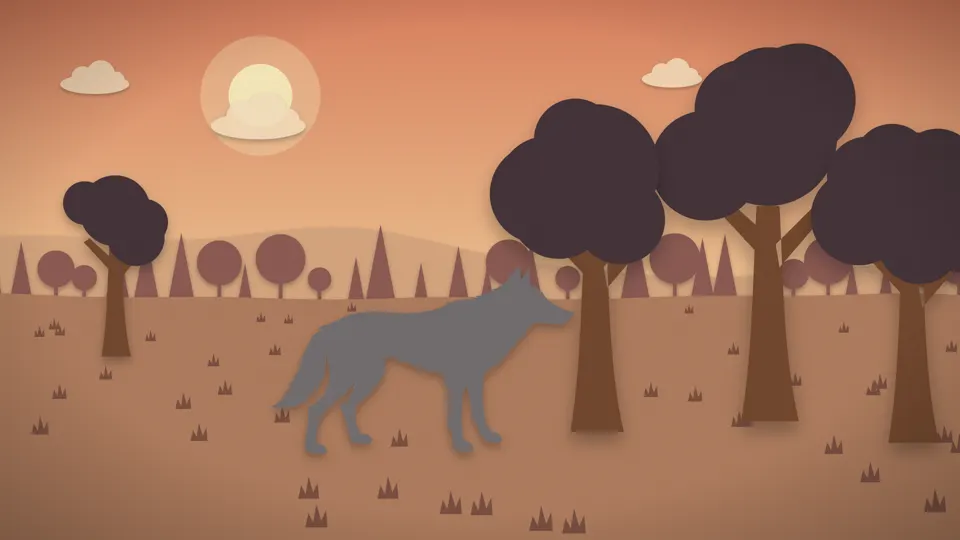
Alors, le loup emporte l’agneau dans la forêt.
So the wolf carries the lamb off into the forest.
Et là, il le mange, sans procès.
And there he eats him, without a trial.
Voici la leçon de cette fable.
Here is the lesson of this fable.
Le plus fort gagne toujours, même s’il a tort.
The strongest always wins, even when he is wrong.
« La raison du plus fort est toujours la meilleure. »
"The reason of the strongest is always the best."