Un sac et des bottes
Part 1 · A sack and some boots · tap a sentence to hear it
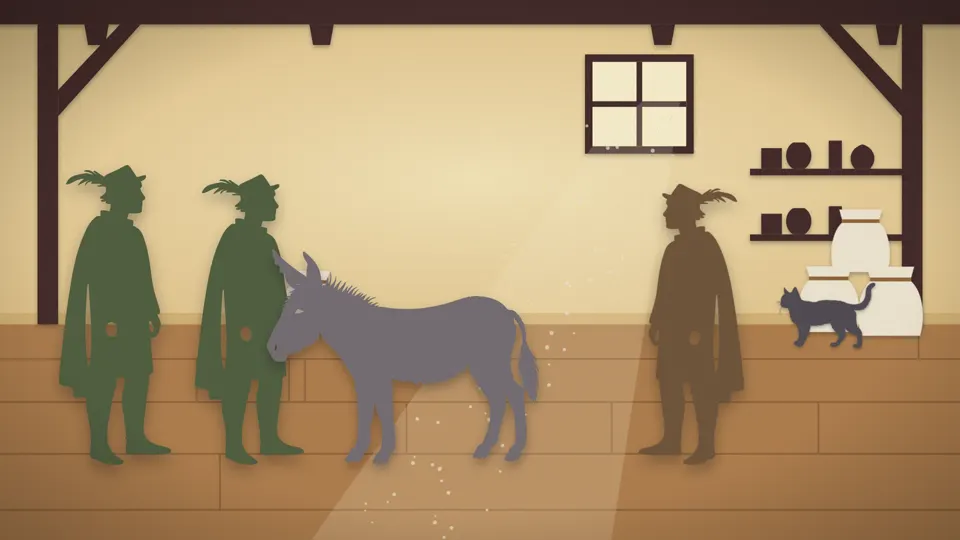
Il était une fois un meunier.
Once upon a time there was a miller.
Le meunier a trois fils.
The miller has three sons.
Il est pauvre, et un jour, il meurt.
He is poor, and one day he dies.
Il laisse un moulin, un âne et un chat.
He leaves a mill, a donkey and a cat.
Le partage est très vite fait.
The sharing out is done very quickly.
L’aîné prend le moulin.
The eldest takes the mill.
Le deuxième fils prend l’âne.
The second son takes the donkey.
Le plus jeune fils a seulement le chat.
The youngest son only gets the cat.
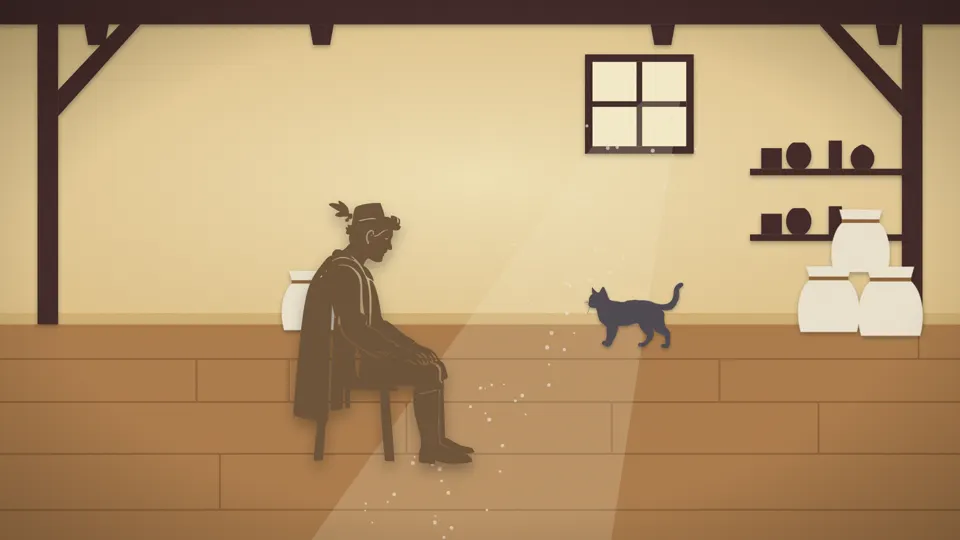
Le plus jeune fils est très triste.
The youngest son is very sad.
Il dit : « Mes frères vont travailler ensemble. »
He says: “My brothers will work together.”
« Ils vont gagner leur vie. »
“They will earn their living.”
« Mais moi, j’ai seulement un chat. »
“But I only have a cat.”
« Je vais manger mon chat. »
“I am going to eat my cat.”
« Je vais faire un manchon avec sa peau. »
“I am going to make a muff from his fur.”
« Et après, je vais mourir de faim ! »
“And after that, I am going to starve!”
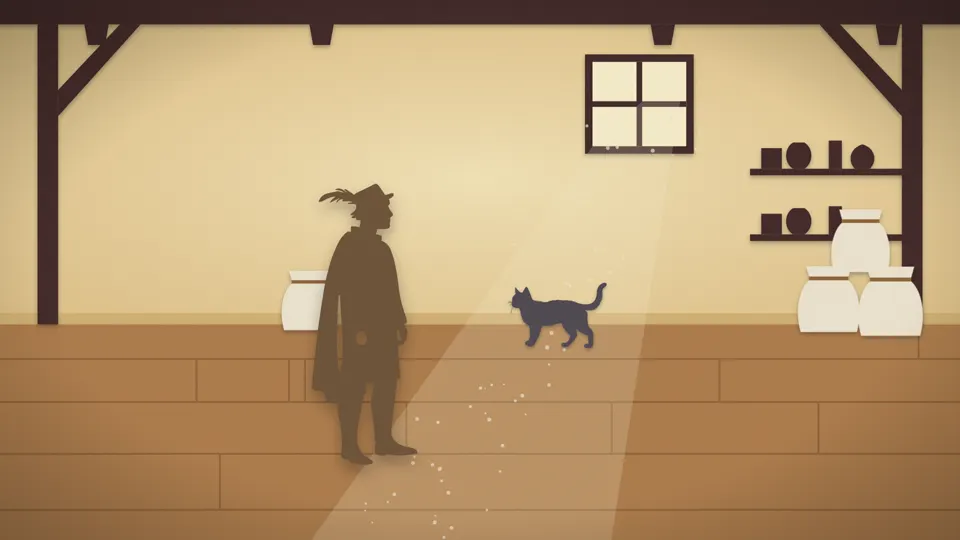
Le chat entend tout, mais il ne montre rien.
The cat hears everything, but he does not show it.
Puis il parle d’un air sérieux.
Then he speaks with a serious air.
Le chat dit : « Ne soyez pas triste, mon maître. »
The cat says: “Do not be sad, master.”
« Donnez-moi seulement un sac. »
“Just give me a sack.”
« Et faites-moi faire une paire de bottes. »
“And have a pair of boots made for me.”
« C’est pour aller dans les buissons. »
“It is for going into the bushes.”
« Vous allez voir : votre part n’est pas si mauvaise. »
“You will see: your share is not so bad.”
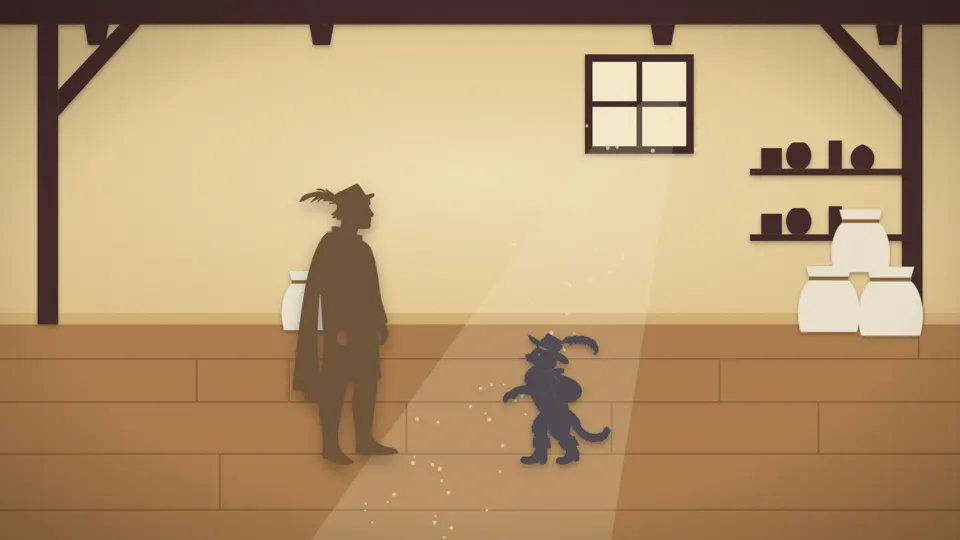
Le jeune homme n’y croit pas beaucoup.
The young man does not really believe it.
Mais ce chat est très malin.
But this cat is very clever.
Pour attraper les rats, il fait mille tours.
To catch rats, he does a thousand tricks.
Il se pend par les pieds.
He hangs by his feet.
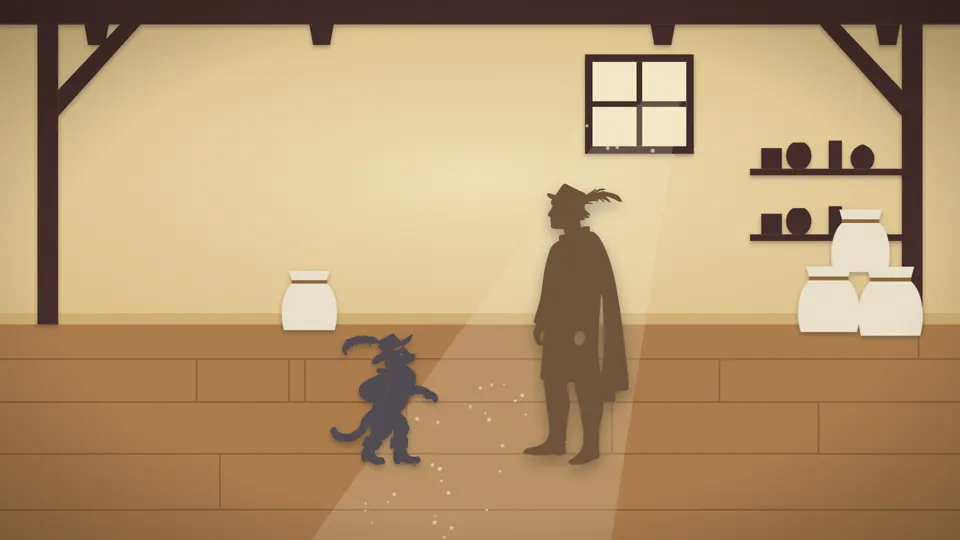
Il se cache dans la farine et il fait le mort.
He hides in the flour and plays dead.
Alors, le jeune homme espère un peu.
So the young man hopes a little.
Bientôt, le chat a son sac et ses bottes.
Soon the cat has his sack and his boots.
Il met ses bottes, très fier.
He puts on his boots, very proud.
Il met le sac sur son épaule.
He puts the sack on his shoulder.
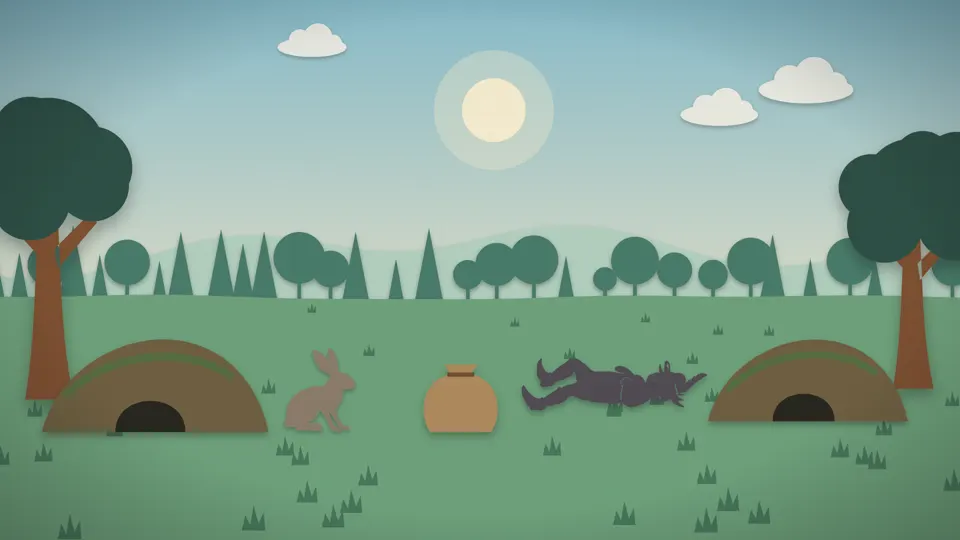
Le chat va dans une garenne pleine de lapins.
The cat goes to a warren full of rabbits.
Il met du son et des herbes dans son sac.
He puts some bran and some greens in his sack.
Il se couche par terre et il fait le mort.
He lies down on the ground and plays dead.
Il attend un jeune lapin.
He waits for a young rabbit.
Bientôt, un petit lapin un peu bête arrive.
Soon a rather silly little rabbit comes along.
Il entre dans le sac pour manger.
He goes into the sack to eat.
Vite, le chat tire les cordons !
Quickly, the cat pulls the strings!
Le lapin est pris, et le chat le tue.
The rabbit is caught, and the cat kills it.
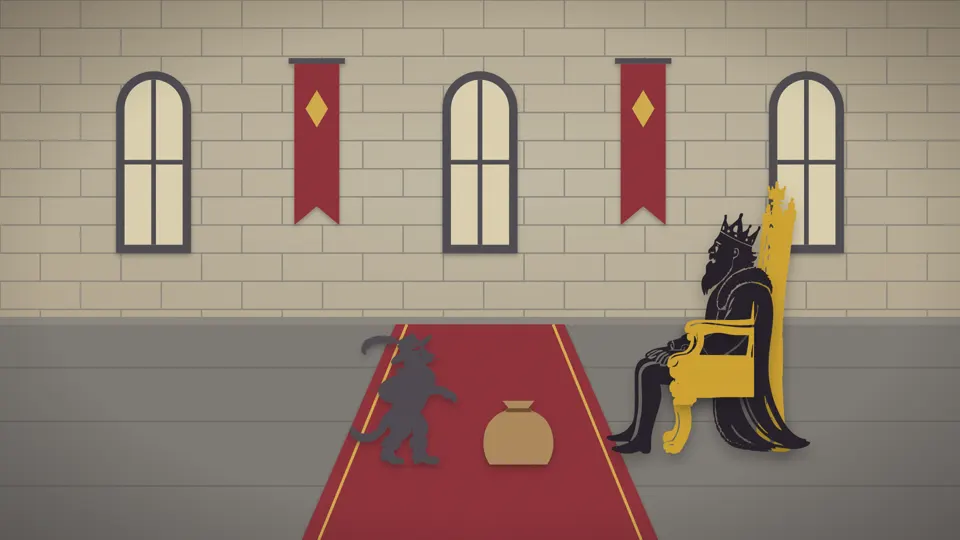
Très fier, le chat va au palais du roi.
Very proud, the cat goes to the king's palace.
Il demande à parler au roi.
He asks to speak to the king.
On le fait monter chez le roi.
They take him up to the king's rooms.
Le chat fait une grande révérence.
The cat makes a deep bow.
Il dit : « Sire, voici un lapin. »
He says: “Sire, here is a rabbit.”
« C’est un cadeau de Monsieur le marquis de Carabas. »
“It is a present from the Marquis of Carabas.”
C’est le nom que le chat donne à son maître.
That is the name the cat gives his master.
Le roi répond : « Merci à ton maître ! »
The king answers: “Thank your master!”
« Il me fait plaisir. »
“He makes me happy.”
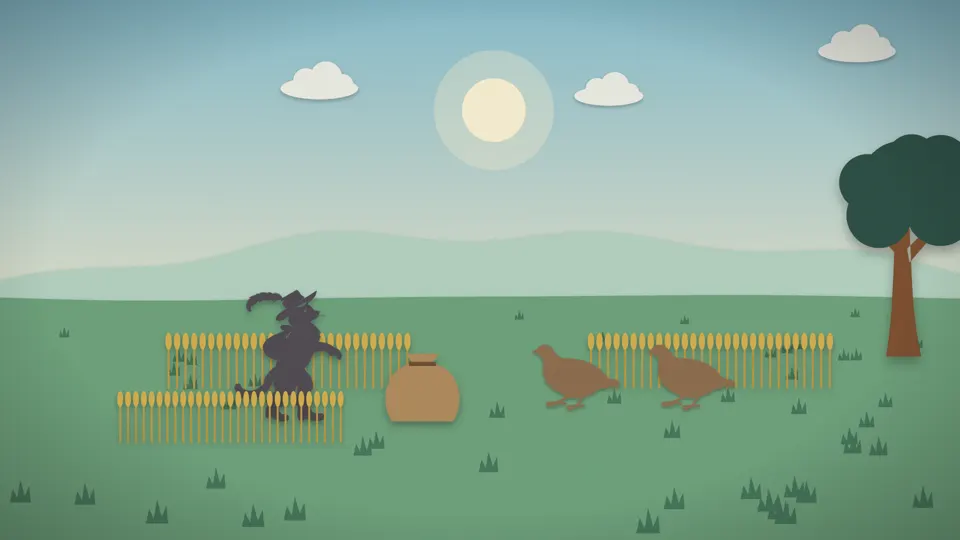
Un autre jour, le chat se cache dans le blé.
Another day, the cat hides in the wheat.
Il tient son sac ouvert.
He holds his sack open.
Deux perdrix entrent dans le sac.
Two partridges go into the sack.
Le chat tire les cordons et il les prend toutes les deux.
The cat pulls the strings and catches them both.
Il va encore chez le roi avec les perdrix.
He goes to the king again with the partridges.
Le roi les prend avec plaisir.
The king takes them with pleasure.
Il donne un pourboire au chat.
He gives the cat a tip.
Pendant deux ou trois mois, le chat continue.
For two or three months, the cat goes on like this.
Souvent, il porte du gibier au roi.
He often brings game to the king.
Il dit toujours : « C’est du marquis de Carabas. »
He always says: “It is from the Marquis of Carabas.”
Un jour, le chat apprend une nouvelle.
One day, the cat hears some news.
Le roi va se promener au bord de la rivière.
The king is going for a drive along the river.
Sa fille va avec lui.
His daughter is going with him.
C’est la plus belle princesse du monde.
She is the most beautiful princess in the world.
Le chat dit à son maître : « Suivez mon conseil. »
The cat says to his master: “Follow my advice.”
« Et votre fortune est faite ! »
“And your fortune is made!”
« Allez vous baigner dans la rivière. »
“Go and bathe in the river.”
« Je vais vous montrer l’endroit. »
“I will show you the place.”
« Et après, laissez-moi faire ! »
“And after that, leave the rest to me!”