Der goldene Vogel
Part 1 · The Golden Bird · tap a sentence to hear it
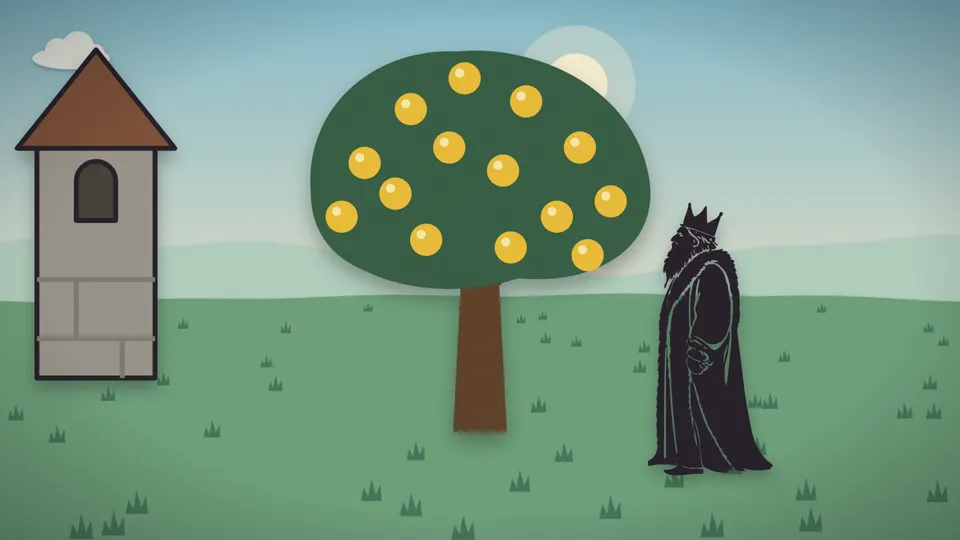
Es war einmal ein König.
Once upon a time there was a king.
Hinter seinem Schloss hat er einen schönen Garten.
Behind his castle he has a beautiful garden.
In dem Garten steht ein Baum mit goldenen Äpfeln.
In the garden there is a tree with golden apples.
Als die Äpfel reif sind, zählt man sie.
When the apples are ripe, they are counted.
Aber am nächsten Morgen fehlt ein Apfel.
But the next morning one apple is missing.
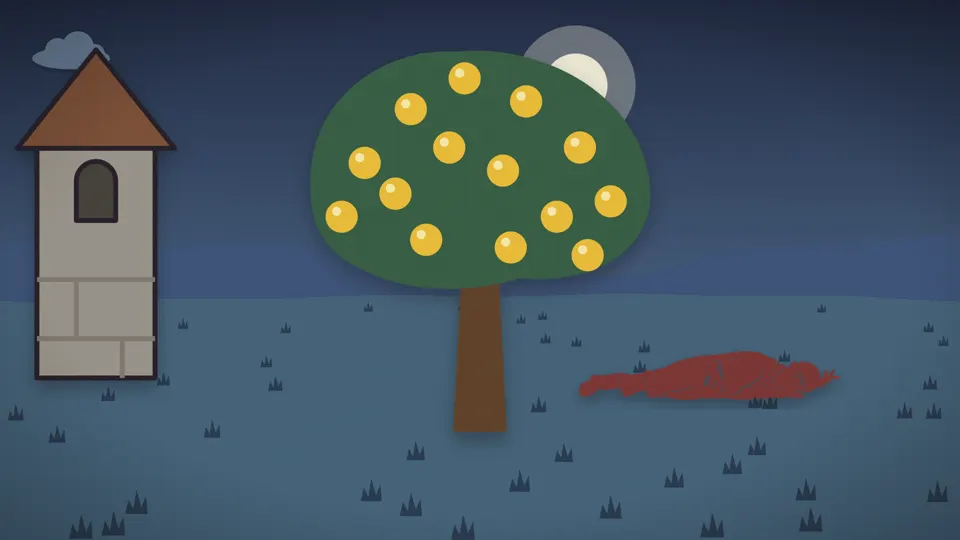
Der König befiehlt: „Jede Nacht soll jemand unter dem Baum wachen.“
The king orders: "Every night someone shall keep watch under the tree."
Der König hat drei Söhne.
The king has three sons.
In der ersten Nacht schickt er den ältesten Sohn in den Garten.
On the first night he sends the eldest son into the garden.
Aber um Mitternacht wird der Sohn so müde.
But at midnight the son gets so tired.
Er schläft ein.
He falls asleep.
Am Morgen fehlt wieder ein Apfel.
In the morning another apple is missing.
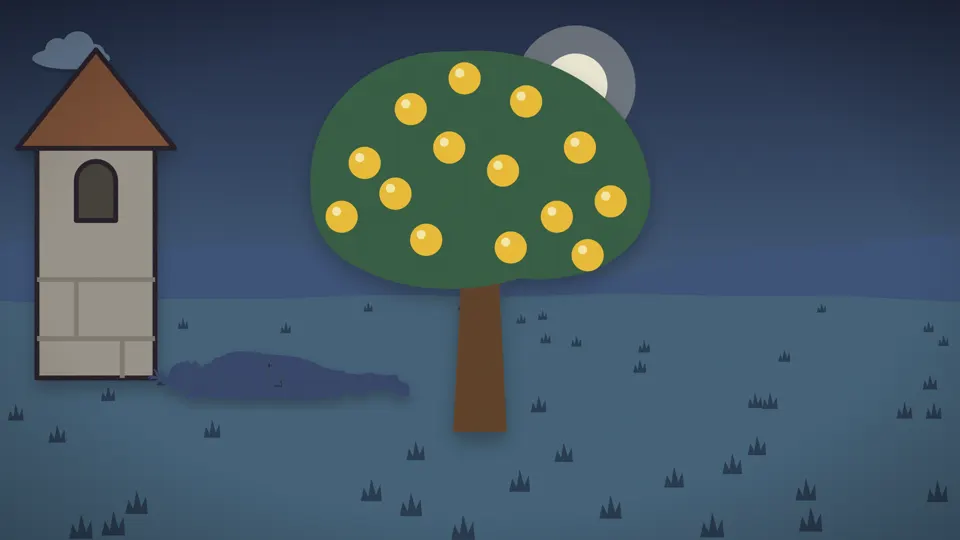
In der zweiten Nacht wacht der zweite Sohn.
On the second night the second son keeps watch.
Aber es geht ihm nicht besser.
But he does no better.
Um zwölf Uhr schläft er auch ein.
At twelve o'clock he falls asleep too.
Und am Morgen fehlt wieder ein Apfel.
And in the morning another apple is missing again.
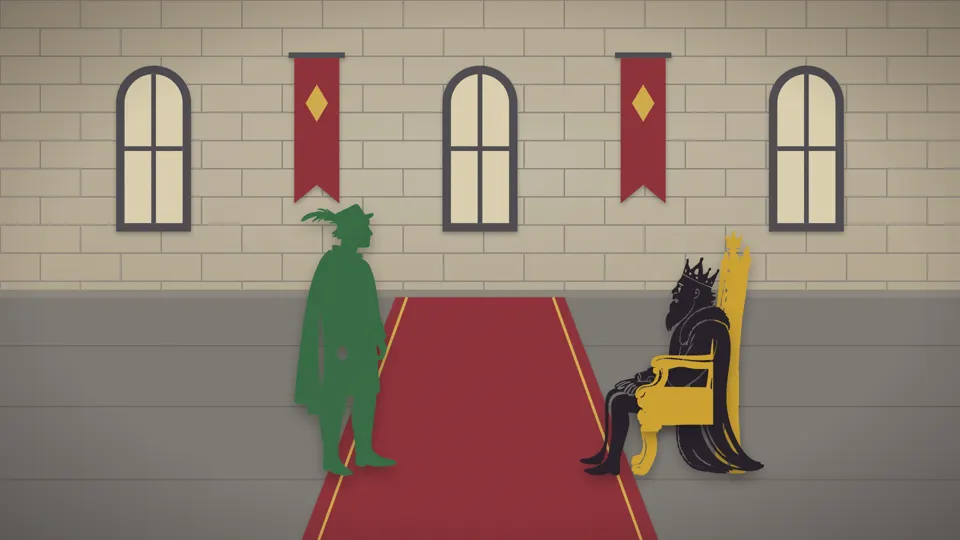
Jetzt will der jüngste Sohn wachen.
Now the youngest son wants to keep watch.
Der König traut ihm nicht viel zu.
The king does not think much of him.
Er denkt: „Er schafft es noch weniger als seine Brüder.“
He thinks: "He will manage it even less than his brothers."
Aber endlich erlaubt er es doch.
But in the end he allows it after all.
Der Jüngste legt sich unter den Baum.
The youngest lies down under the tree.
Er bleibt wach und schläft nicht ein.
He stays awake and does not fall asleep.
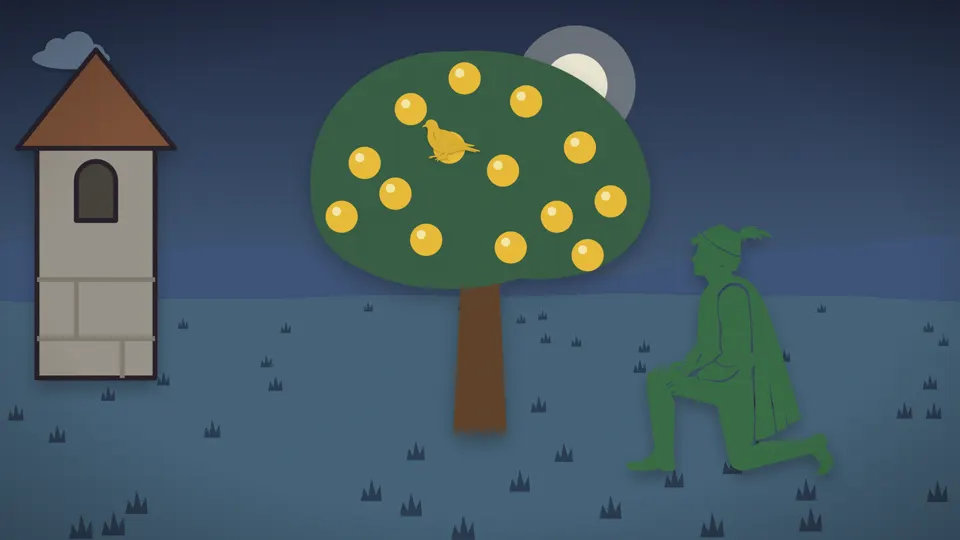
Um zwölf Uhr rauscht etwas durch die Luft.
At twelve o'clock something rushes through the air.
Im Mondschein sieht er einen Vogel.
In the moonlight he sees a bird.
Seine Federn glänzen ganz aus Gold.
Its feathers shine all of gold.
Der Vogel setzt sich auf den Baum.
The bird settles on the tree.
Er pickt einen Apfel ab.
It pecks off an apple.
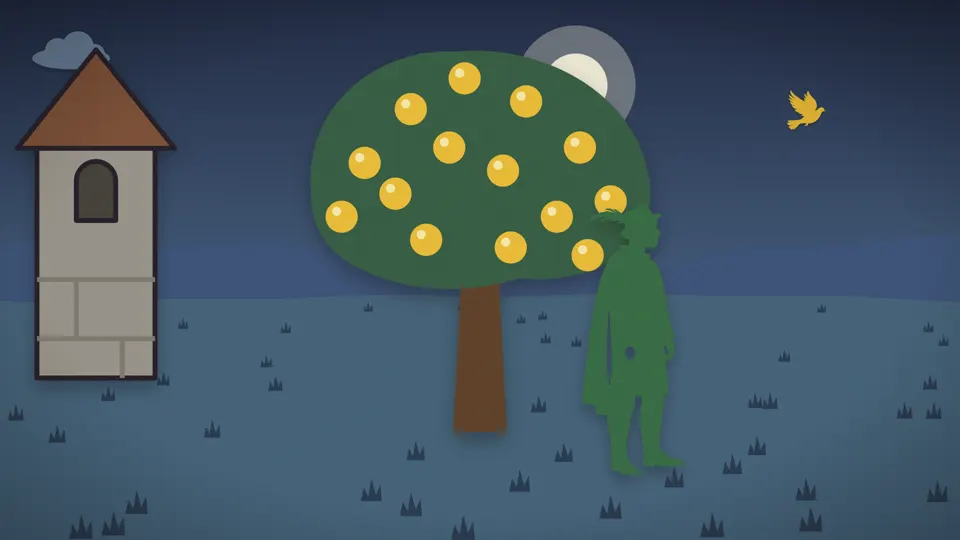
Da schießt der Jüngste einen Pfeil nach ihm.
Then the youngest shoots an arrow at it.
Der Vogel fliegt davon.
The bird flies away.
Aber der Pfeil hat ihn getroffen.
But the arrow has hit it.
Eine goldene Feder fällt herab.
A golden feather falls down.
Der Jüngste hebt sie auf.
The youngest picks it up.
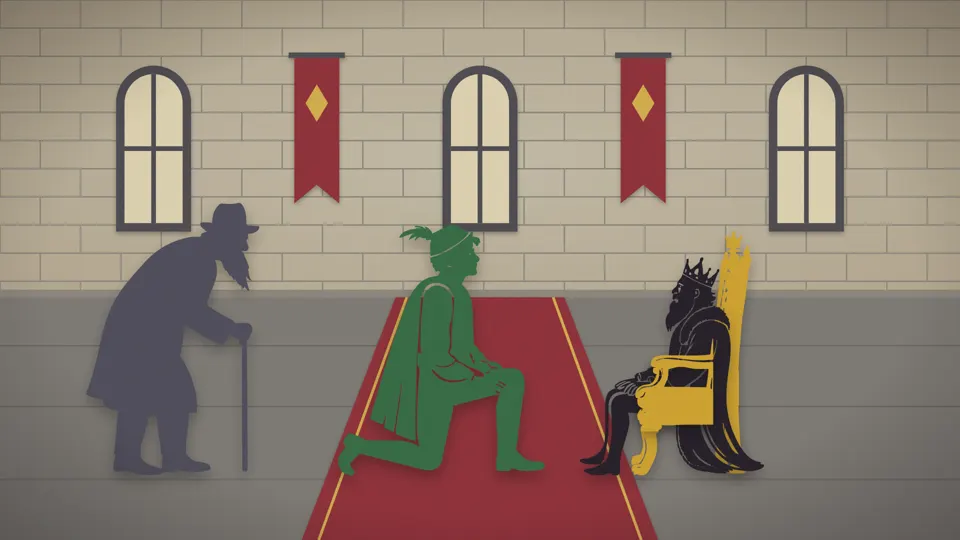
Am Morgen bringt er die Feder zum König.
In the morning he brings the feather to the king.
Er erzählt, was er in der Nacht gesehen hat.
He tells what he saw in the night.
Der König fragt seine klugen Männer.
The king asks his wise men.
Alle sagen: „Diese Feder ist mehr wert als das ganze Königreich.“
Everyone says: "This feather is worth more than the whole kingdom."
Der König sagt: „Dann hilft mir eine Feder nicht.“
The king says: "Then one feather is no use to me."
„Ich will den ganzen Vogel haben!“
"I want to have the whole bird!"
Der älteste Sohn macht sich auf den Weg.
The eldest son sets off.
Er denkt: „Ich bin klug. Ich finde den goldenen Vogel schon.“
He thinks: "I am clever. I'll find the golden bird all right."
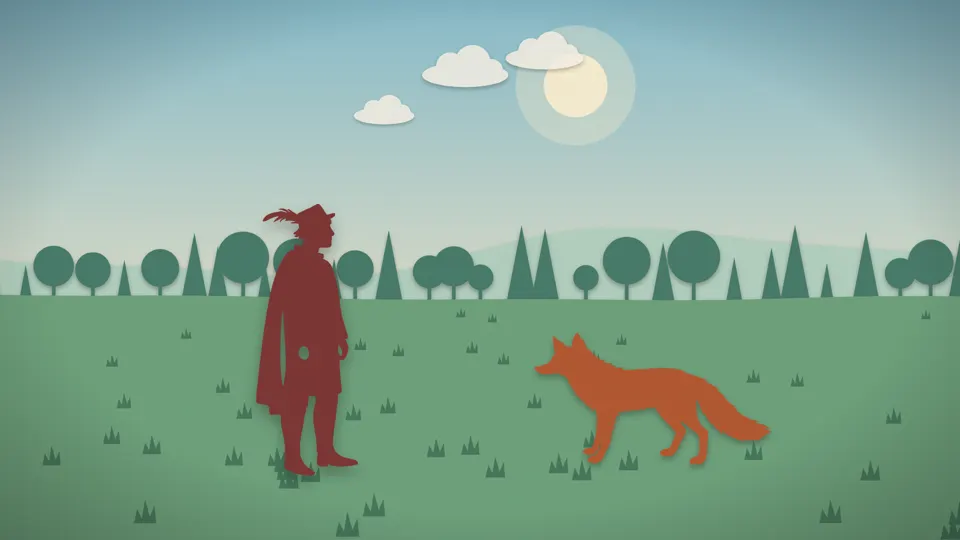
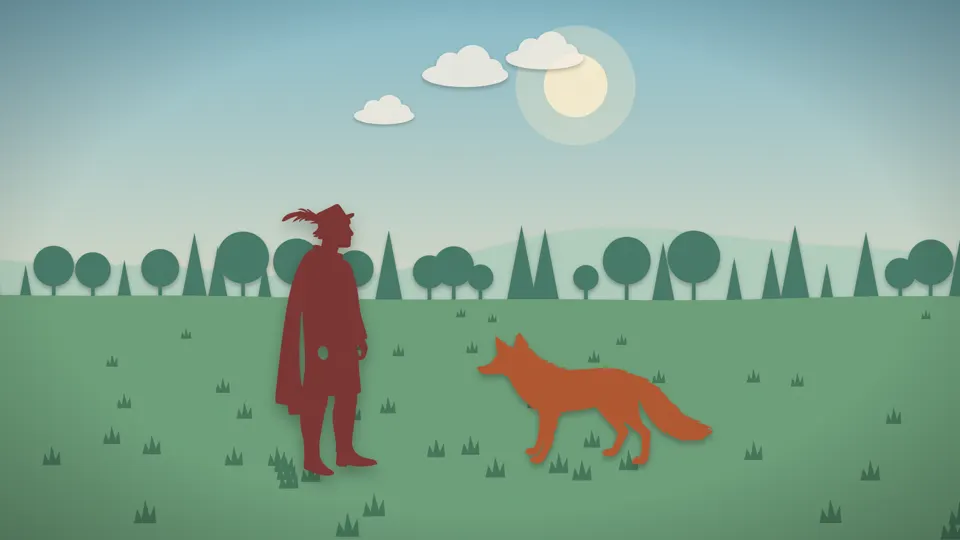
Am Rand eines Waldes sitzt ein Fuchs.
At the edge of a forest sits a fox.
Der Sohn nimmt sein Gewehr und zielt auf ihn.
The son takes his gun and aims at it.
Der Fuchs ruft: „Schieß nicht! Ich gebe dir einen guten Rat.“
The fox calls: "Don't shoot! I'll give you good advice."
„Heute Abend kommst du in ein Dorf.“
"This evening you will come to a village."
„Dort stehen zwei Gasthäuser, eins gegenüber dem anderen.“
"There two inns stand, one opposite the other."
„Das eine ist hell, und drinnen ist es lustig.“
"The one is bright, and inside it is merry."
„Da geh nicht hinein!“
"Don't go in there!"
„Geh in das andere, auch wenn es schlecht aussieht.“
"Go into the other one, even if it looks bad."
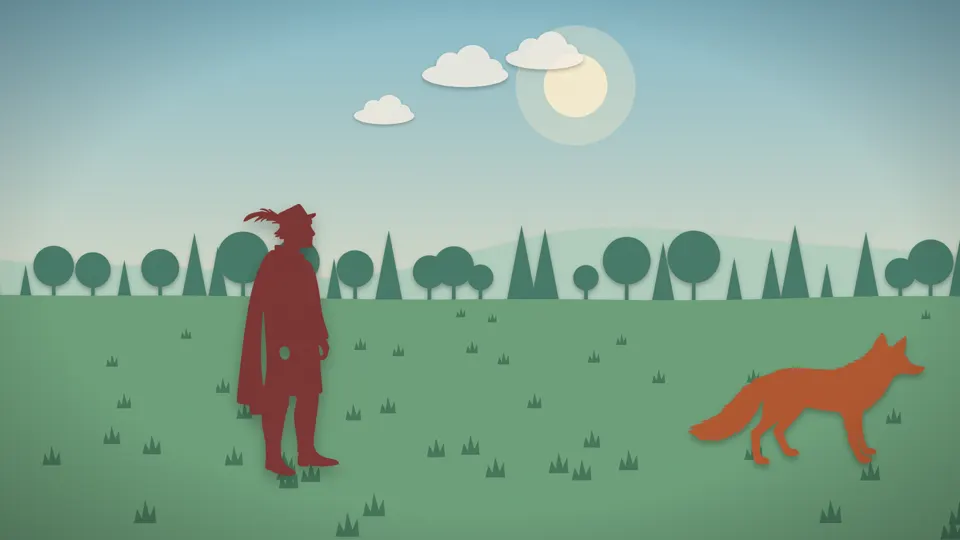
Der Sohn denkt: „Wie kann so ein dummes Tier einen guten Rat geben?“
The son thinks: "How can such a stupid animal give good advice?"
Er schießt.
He shoots.
Aber er trifft den Fuchs nicht.
But he does not hit the fox.
Der Fuchs streckt den Schwanz aus und läuft schnell in den Wald.
The fox stretches out its tail and runs quickly into the forest.
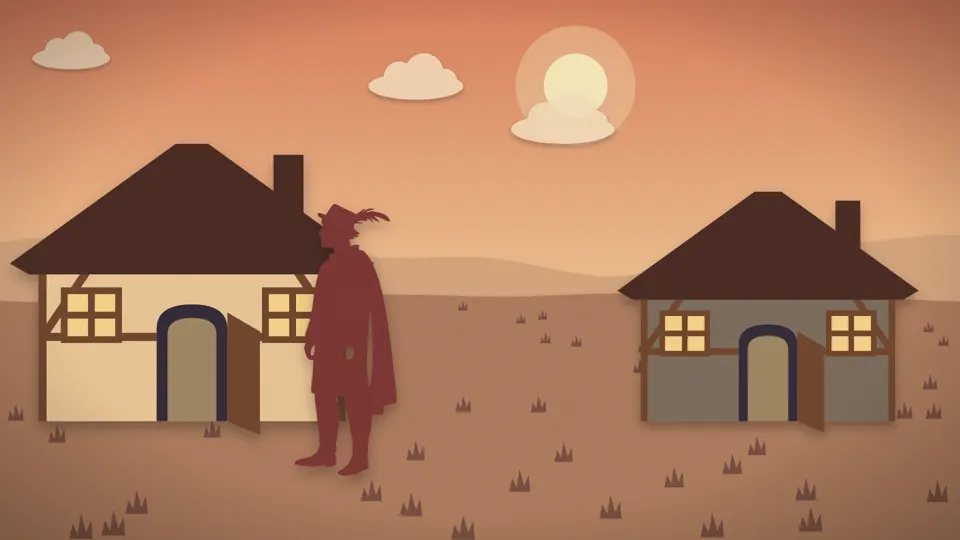
Am Abend kommt der Sohn in das Dorf.
In the evening the son comes to the village.
In dem einen Gasthaus singen und tanzen die Leute.
In the one inn the people sing and dance.
Das andere sieht arm und traurig aus.
The other looks poor and sad.
Er denkt: „Ich bin doch kein Narr!“
He thinks: "I'm no fool, after all!"
Er geht in das lustige Gasthaus.
He goes into the merry inn.
Dort feiert er Tag und Nacht.
There he celebrates day and night.
Er vergisst den Vogel, seinen Vater und alle guten Lehren.
He forgets the bird, his father and all good lessons.
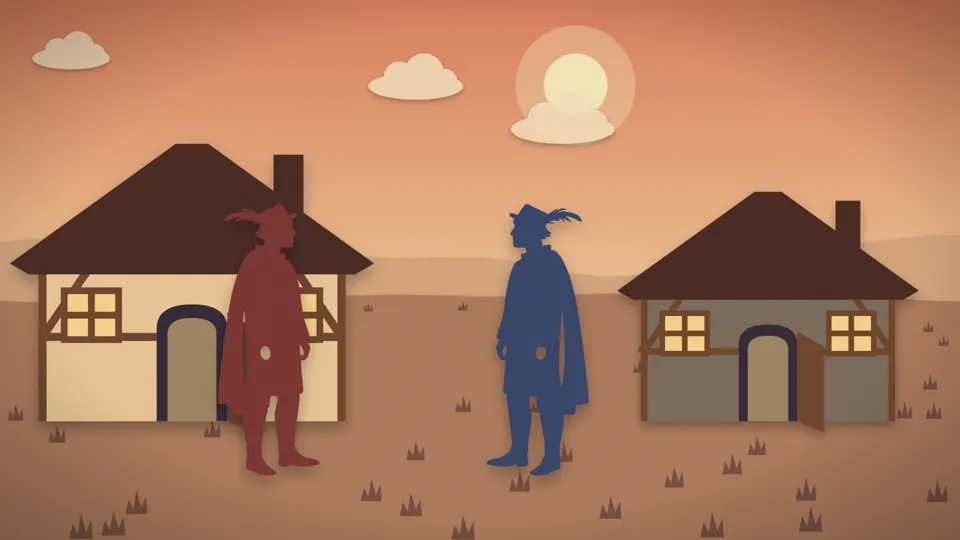
Die Zeit vergeht, aber der älteste Sohn kommt nicht nach Hause.
Time passes, but the eldest son does not come home.
Da geht der zweite Sohn los.
Then the second son sets out.
Auch ihn trifft der Fuchs und gibt ihm den guten Rat.
The fox meets him too and gives him the good advice.
Aber er hört nicht darauf.
But he does not listen to it.
Er kommt zu den zwei Gasthäusern.
He comes to the two inns.
Sein Bruder steht vor dem lustigen Gasthaus und ruft ihn.
His brother stands in front of the merry inn and calls him.
Er kann nicht widerstehen und geht hinein.
He cannot resist and goes in.
Dort lebt er nur noch für sein Vergnügen.
There he lives only for his pleasure.