Vier Freunde auf dem Weg
Part 1 · Four friends on the road · tap a sentence to hear it
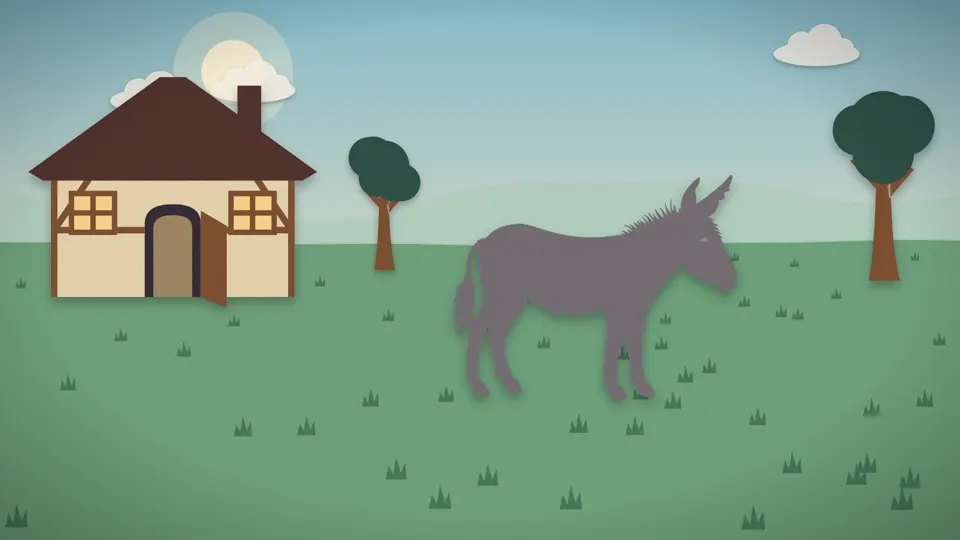
Ein Mann hat einen Esel.
A man has a donkey.
Der Esel ist alt.
The donkey is old.
Viele Jahre trägt er schwere Säcke zur Mühle.
For many years he carries heavy sacks to the mill.
Jetzt ist er müde und schwach.
Now he is tired and weak.
Der Mann denkt: „Der Esel arbeitet nicht mehr gut.“
The man thinks: “The donkey doesn’t work well anymore.”
Er denkt: „Ich will ihn nicht mehr füttern.“
He thinks: “I don’t want to feed him anymore.”
Der Esel versteht das.
The donkey understands that.
Er hat Angst.
He is afraid.
Er läuft weg.
He runs away.
Der Esel sagt: „Ich gehe nach Bremen.“
The donkey says: “I’m going to Bremen.”
Er sagt auch: „Dort werde ich Stadtmusikant.“
He also says: “There I will become a town musician.”
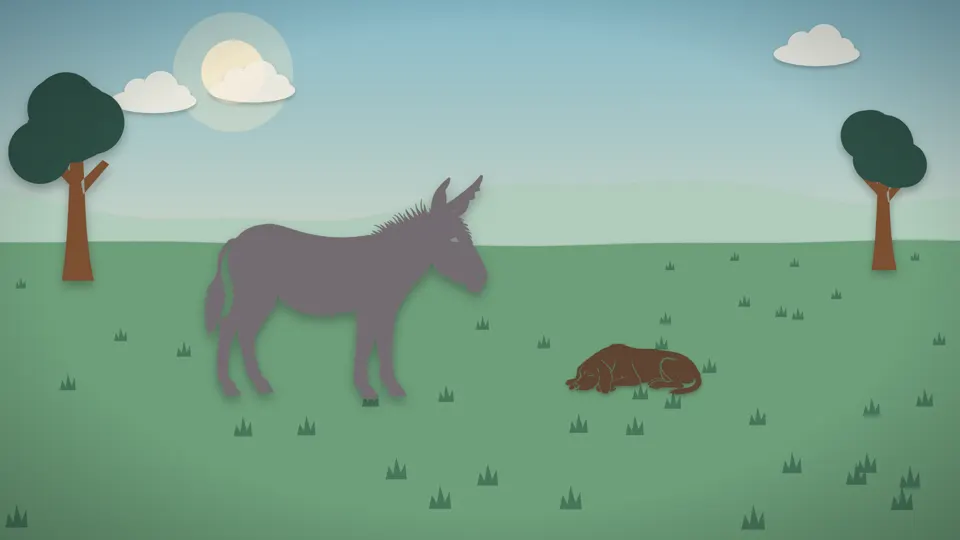
Auf dem Weg liegt ein Hund.
On the road lies a dog.
Der Hund ist alt und müde.
The dog is old and tired.
Er atmet schwer.
He is breathing heavily.
Der Esel fragt: „Warum bist du so müde?“
The donkey asks: “Why are you so tired?”
Der Hund sagt: „Ich bin alt.“
The dog says: “I am old.”
Er sagt: „Ich kann nicht mehr schnell laufen.“
He says: “I can’t run fast anymore.”
Und er sagt: „Ich kann nicht mehr jagen.“
And he says: “I can’t hunt anymore.”
Der Hund sagt: „Mein Herr will mich nicht mehr.“
The dog says: “My master doesn’t want me anymore.”
Dann sagt er: „Jetzt habe ich kein Zuhause.“
Then he says: “Now I have no home.”
Der Esel sagt: „Komm mit mir nach Bremen!“
The donkey says: “Come with me to Bremen!”
Er sagt: „Wir werden dort Stadtmusikanten.“
He says: “We’ll become town musicians there.”
Er sagt: „Ich spiele Laute, du schlägst die Trommel.“
He says: “I’ll play the lute, you’ll beat the drum.”
Der Hund freut sich.
The dog is happy.
Jetzt sind sie zwei.
Now they are two.
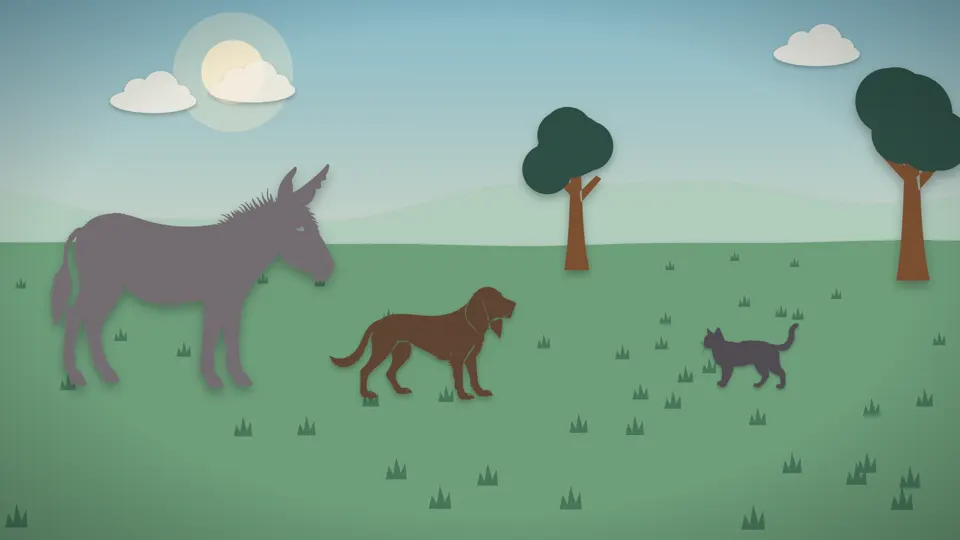
Bald sehen sie eine Katze.
Soon they see a cat.
Die Katze sitzt am Weg.
The cat is sitting by the road.
Sie sieht sehr traurig aus.
She looks very sad.
Der Esel fragt: „Was ist los?“
The donkey asks: “What’s wrong?”
Die Katze sagt: „Ich bin alt.“
The cat says: “I am old.”
Sie sagt: „Meine Zähne sind nicht mehr scharf.“
She says: “My teeth aren’t sharp anymore.”
Sie sagt auch: „Ich fange keine Mäuse mehr.“
She also says: “I don’t catch mice anymore.”
Die Katze sagt: „Ich sitze lieber am warmen Ofen.“
The cat says: “I’d rather sit by the warm stove.”
Dann sagt sie: „Aber meine Frau will mich nicht mehr.“
Then she says: “But my mistress doesn’t want me anymore.”
Sie fragt: „Wohin soll ich gehen?“
She asks: “Where should I go?”
Der Esel sagt: „Komm mit uns nach Bremen!“
The donkey says: “Come with us to Bremen!”
Er sagt: „Du singst so schön in der Nacht.“
He says: “You sing so beautifully at night.”
Und er sagt: „Du wirst eine gute Musikantin.“
And he says: “You’ll make a good musician.”
Die Katze kommt mit.
The cat comes along.
Jetzt sind sie drei.
Now they are three.
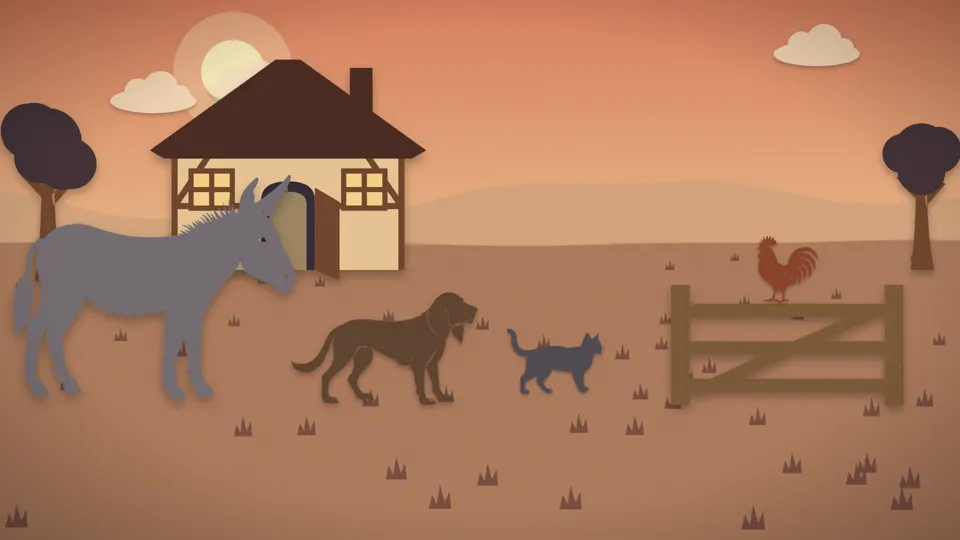
Sie kommen an einen Bauernhof.
They come to a farm.
Auf dem Tor sitzt ein Hahn.
On the gate sits a rooster.
Der Hahn schreit sehr laut.
The rooster is crowing very loudly.
Der Esel fragt: „Warum schreist du so?“
The donkey asks: “Why are you crying out like that?”
Der Hahn sagt: „Morgen ist Sonntag.“
The rooster says: “Tomorrow is Sunday.”
Er sagt: „Es kommen Gäste.“
He says: “Guests are coming.”
Er sagt auch: „Die Frau will mich kochen.“
He also says: “The woman wants to cook me.”
Der Hahn sagt: „Heute Abend ist mein letzter Abend.“
The rooster says: “Tonight is my last evening.”
Dann sagt er: „Darum schreie ich, so laut ich kann.“
Then he says: “That’s why I’m crying out as loud as I can.”
Der Esel sagt: „Nein! Komm lieber mit uns!“
The donkey says: “No! Come with us instead!”
Er sagt: „Wir gehen nach Bremen.“
He says: “We’re going to Bremen.”
Und er sagt: „Du hast eine starke Stimme.“
And he says: “You have a strong voice.”
Dann sagt er: „Wir machen zusammen Musik.“
Then he says: “We’ll make music together.”
Der Hahn ist froh.
The rooster is glad.
Er fliegt vom Tor.
He flies down from the gate.
Jetzt sind sie vier.
Now they are four.
Die vier Freunde gehen zusammen weiter.
The four friends walk on together.
Der Esel, der Hund, die Katze und der Hahn.
The donkey, the dog, the cat and the rooster.
Aber Bremen ist weit.
But Bremen is far away.
An einem Tag kommen sie nicht an.
They can’t get there in one day.
Am Abend kommen sie in einen Wald.
In the evening they come into a forest.
Es wird dunkel.
It is getting dark.
Der Esel sagt: „Hier bleiben wir heute Nacht.“
The donkey says: “We’ll stay here tonight.”
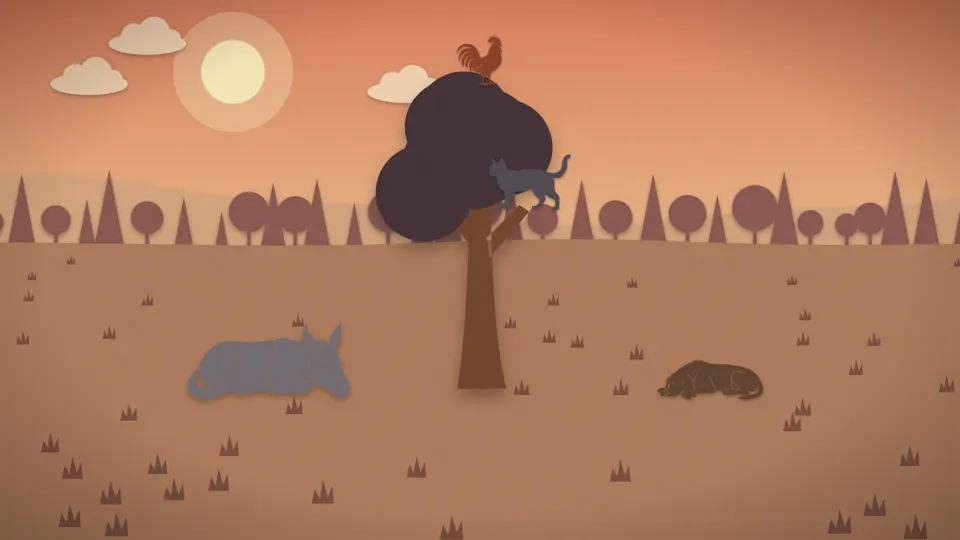
Der Esel und der Hund legen sich unter einen großen Baum.
The donkey and the dog lie down under a big tree.
Die Katze klettert auf einen Ast.
The cat climbs onto a branch.
Der Hahn fliegt ganz nach oben in den Baum.
The rooster flies right up to the top of the tree.
Dort ist er sicher.
There he is safe.
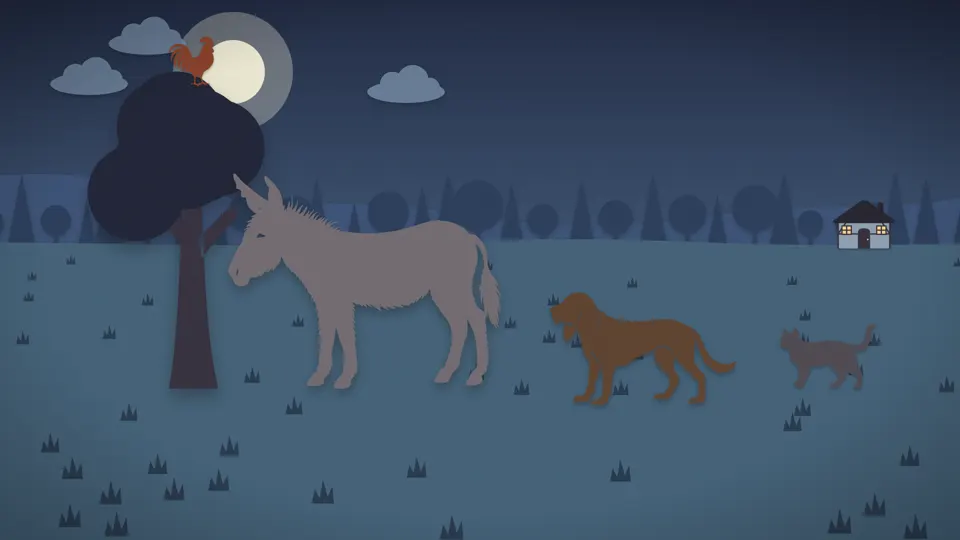
Vor dem Schlafen sieht der Hahn noch einmal nach allen Seiten.
Before sleeping, the rooster looks around one more time.
Da sieht er etwas.
Then he sees something.
Weit weg im Wald ist ein kleines Licht.
Far away in the forest there is a small light.
Der Hahn ruft: „Freunde!“
The rooster calls: “Friends!”
Er ruft: „Ich sehe ein Licht.“
He calls: “I see a light.”
Er sagt: „Dort steht vielleicht ein Haus.“
He says: “Maybe there is a house there.”
Der Esel sagt: „Dann gehen wir dorthin.“
The donkey says: “Then let’s go there.”
Er sagt auch: „Hier im Wald ist es kalt.“
He also says: “Here in the forest it is cold.”
Der Hund sagt: „Vielleicht gibt es dort auch etwas zu essen.“
The dog says: “Maybe there is something to eat there, too.”
Die vier Freunde stehen auf.
The four friends get up.
Sie gehen langsam durch den dunklen Wald.
They walk slowly through the dark forest.
Das Licht wird größer und größer.
The light gets bigger and bigger.
Was ist das für ein Haus?
What kind of house is that?